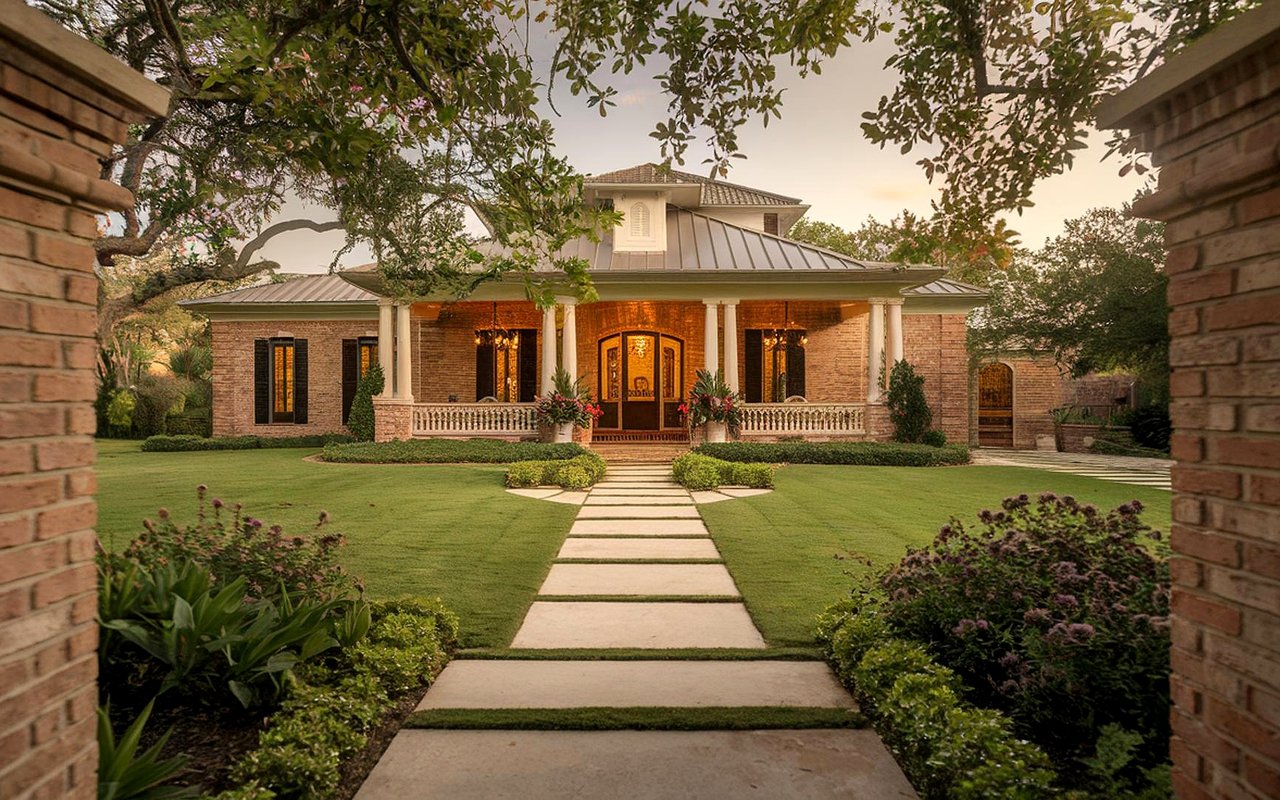
Welcome to
6,215 people live in Awbrey Butte, where the median age is 50 and the average individual income is $88,658. Data provided by the U.S. Census Bureau.
Total Population
Median Age
Population Density
Average individual Income
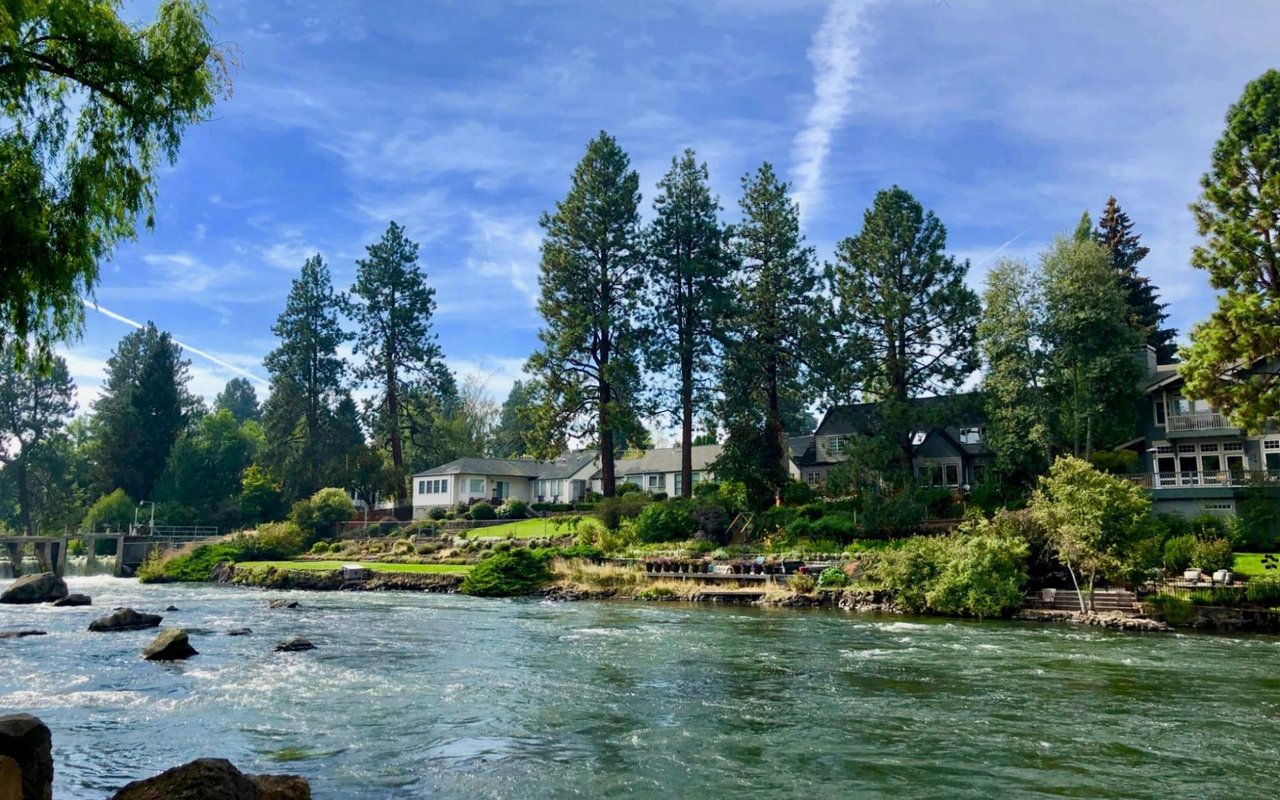
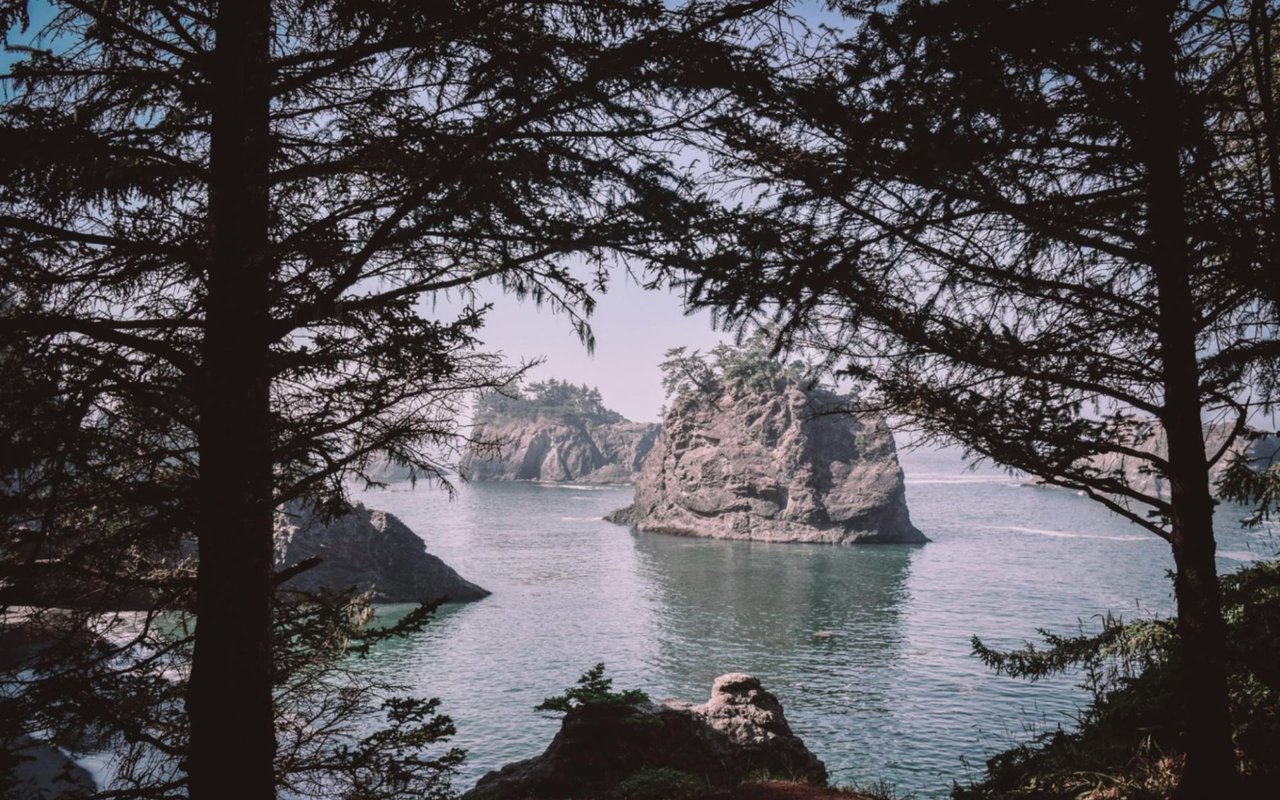
Rising nearly 700 feet above the rest of Bend, Awbrey Butte is the city's most distinctive luxury enclave — a forested volcanic cone stitched with winding roads, custom estates, and some of the most jaw-dropping Cascade views in Central Oregon. It's the address longtime Bend locals point to when they want to describe understated Northwest wealth: quiet, wooded, private, and unmistakably tied to the land it sits on. This guide breaks down what makes the Butte tick, who thrives here, and what buyers need to understand before writing an offer on the hillside.
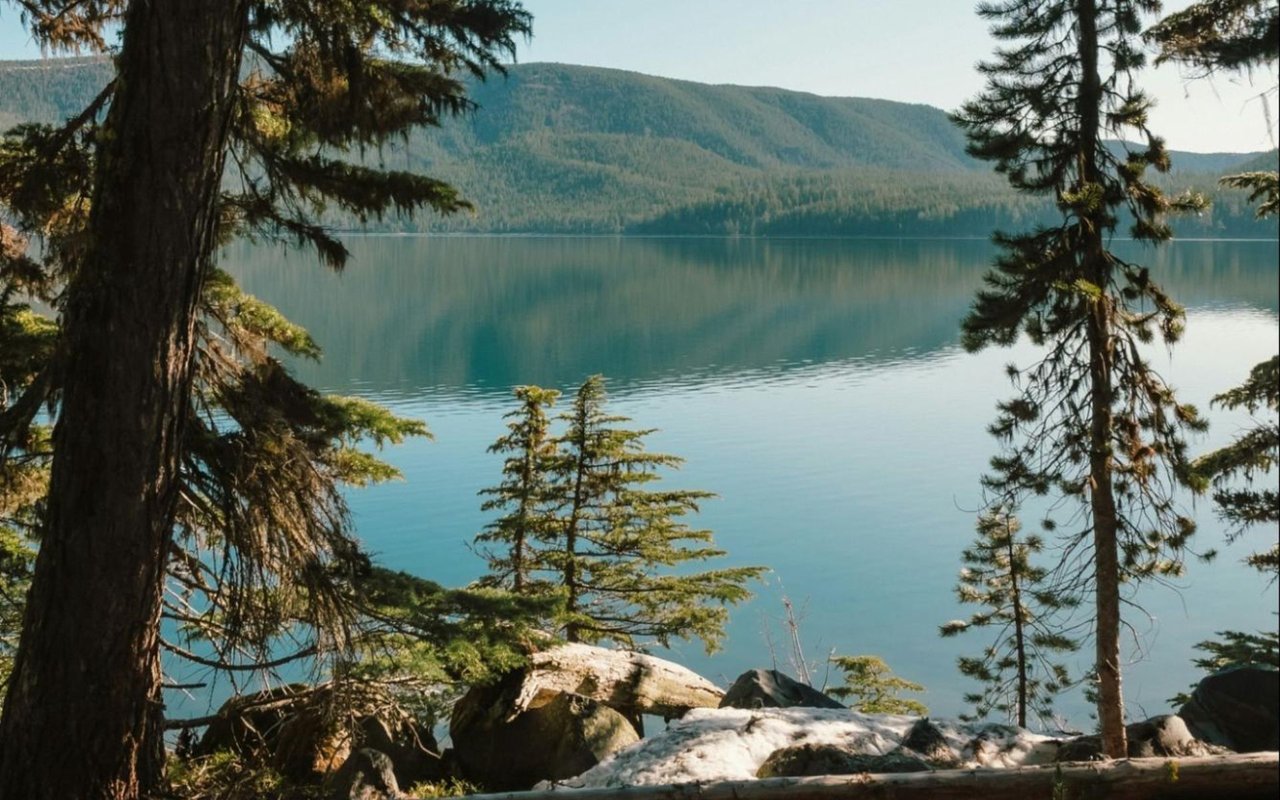
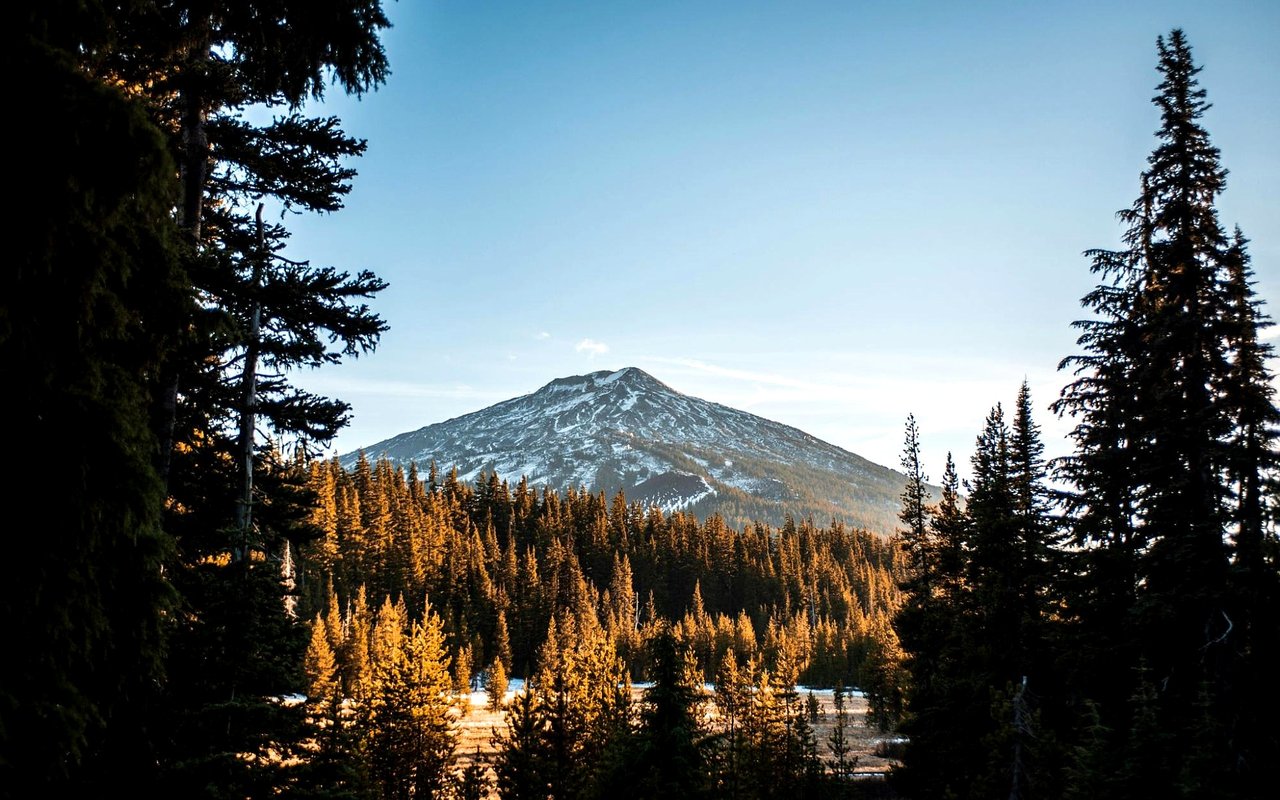
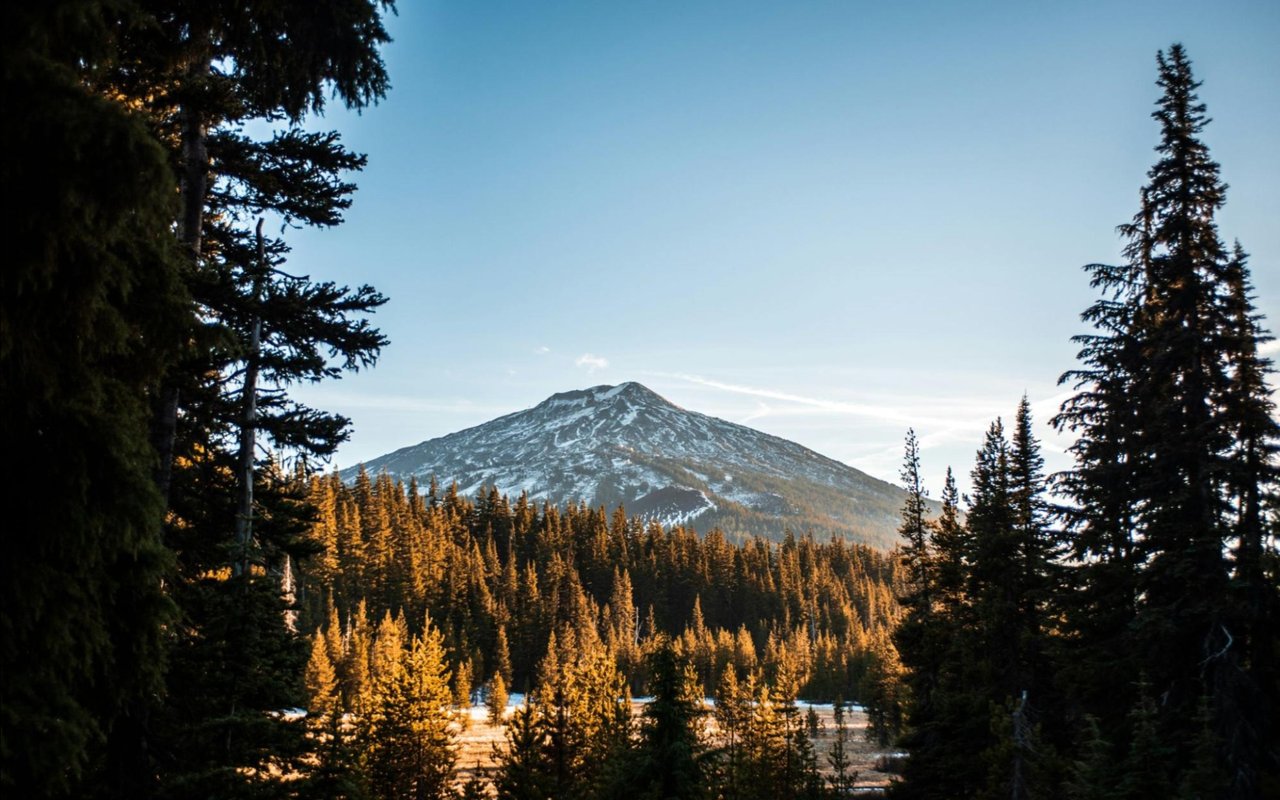
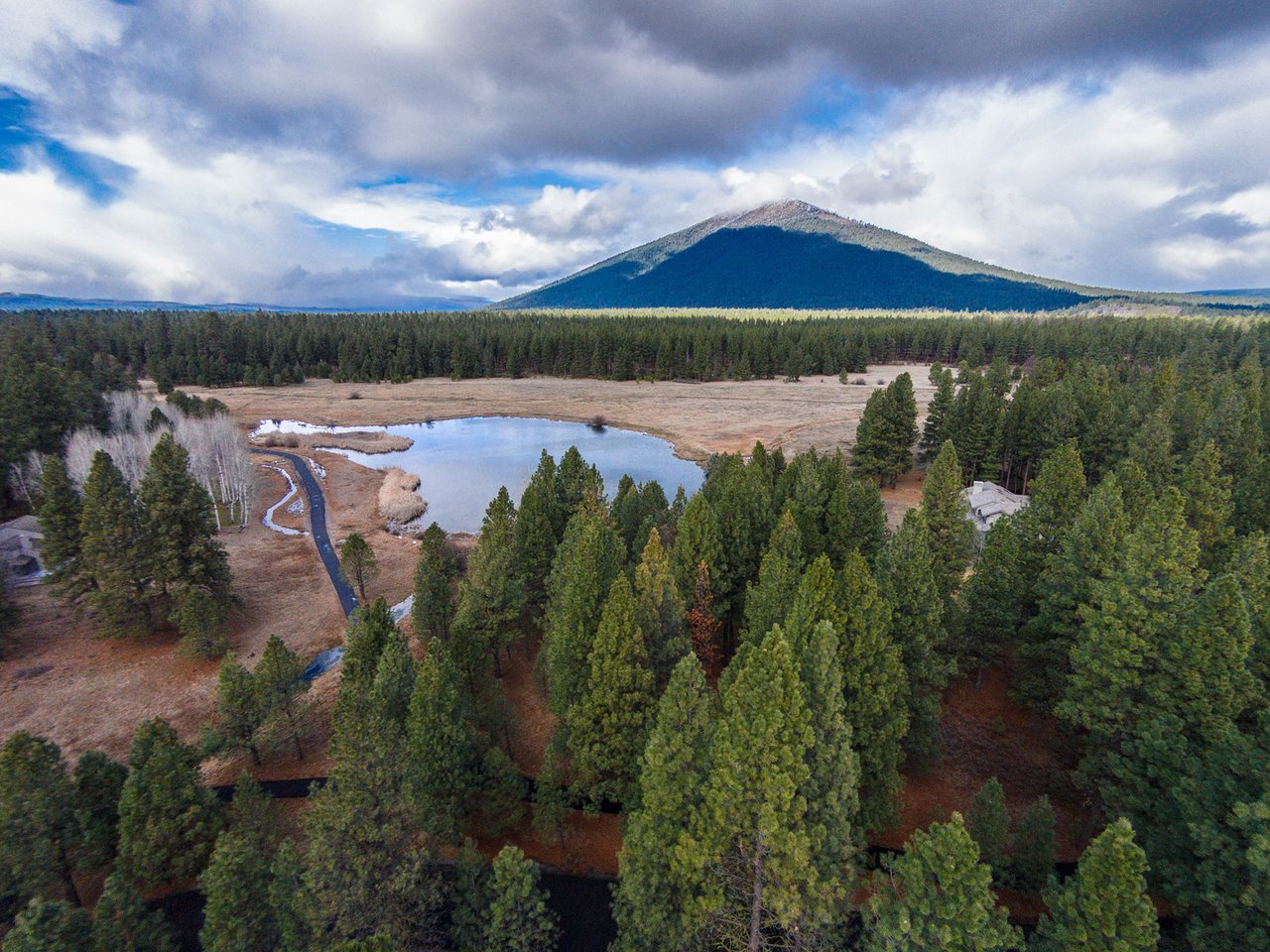
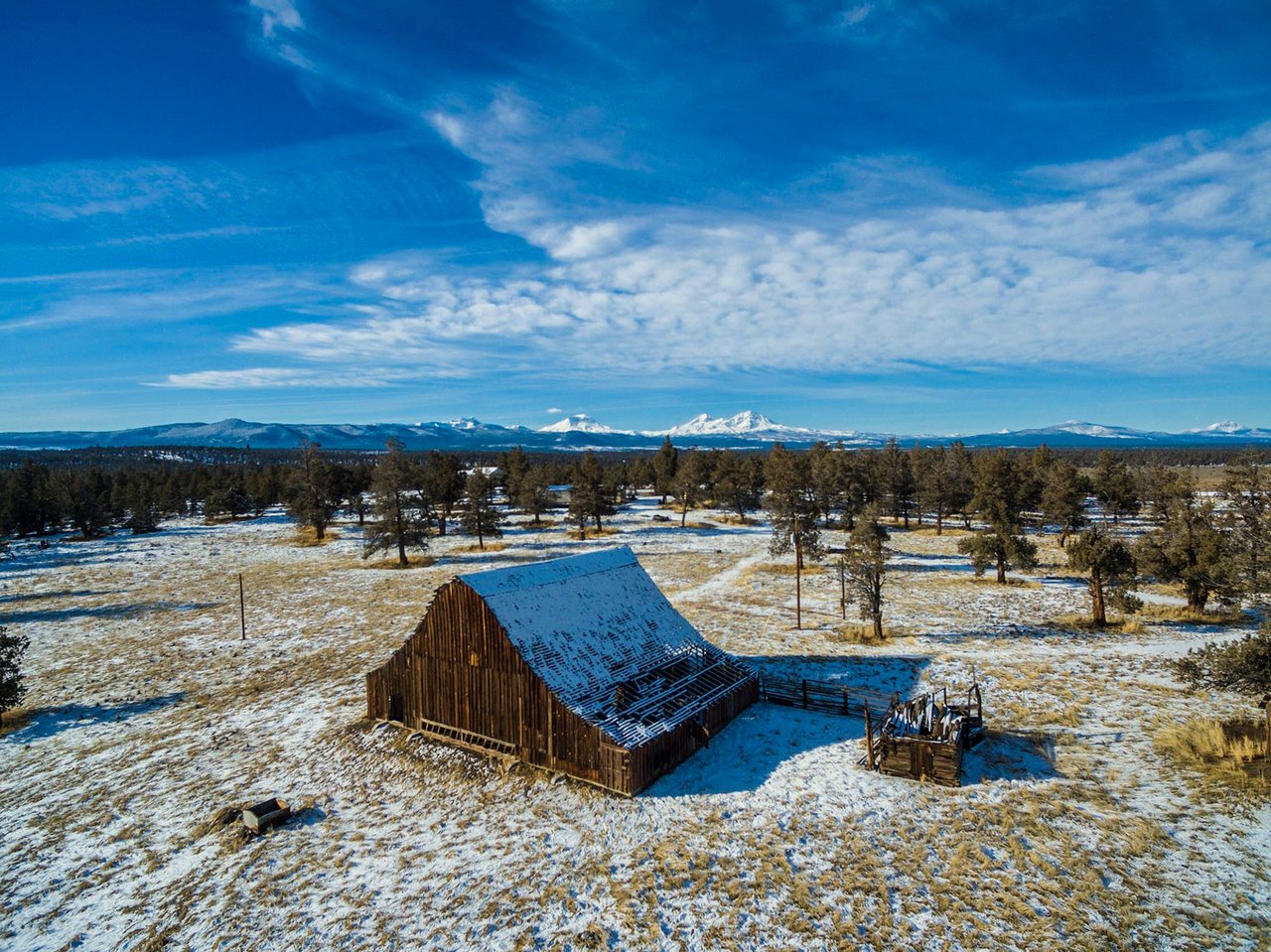
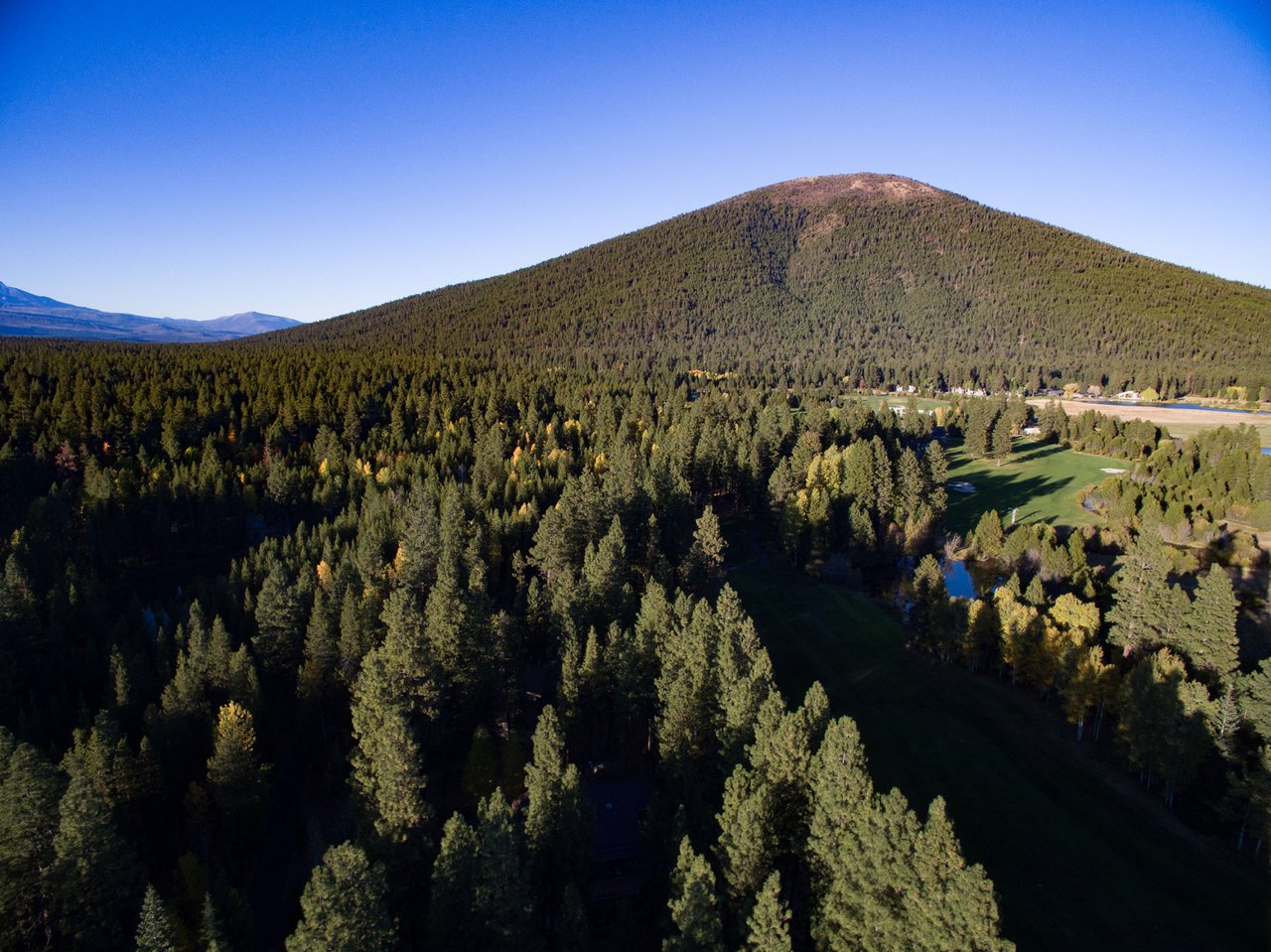
Awbrey Butte is a cinder cone volcano rising directly out of Bend's West Side, cresting at roughly 4,300 feet — about 700 feet above downtown. That vertical lift creates a genuinely different microclimate, and depending on which slope a home occupies, residents wake up to snow-capped Cascade peaks, the Deschutes River canyon, or a glittering panorama of downtown Bend and the high desert beyond.
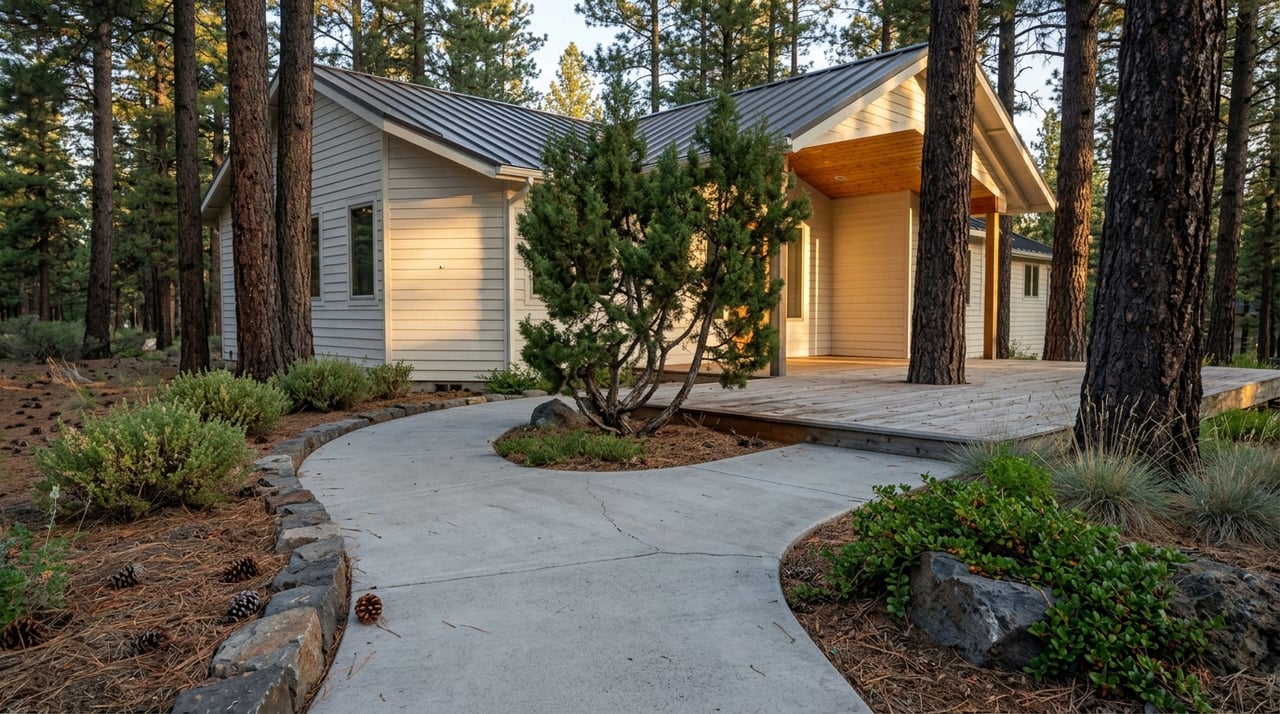
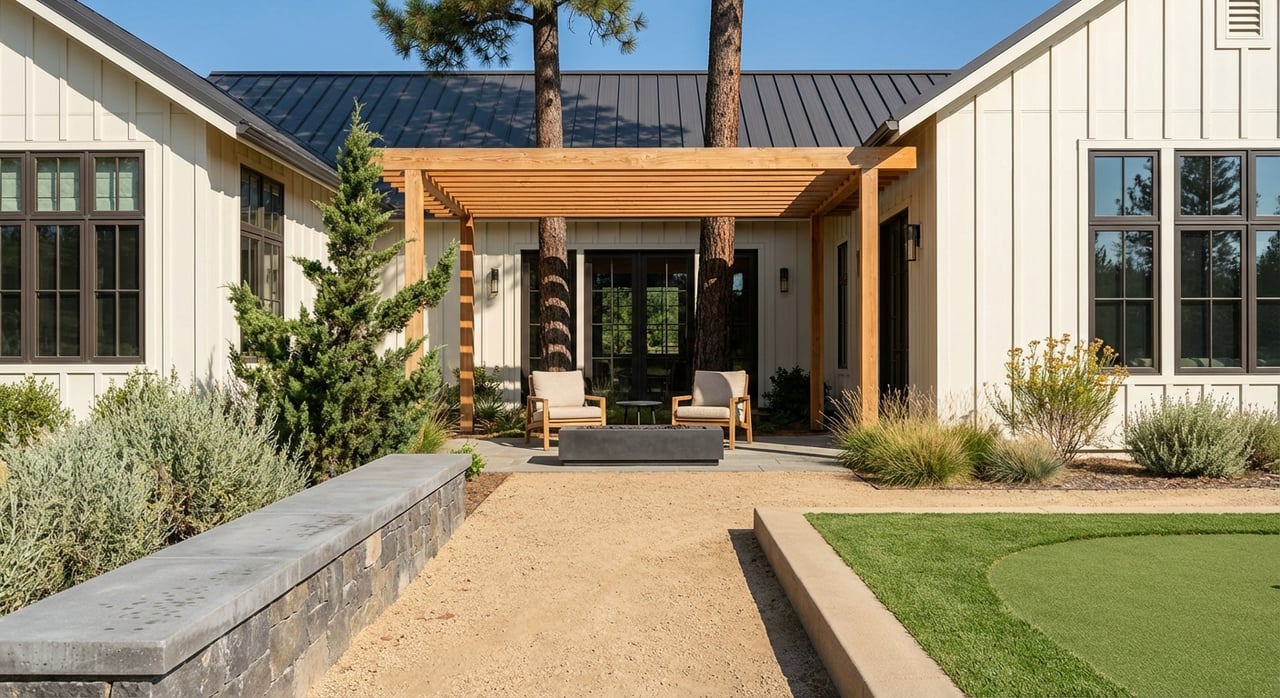
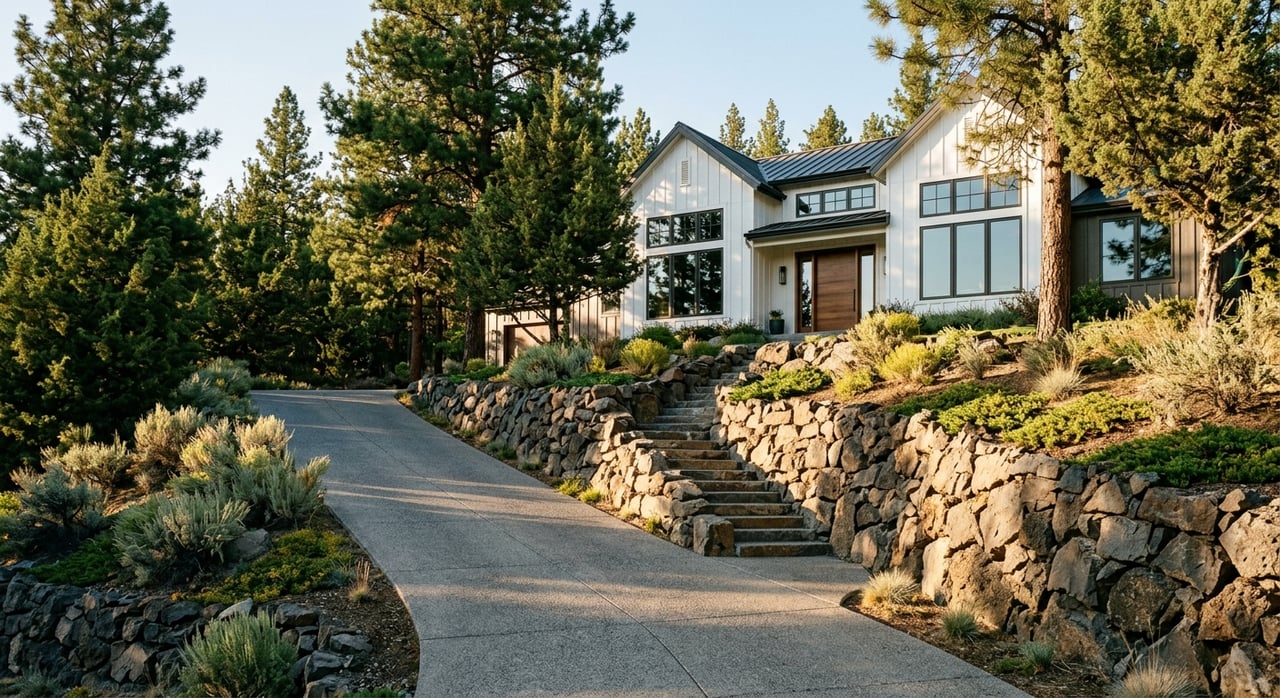
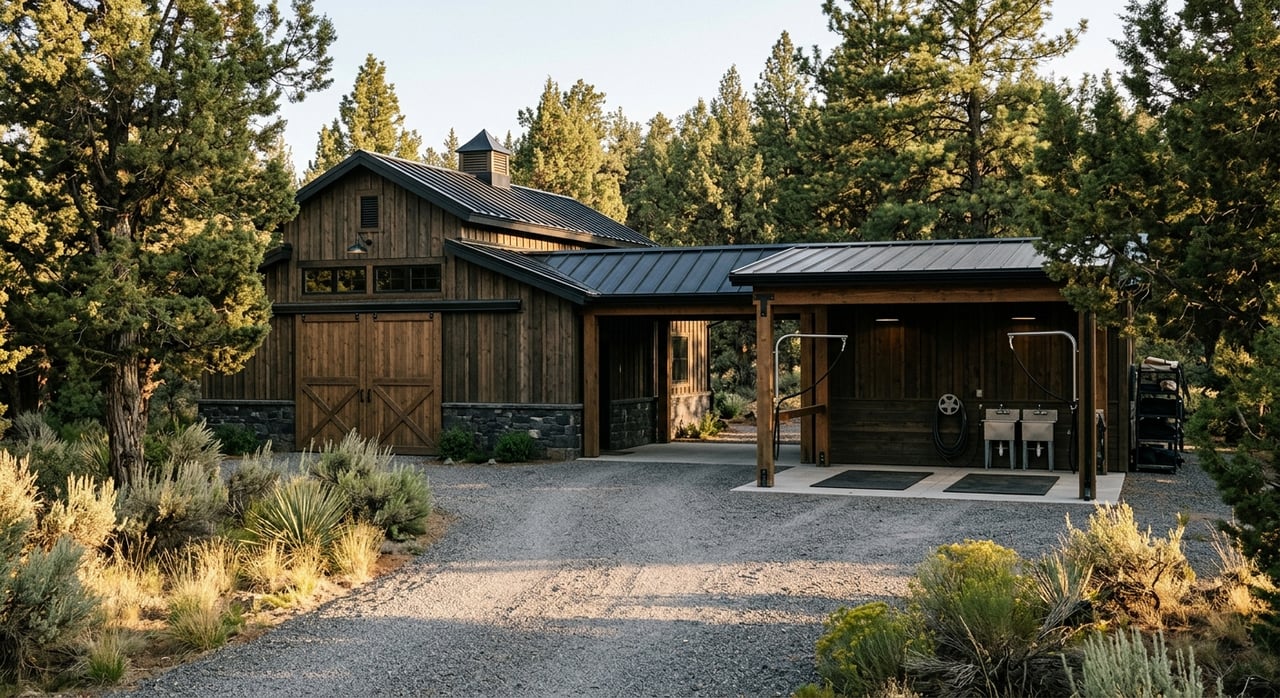
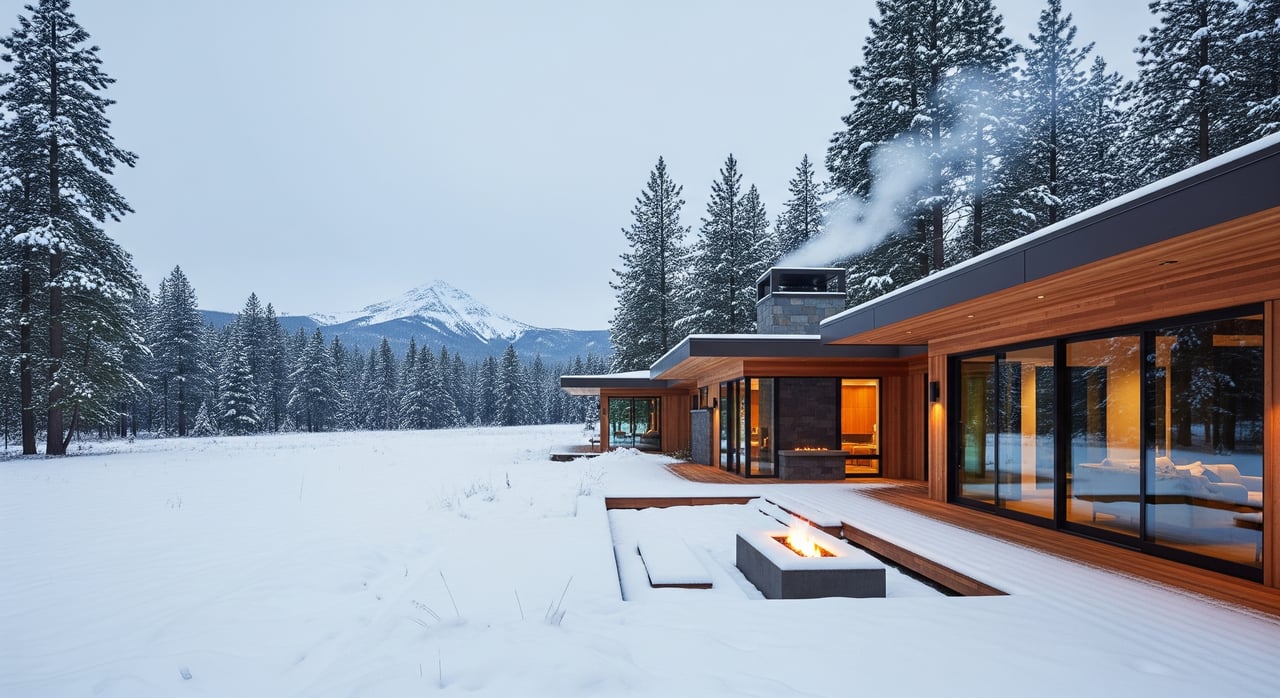
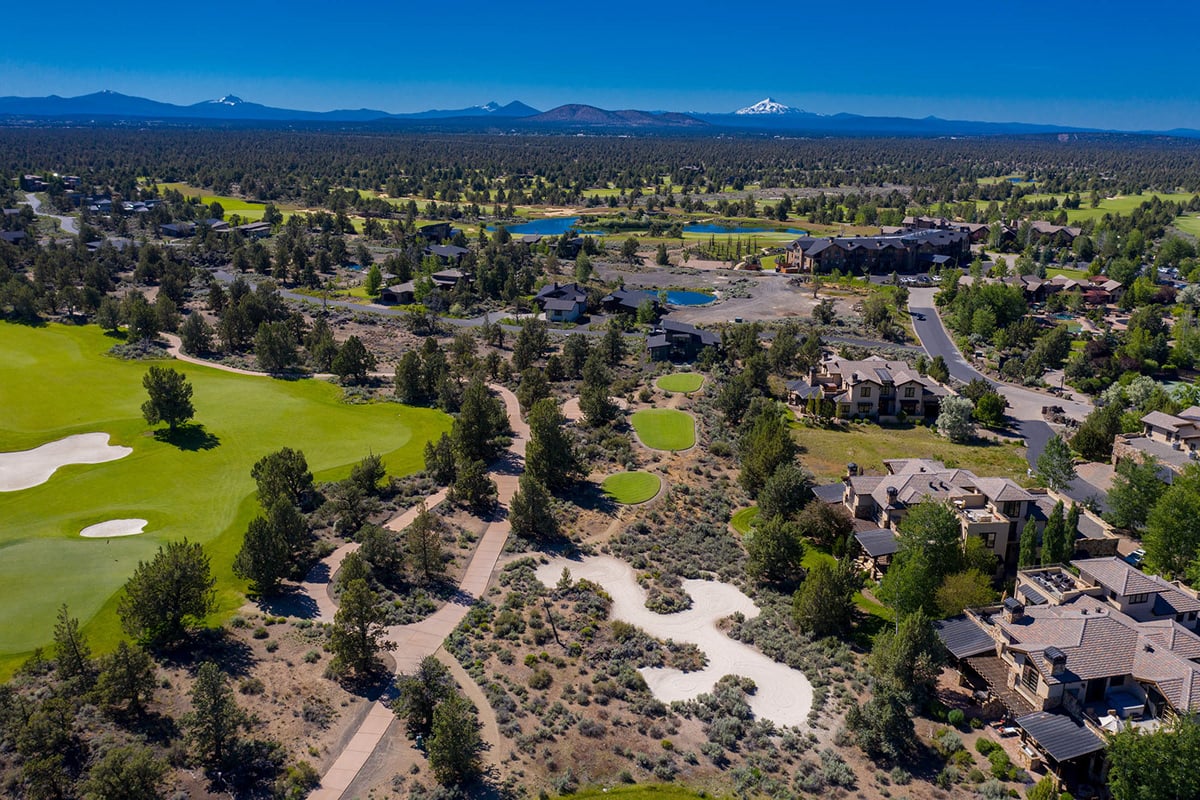
The vibe here is intentionally low-key luxury. There are no strip malls, no gas stations, and no commercial signage cluttering the hillside — just custom homes tucked into ponderosa pines, basalt rock outcroppings, and mule deer trails. Architecture leans toward Pacific Northwest Contemporary, Modern Rustic, and Craftsman, all governed by an active Architectural Review Committee that keeps the neighborhood's natural silhouette intact. Awbrey Park and Sylvan Park anchor the recreational side of daily life, offering tennis and pickleball courts, shaded picnic areas, and connecting trails that funnel walkers and runners into the Butte's steeper terrain. And despite feeling like a mountain retreat, downtown Bend sits less than 10 minutes down the hill.
Awbrey Butte tracks Bend's own story — from rugged frontier outpost to one of the West's most coveted mountain towns. The Butte takes its name from Marshall Awbrey, an early Oregon pioneer who arrived in the region in the late 19th century. For decades, the volcanic cone was simply too steep and too rocky to develop. While the lumber mills roared to life along the Deschutes River below, the Butte itself stayed largely wild — used for cattle grazing, timber, and little else.
That began to change in the late 1970s and early 1980s, when developers finally saw what the eastern hills — including Pilot Butte — couldn't offer: a west-facing perch with unobstructed Cascade views. The master-planned Awbrey Butte Homesites community was established with strict architectural guidelines designed to preserve the pine canopy and the Butte's natural silhouette. That single decision — protecting the trees and the ridgeline rather than clear-cutting for maximum density — is exactly why the neighborhood still feels the way it does today.
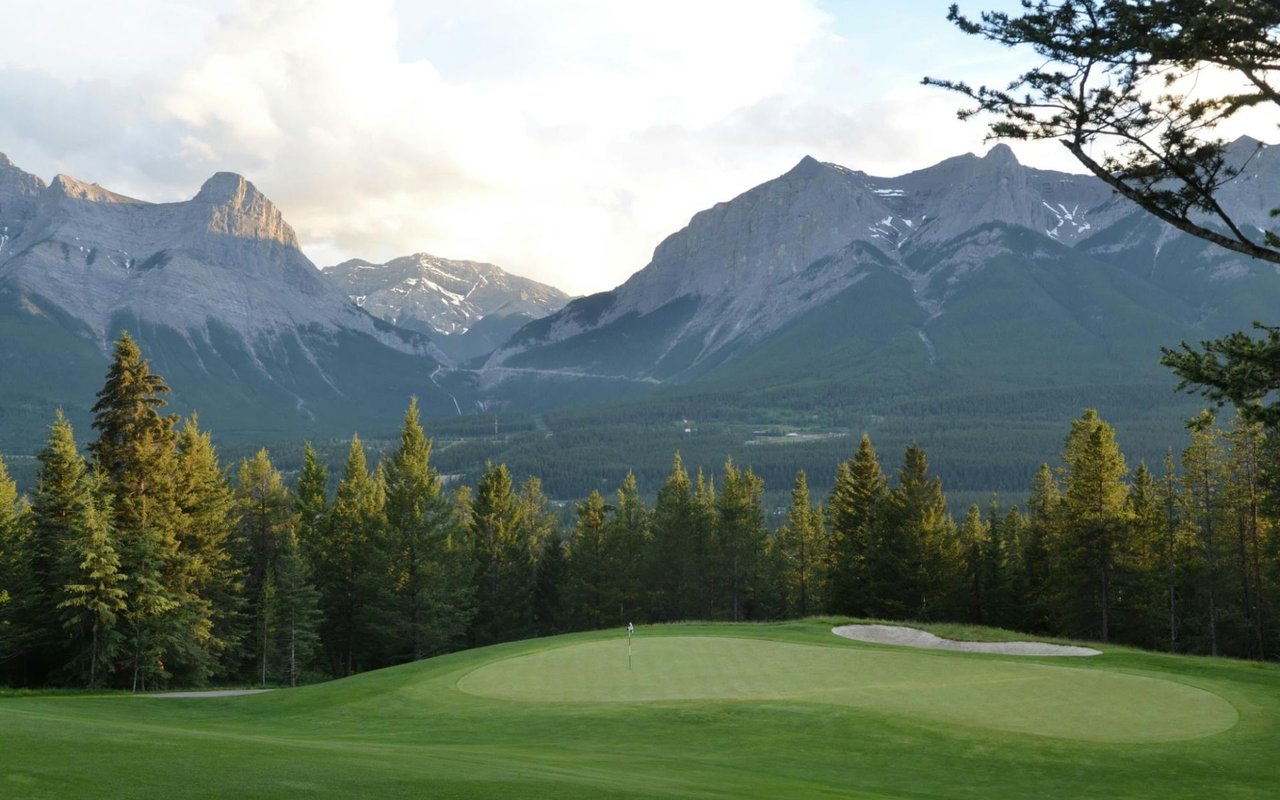
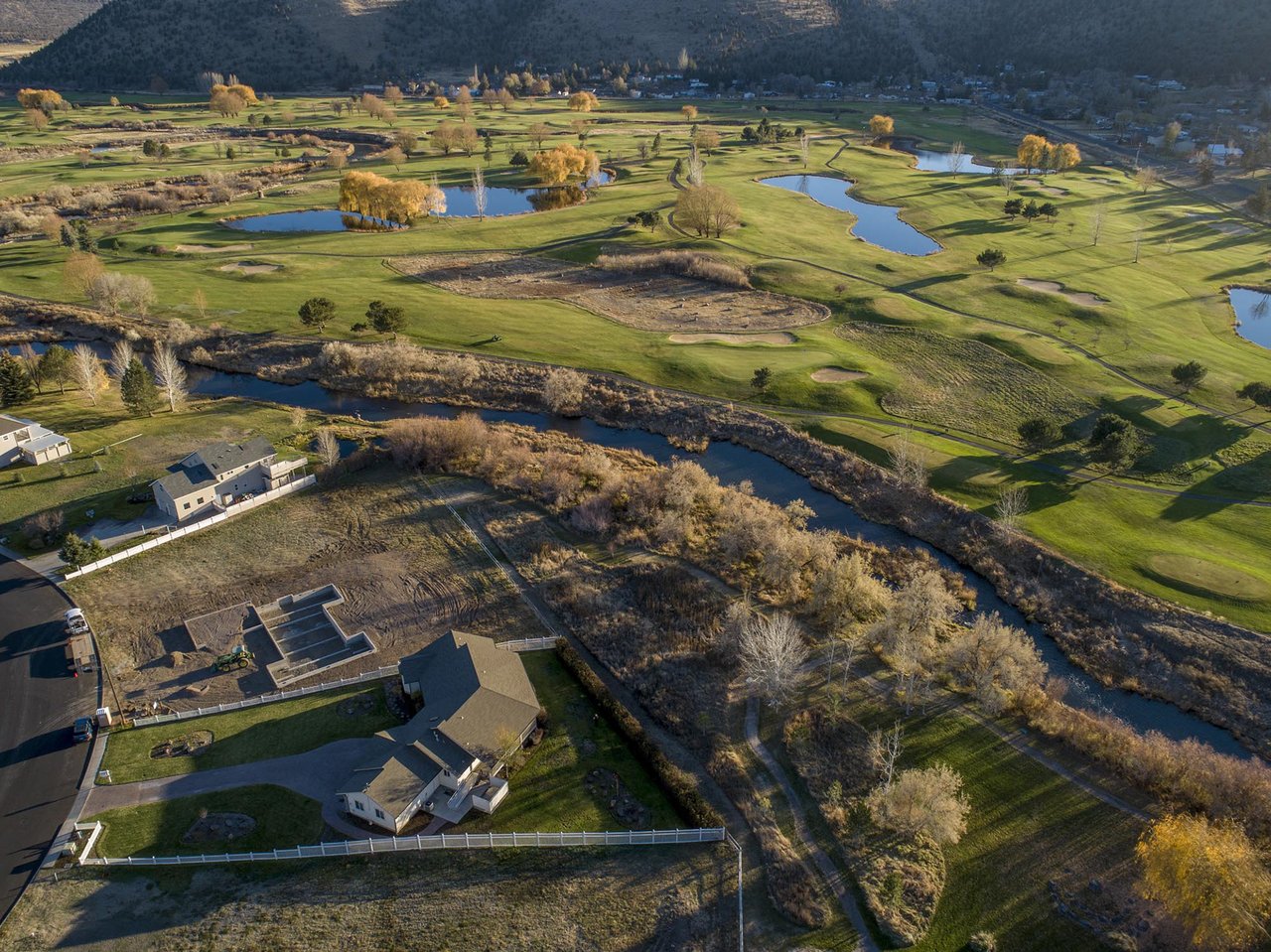
Two golf courses cemented the Butte's luxury status through the 1990s and early 2000s: Awbrey Glen on the northwestern flank and River's Edge at the eastern base. As Bend transitioned from a timber economy to an outdoor recreation destination, Awbrey Butte became the place to build the dream home — the rare address offering forested privacy, Cascade views, and a five-minute descent to a downtown dinner reservation.
Because Awbrey Butte is a standalone volcanic cone, the orientation of a specific property defines its entire visual character. This is one of the most important things buyers on the Butte need to understand — two homes half a mile apart can offer completely different worlds.
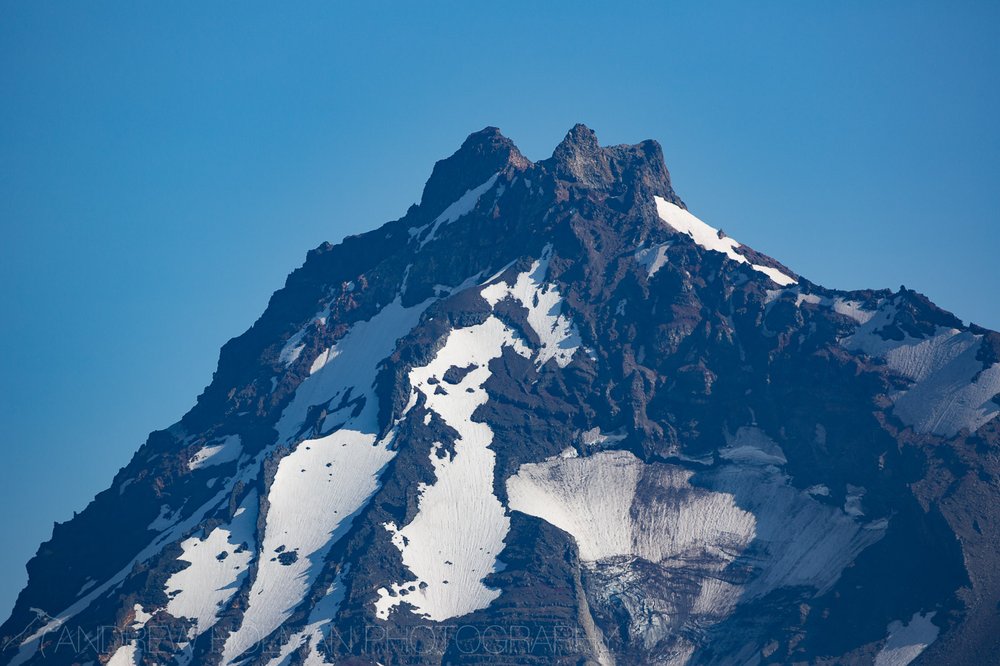
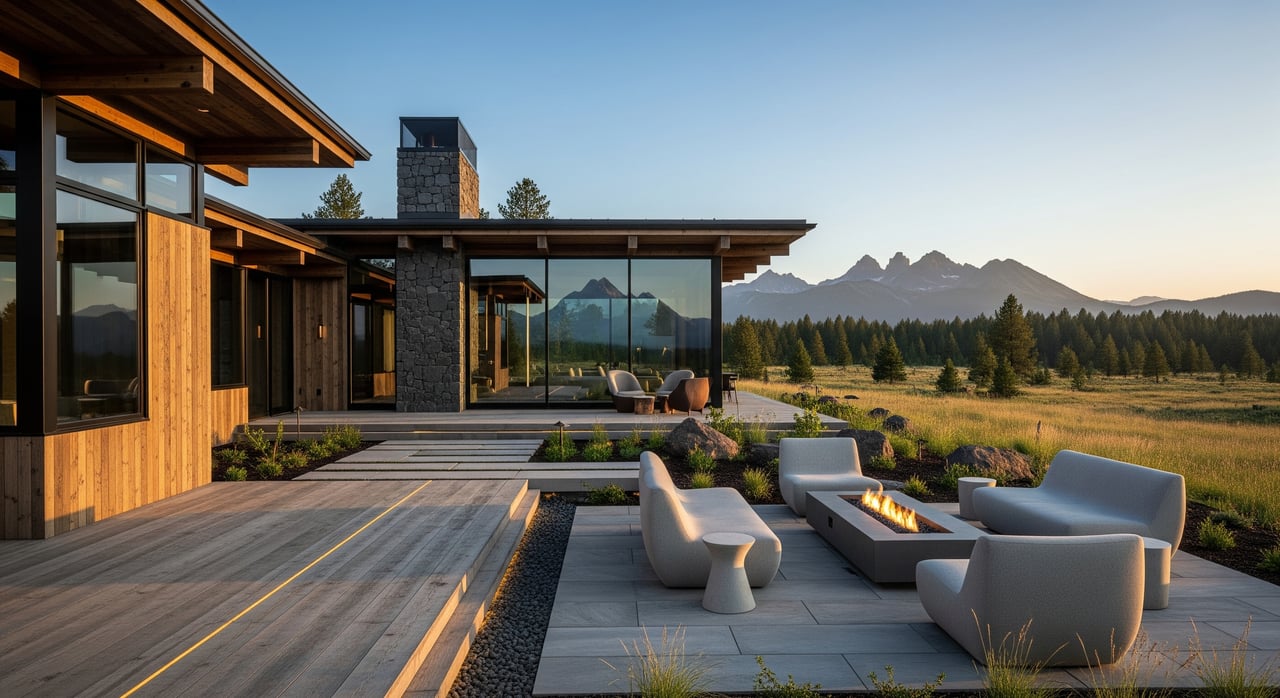
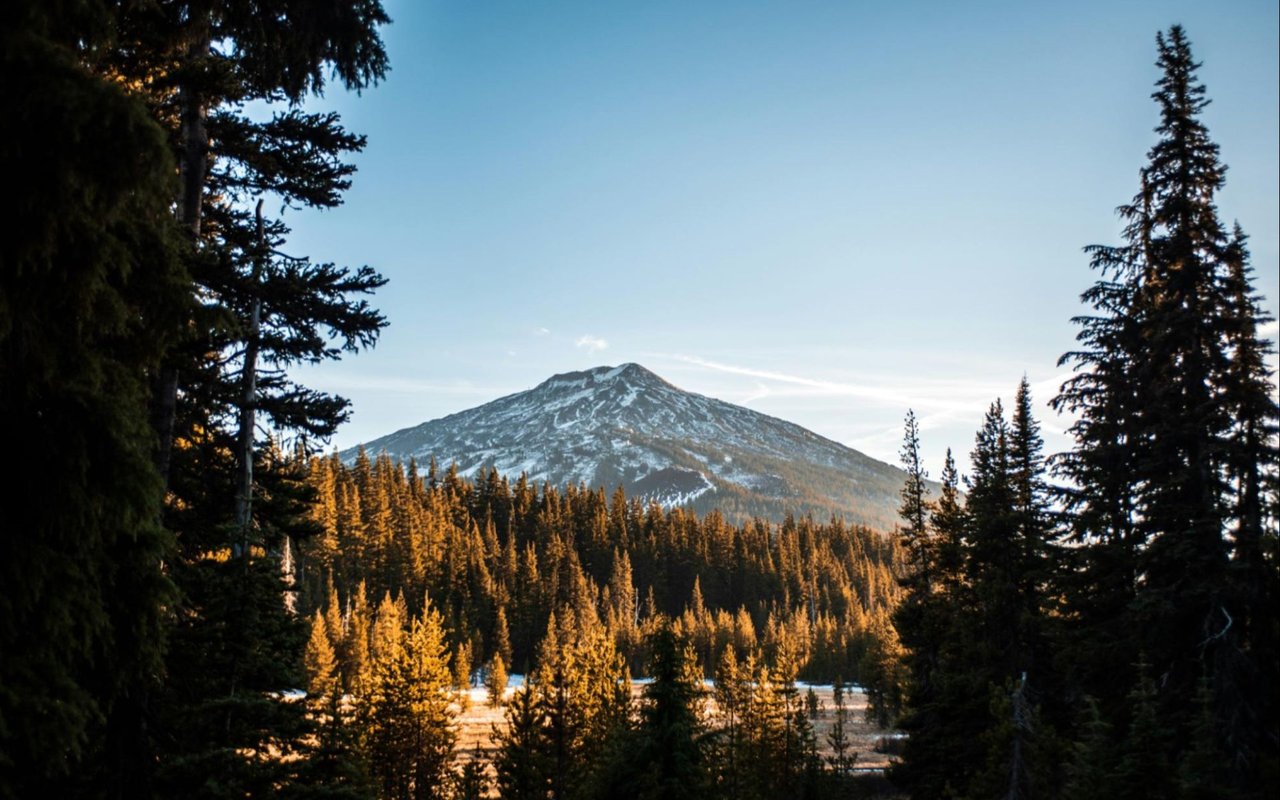
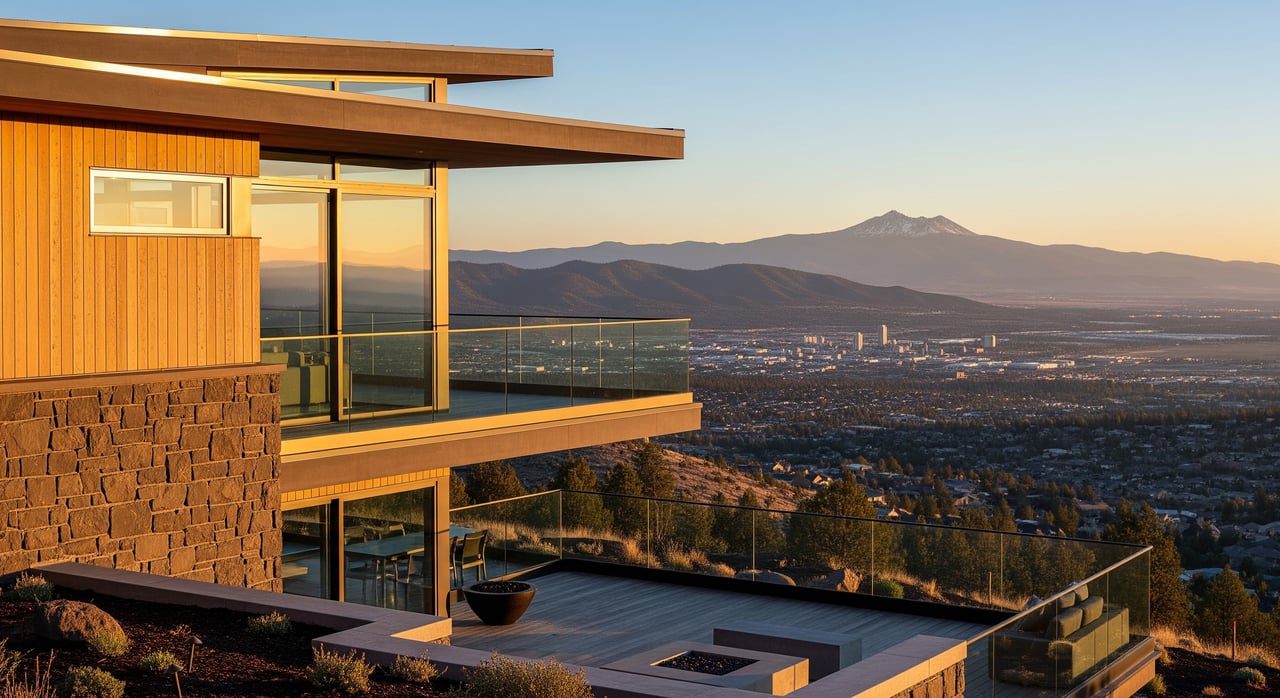
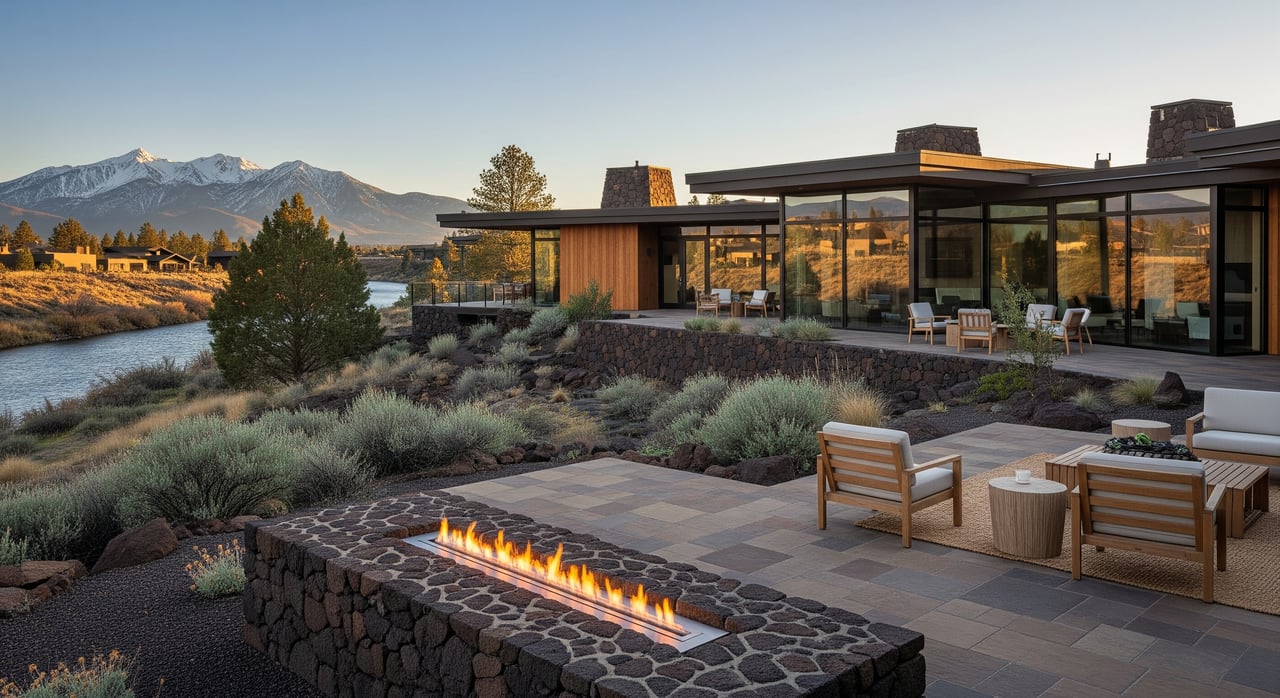
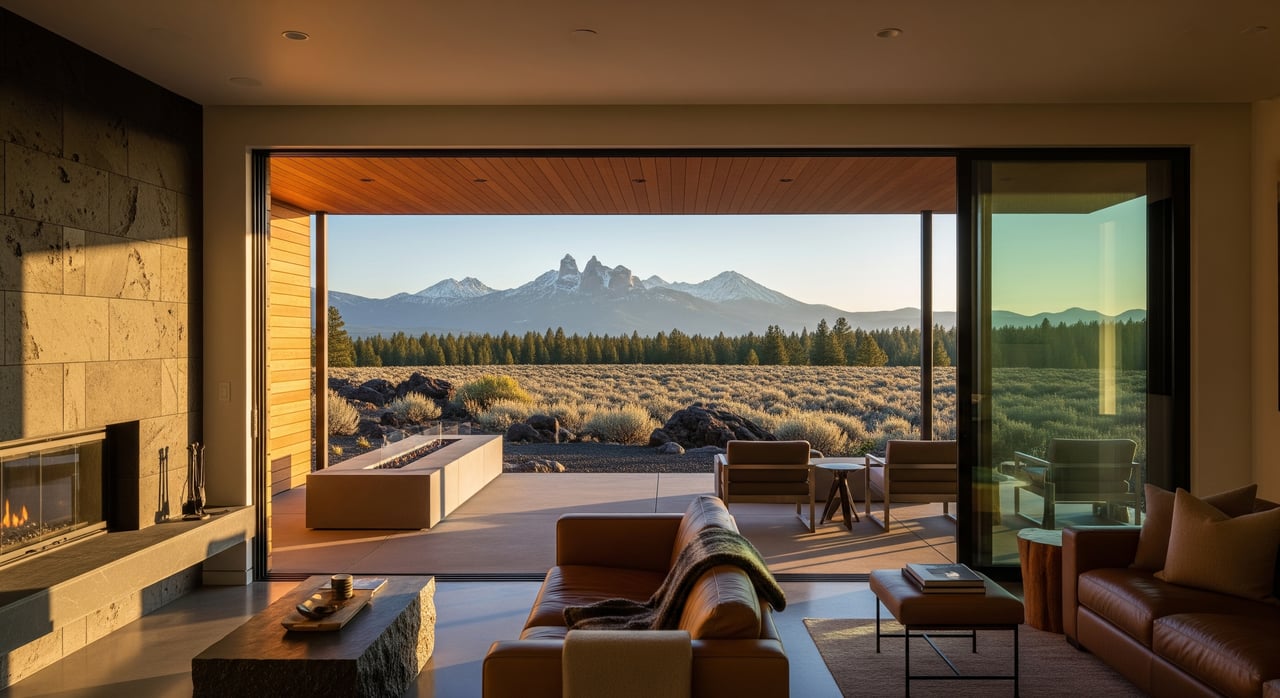
Properties on the western and southwestern ridges capture the classic postcard view: uninterrupted panoramas of Mt. Bachelor, Broken Top, the Three Sisters, Mt. Washington, and Mt. Jefferson lined up across the high-desert basin. Homes on the northern and eastern slopes look down into the Deschutes River canyon, where basalt rimrock walls glow at sunset and the river carves a dramatic bend far below. And properties facing south and southeast get a bird's-eye view of downtown Bend, the Old Mill District, and Pilot Butte, with the high desert stretching all the way to the Ochoco Mountains.
Yet for all that sense of altitude and remoteness, the Butte's practical geography is remarkable. Mt. Washington Drive and Archie Briggs Road connect the hillside directly into Bend's arterial network, meaning residents can shift from total mountain seclusion to a West Side bistro, a river trail, or a grocery store in under 10 minutes.
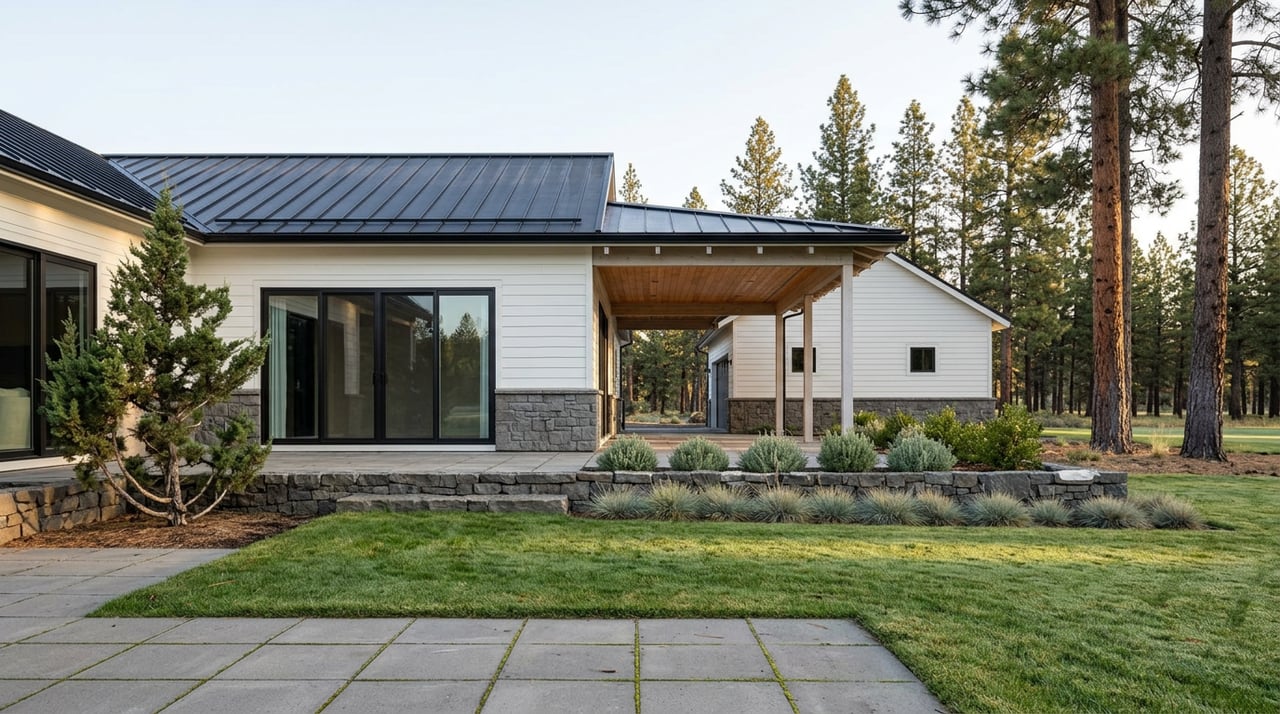
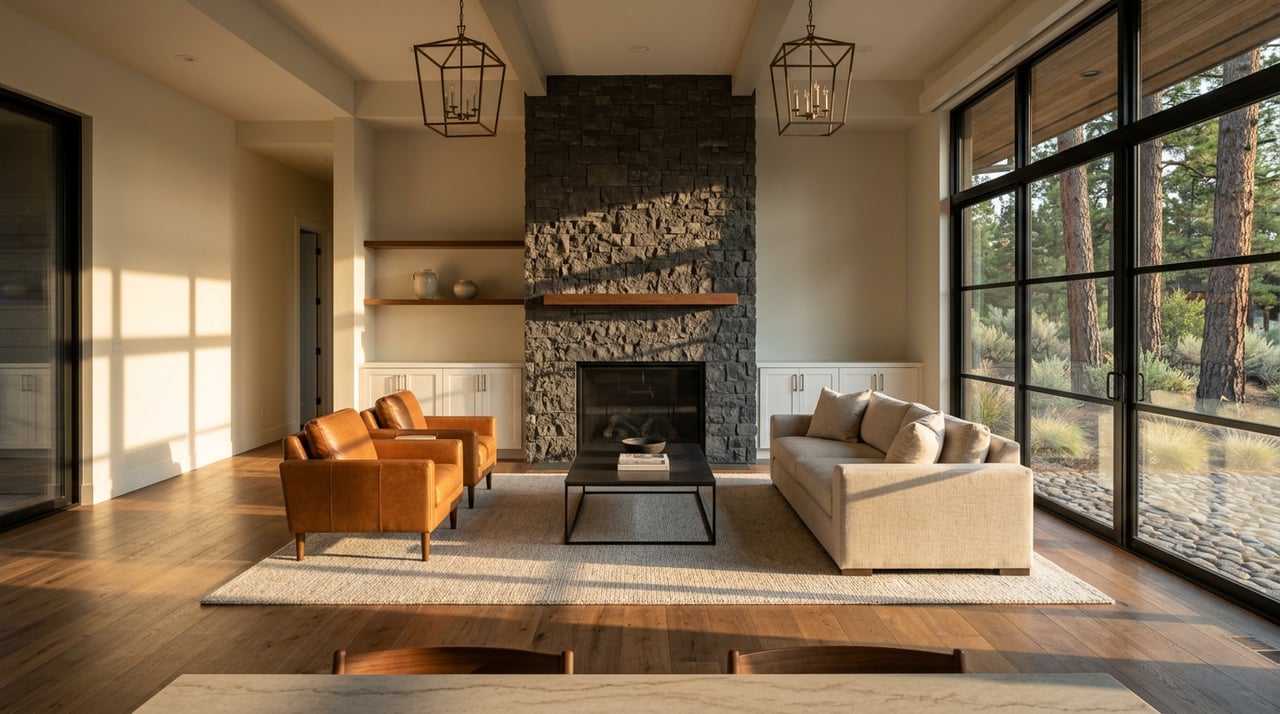
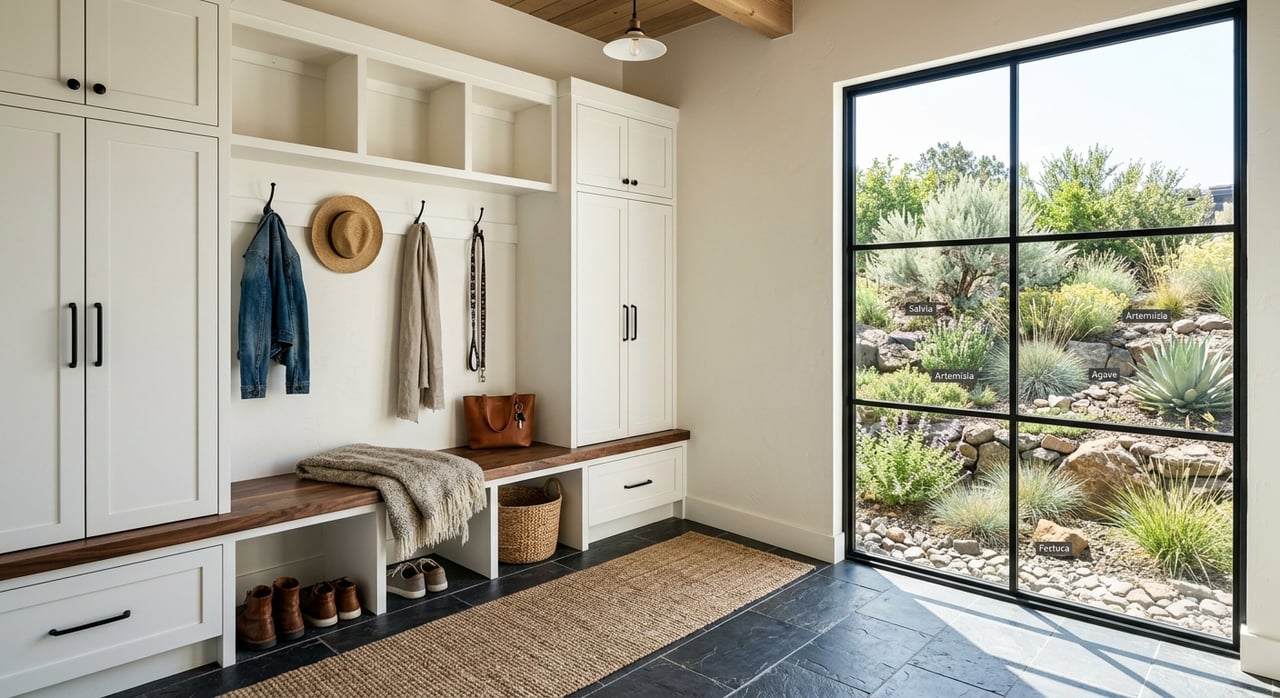
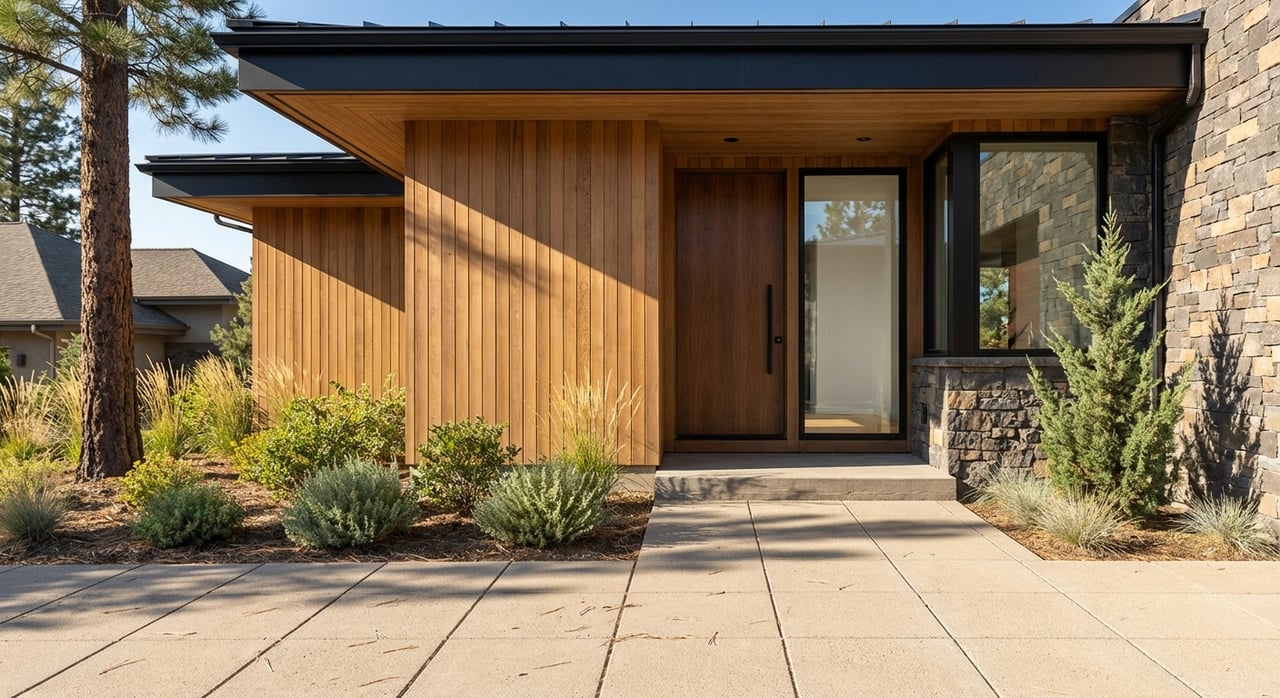
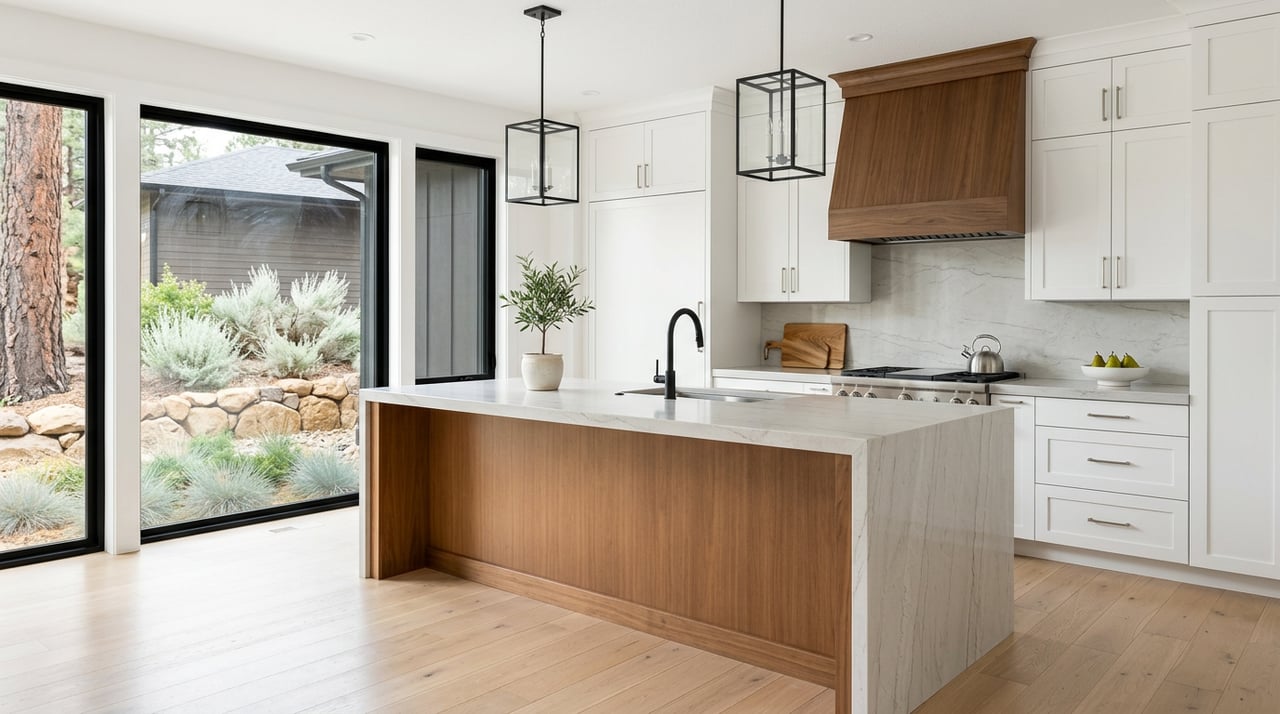
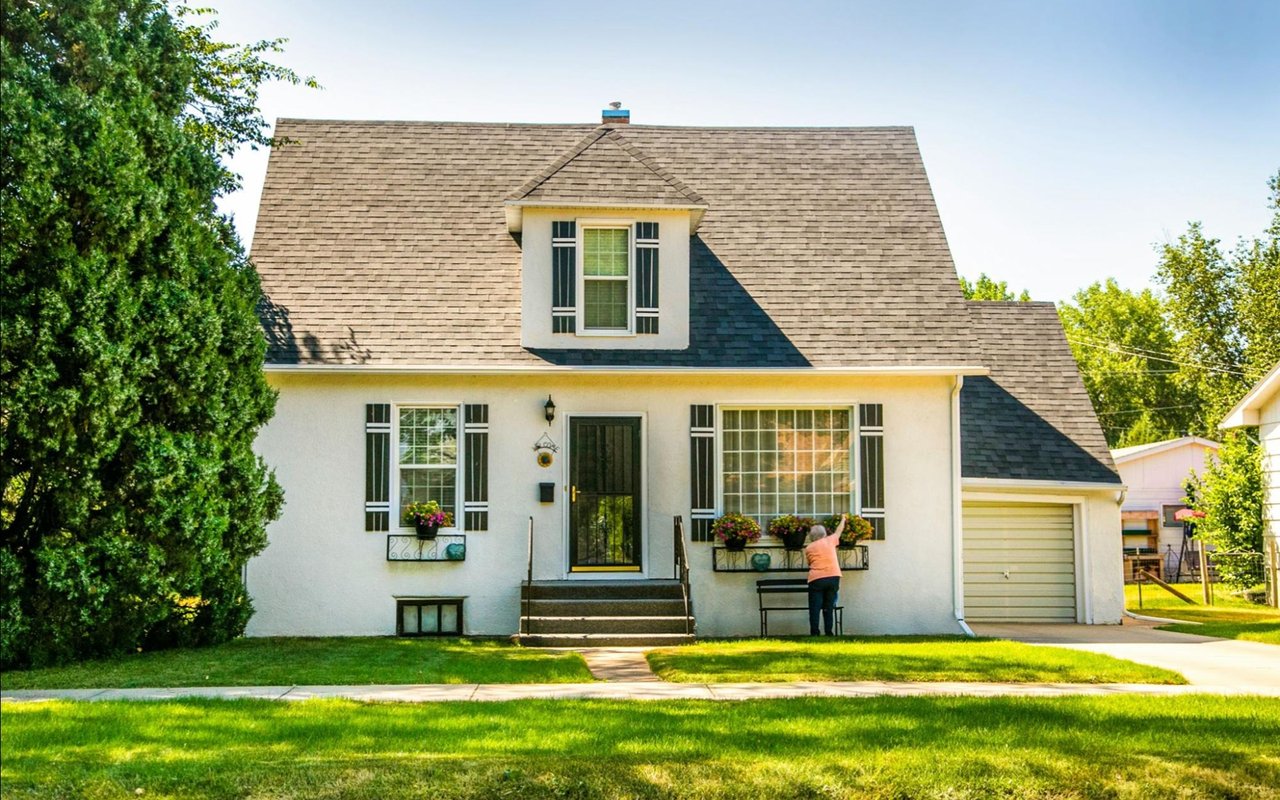
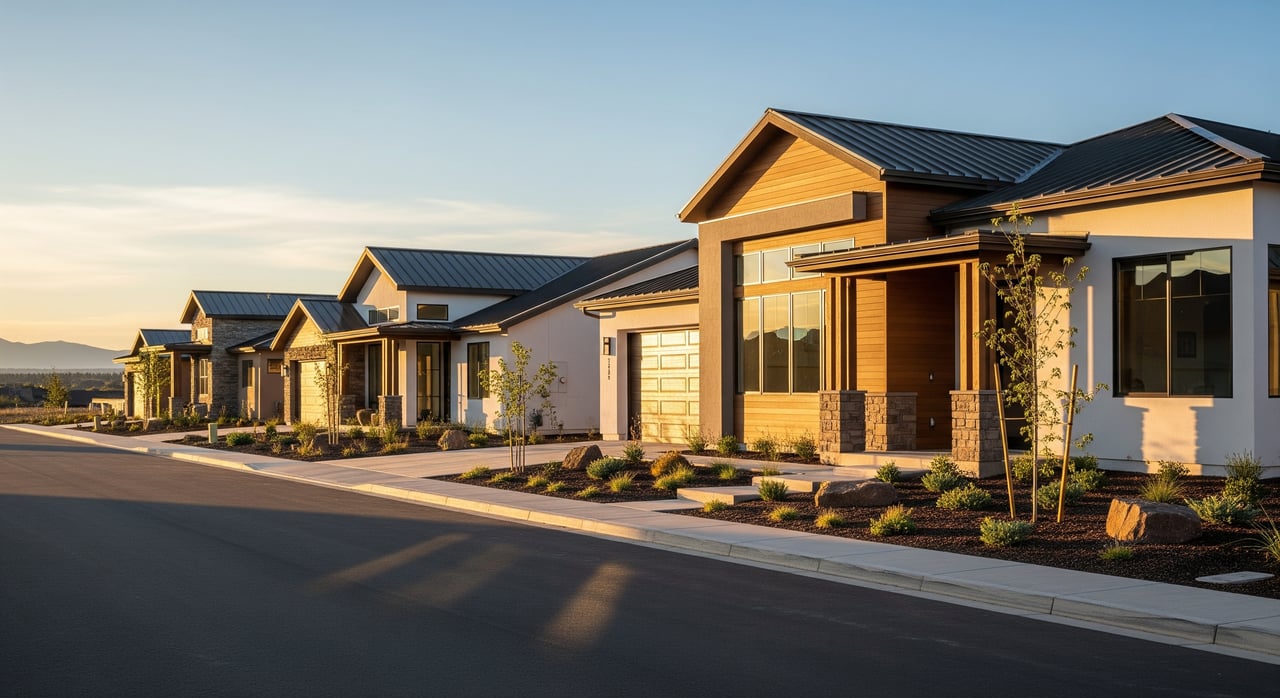
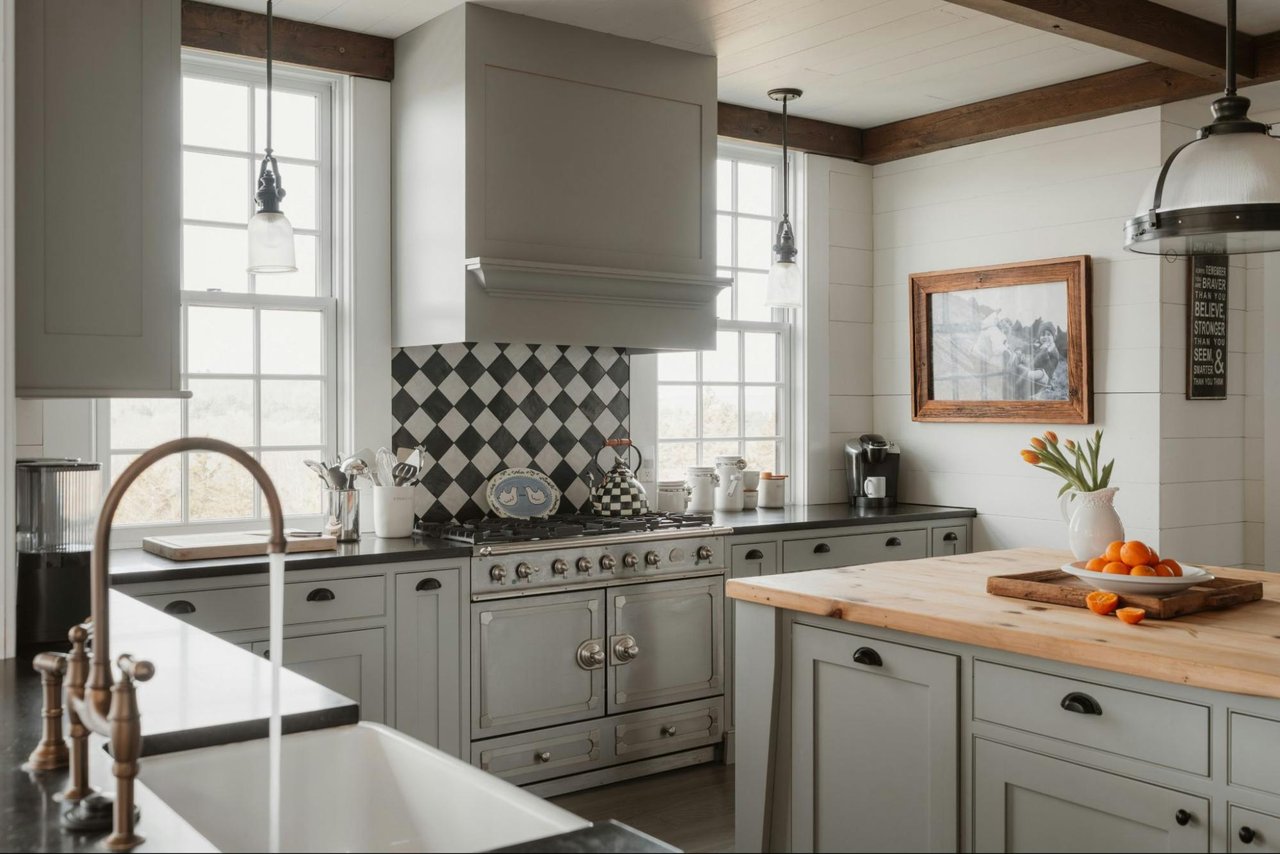
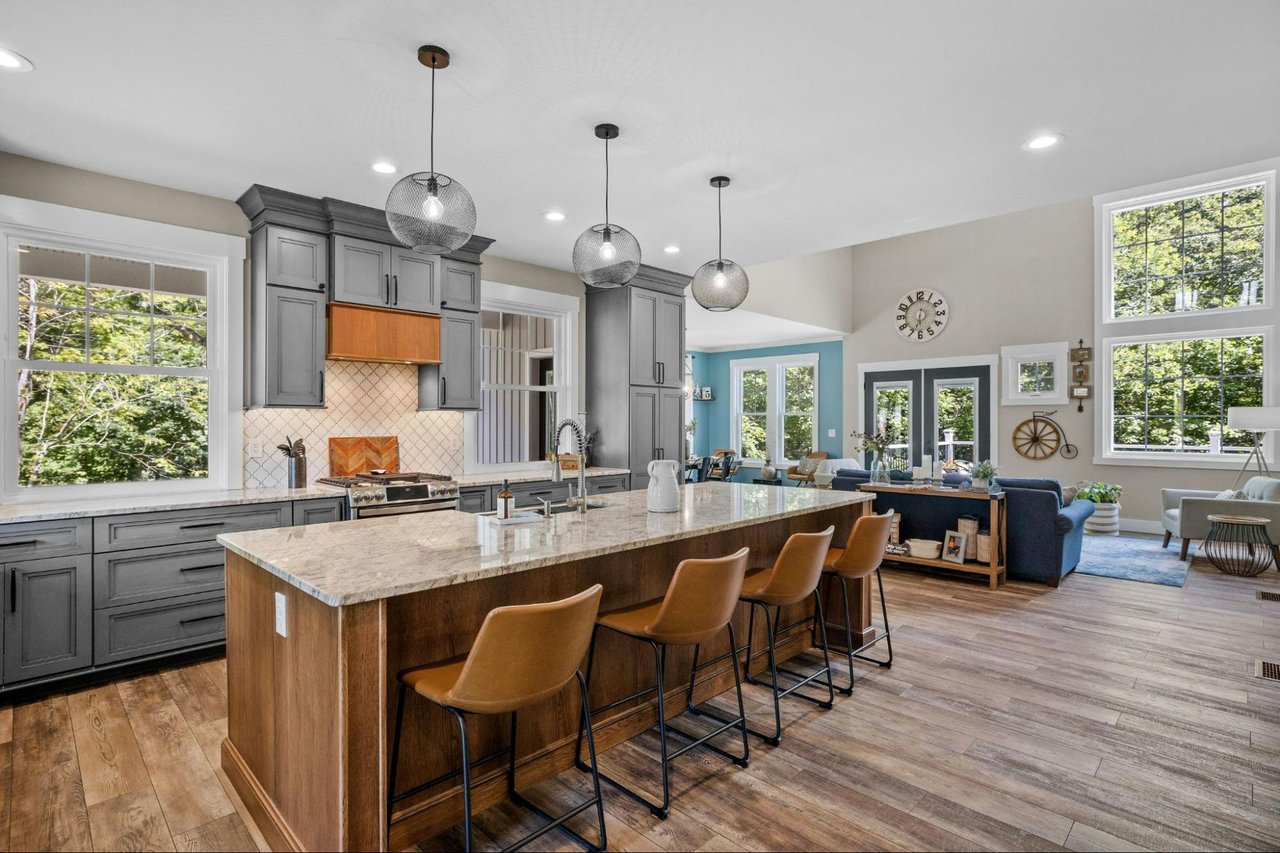
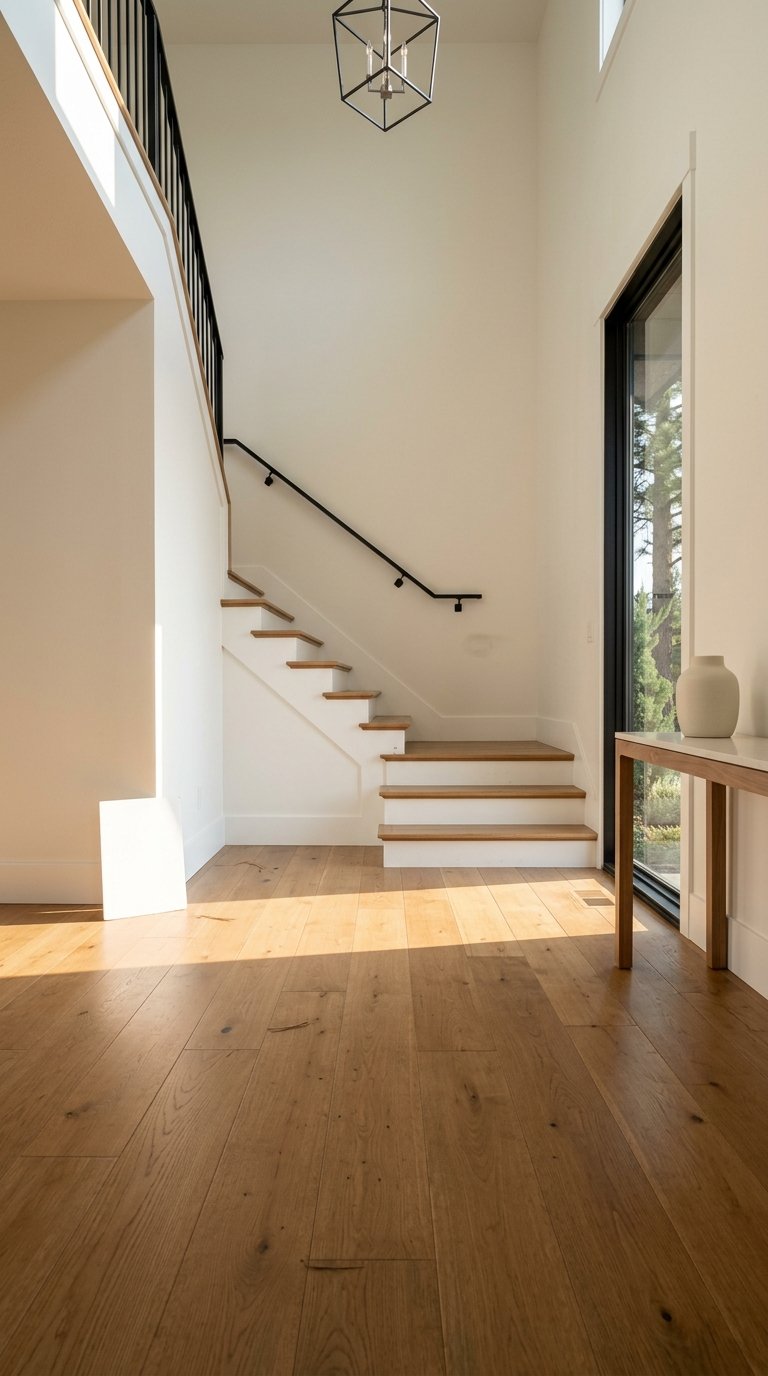
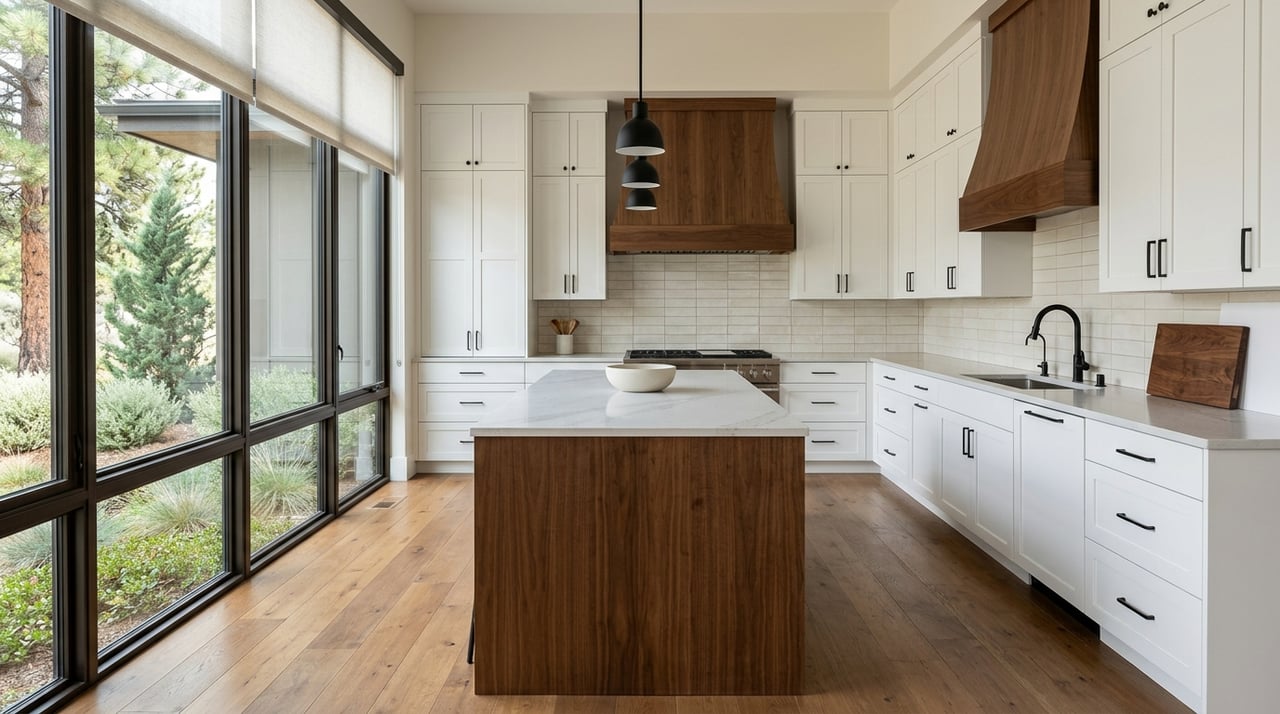
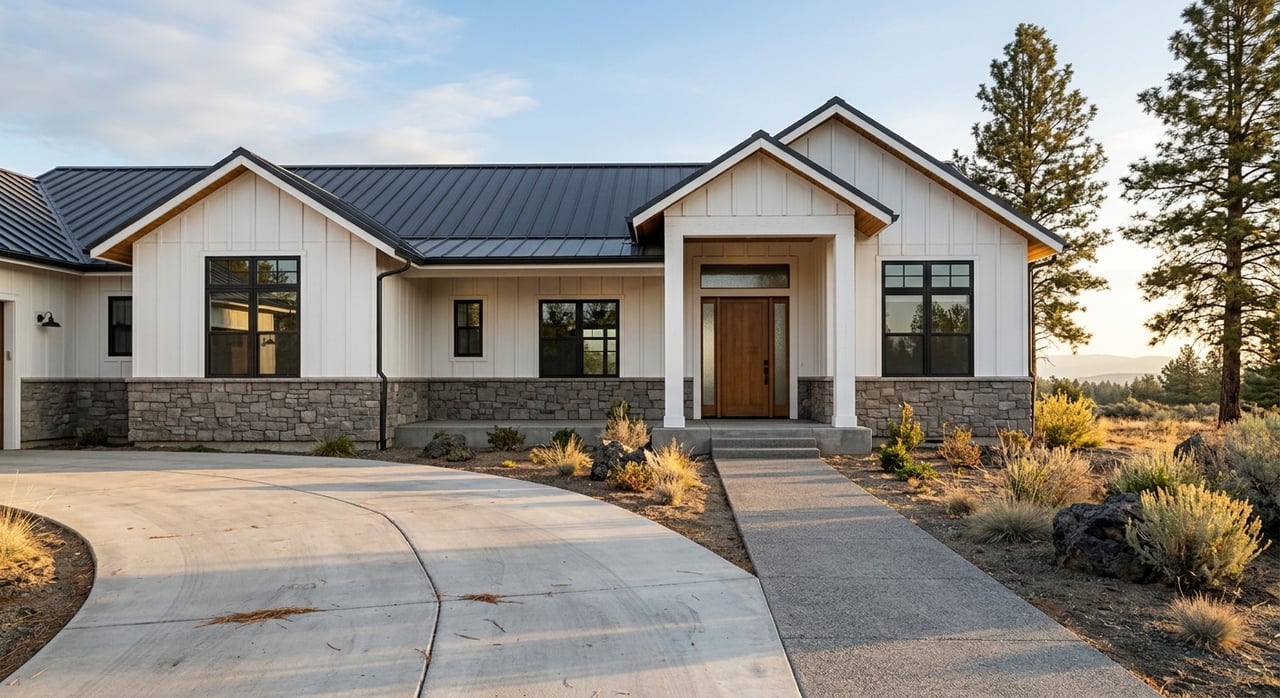
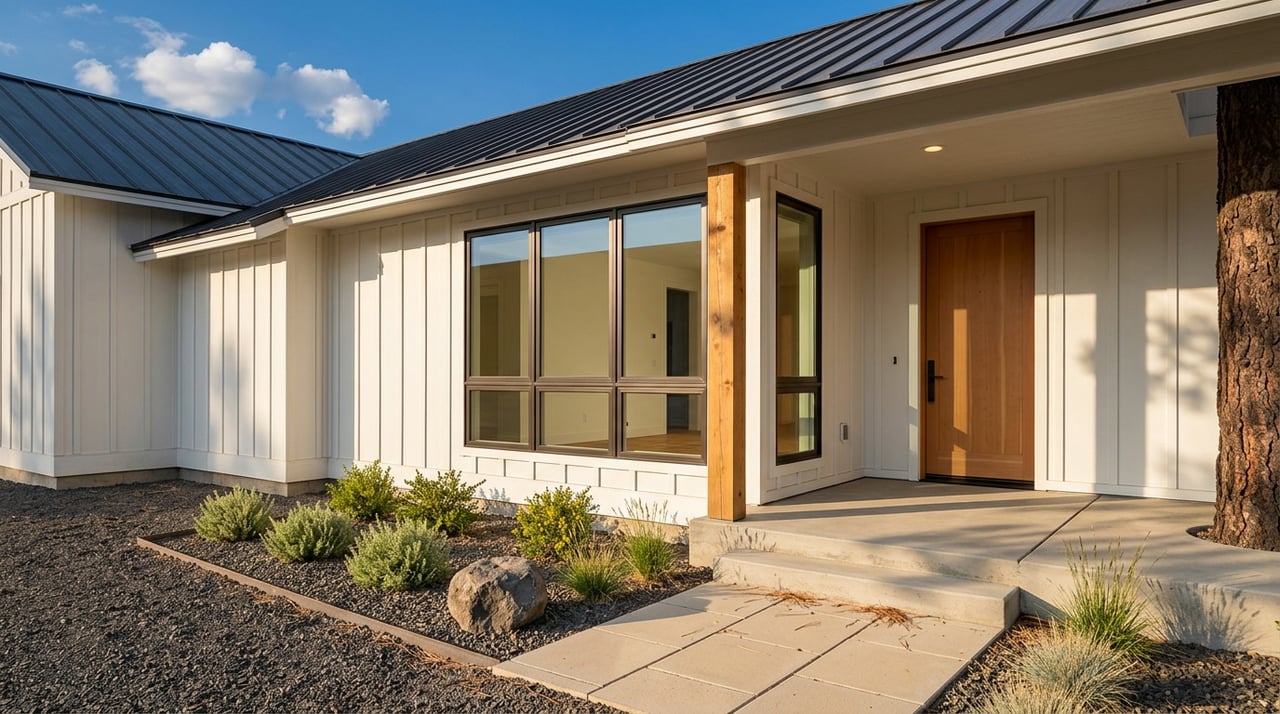
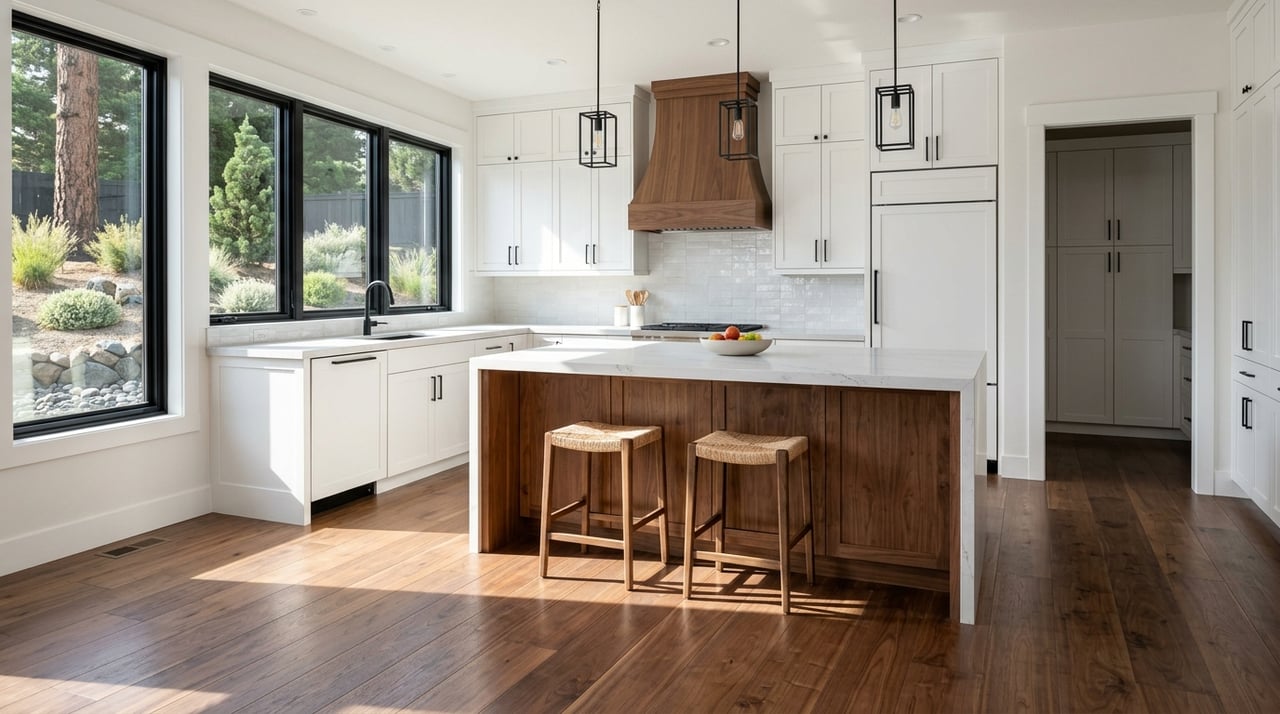
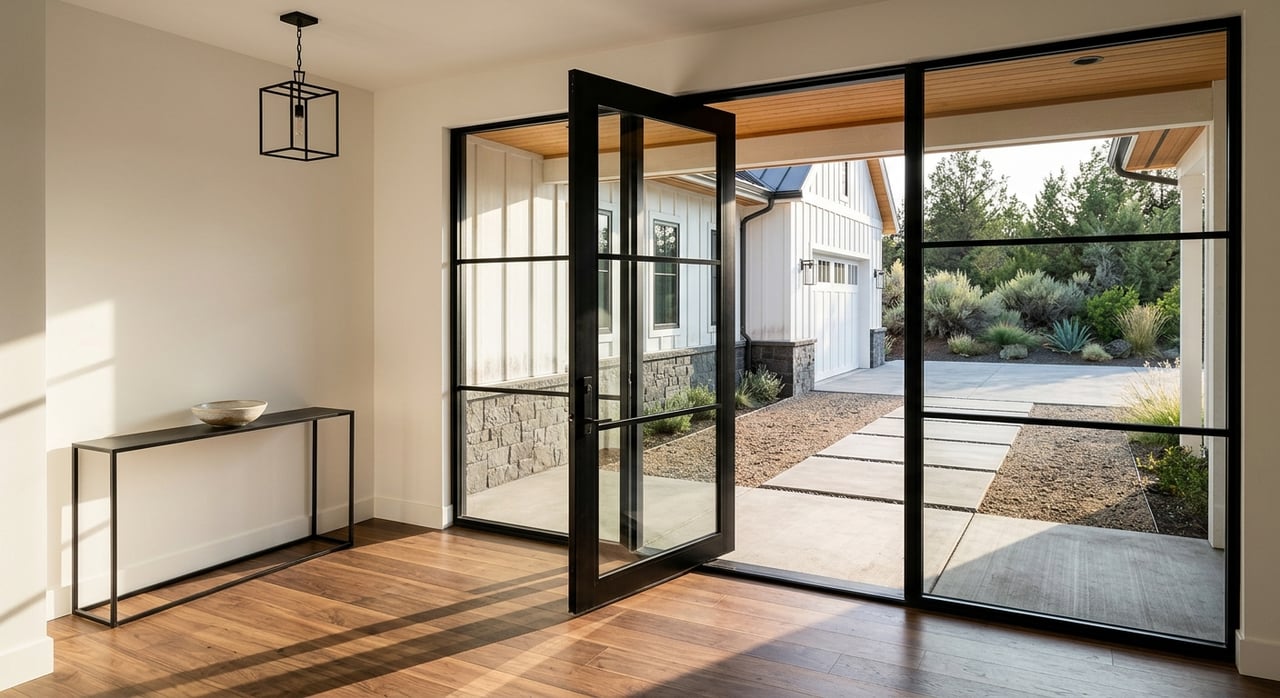
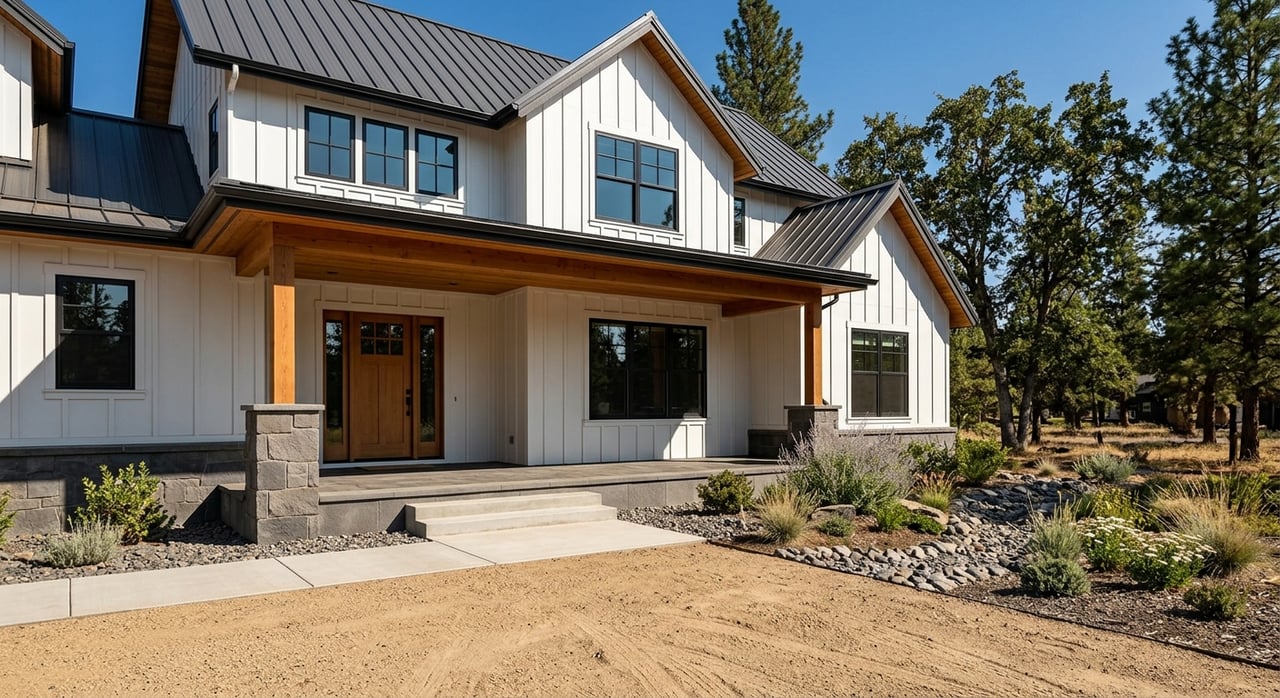
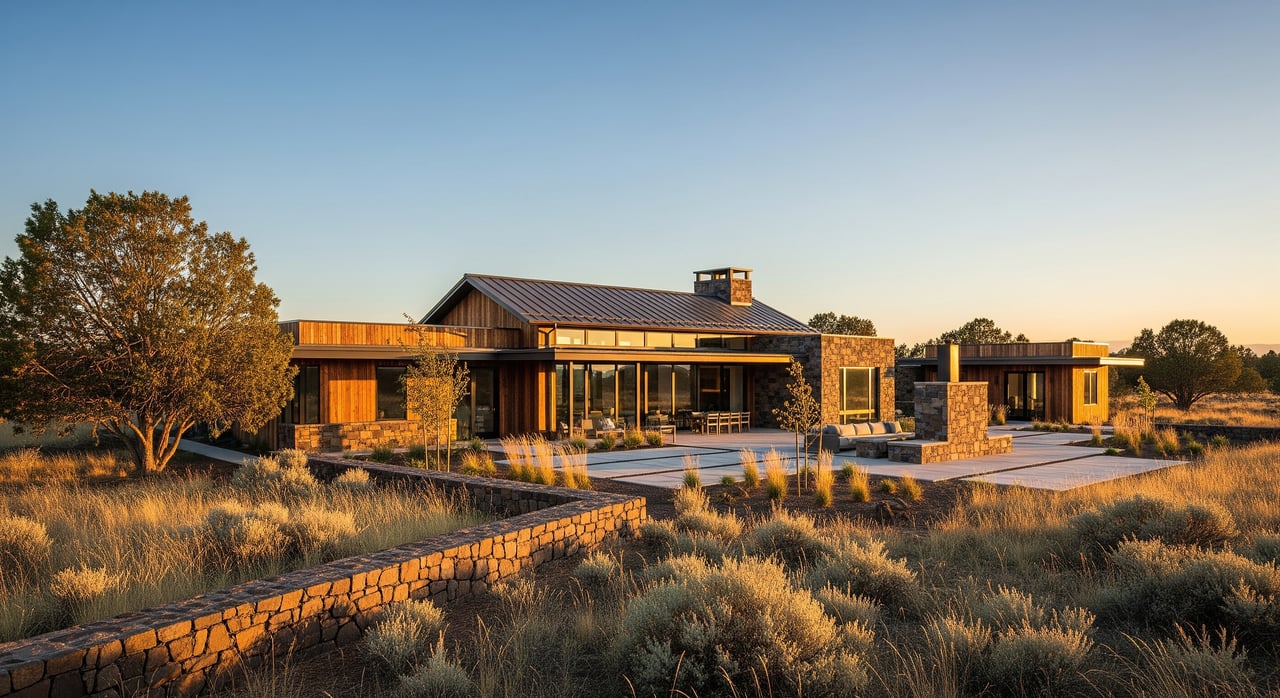
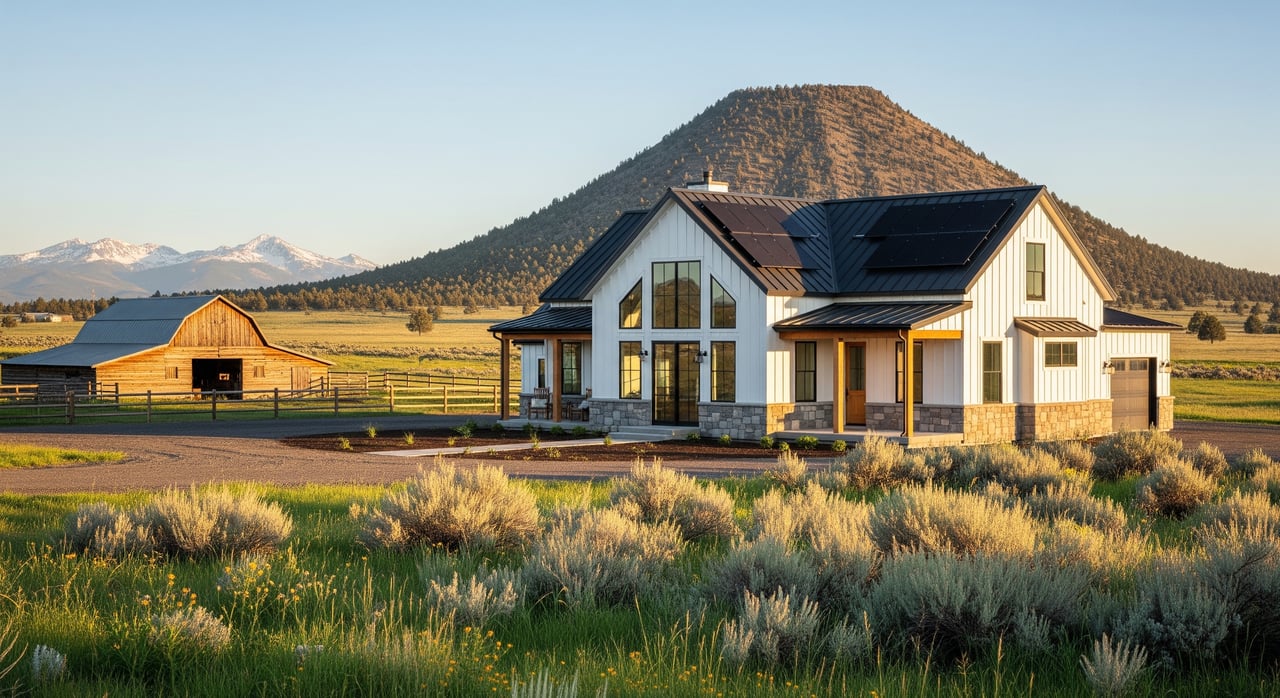
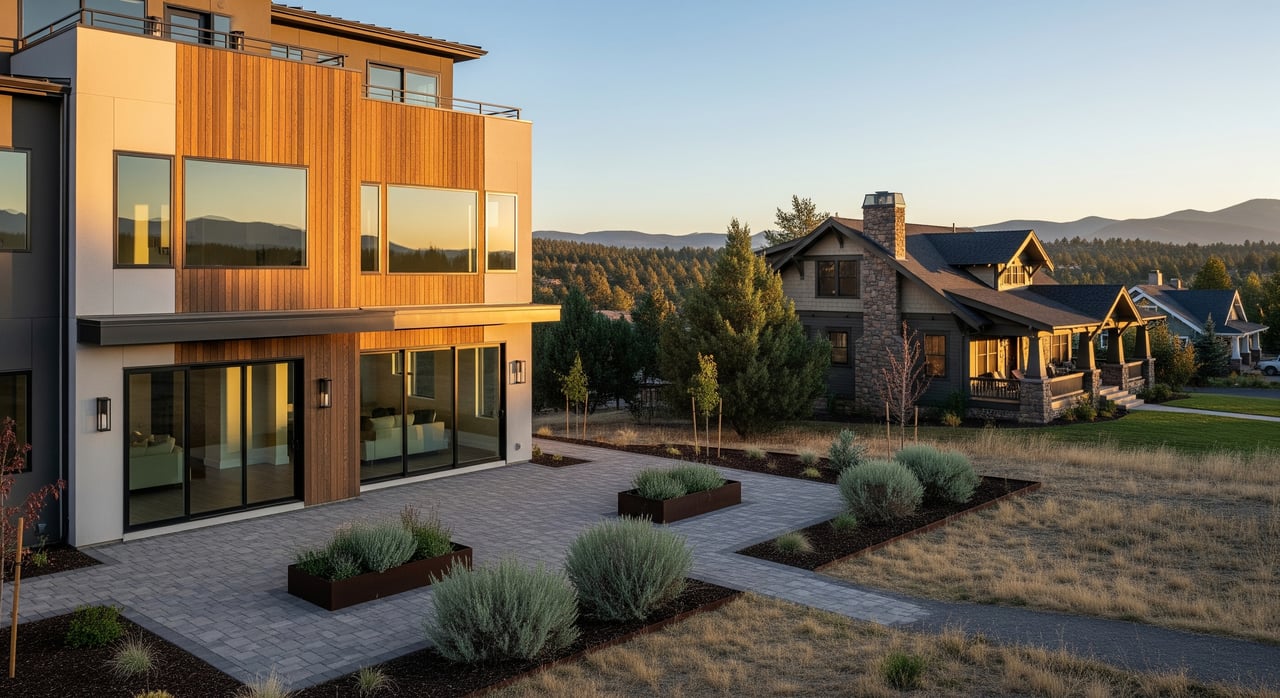
Awbrey Butte is one of Bend's most mature luxury submarkets, and its real estate profile reflects that. Because the neighborhood was built out via individual custom lot sales across several decades — rather than a single developer's cookie-cutter blueprint — the housing stock is genuinely diverse. Pacific Northwest Contemporary homes with floor-to-ceiling glass sit near classic Craftsman builds from the 1990s, which sit near ultra-modern new construction with steel frames and flat roofs. The through-line isn't a style; it's quality, materials, and thoughtful integration with the landscape.
Pricing on the Butte is heavily stratified by two variables: square footage and the presence of a true Cascade view. While Bend's citywide median hovers around $725,000 to $795,000, the Butte demands a premium. The table below is one of the few places in this guide where the data genuinely warrants a visual breakdown:
Market Segment | Price Range | What You Get |
|---|---|---|
Entry-Level Butte | $650,000 – $900,000 | Older townhomes, updated golf-course villas near the bases of Awbrey Glen or River's Edge, and smaller 1980s single-family homes without premium mountain views. |
The Sweet Spot | $1,000,000 – $1,600,000 | Generous custom family homes in the 2,500–3,500 sq. ft. range, partial mountain views, wooded private lots, and high-end interior finishes. |
Luxury / View Estates | $1,700,000 – $4,000,000+ | Elite ridge-line estates with sprawling floor plans, private acreage, luxury outdoor entertaining zones, and uninterrupted multi-peak Cascade panoramas. |
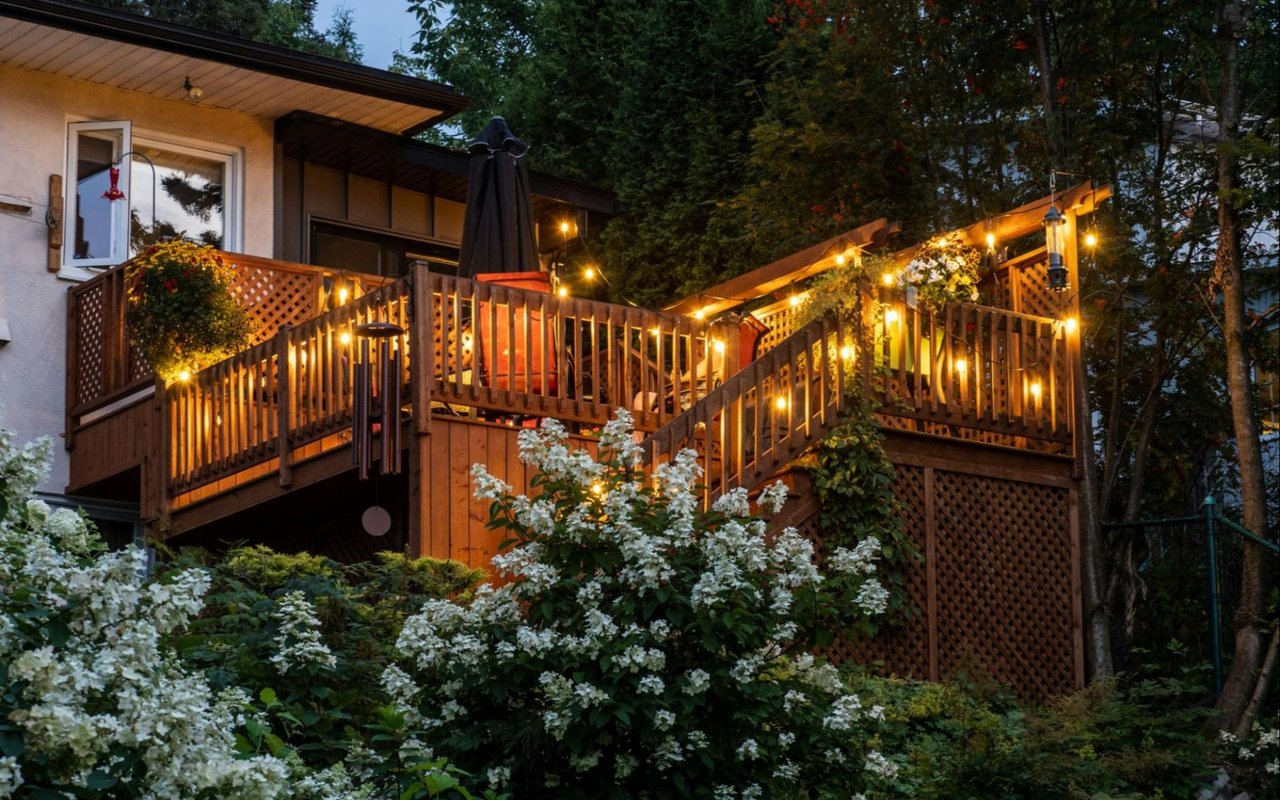
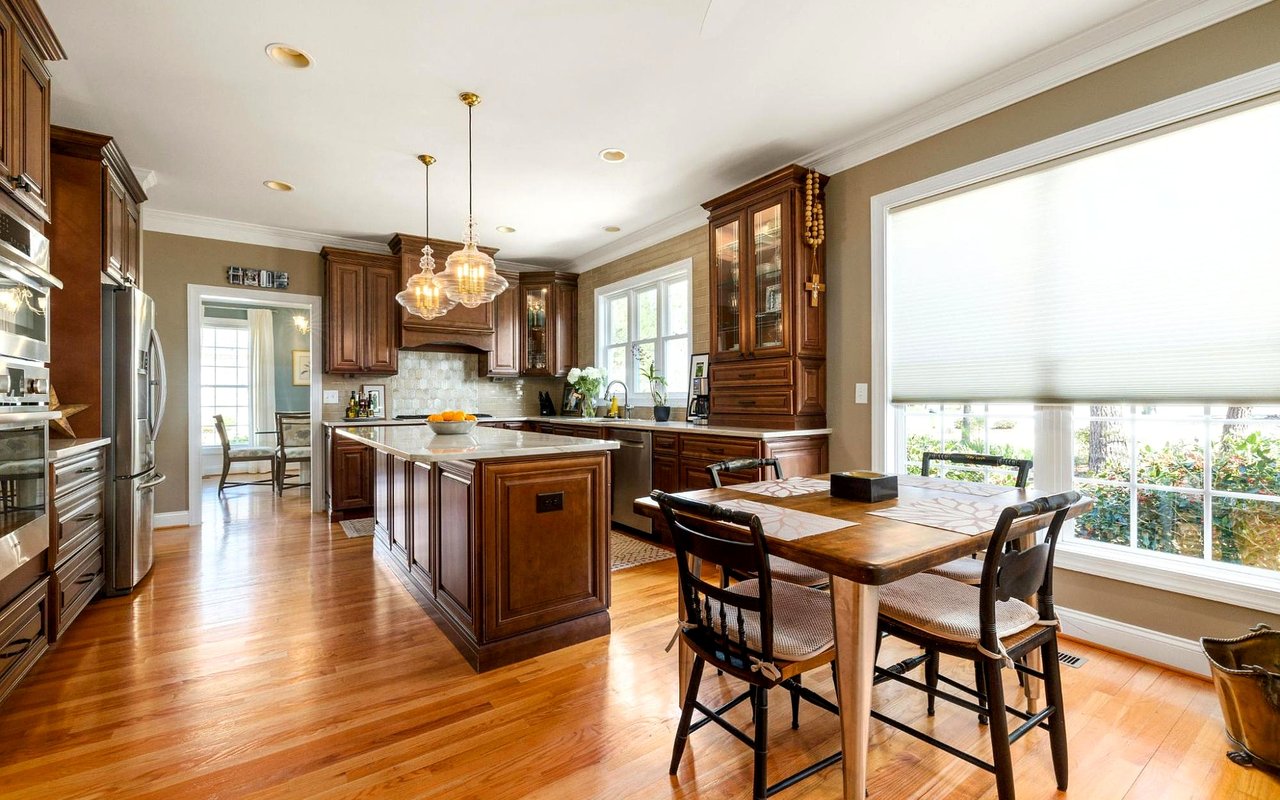
Beyond price, buyers should walk into a Butte transaction with a few realities in mind. Dramatic topography is the norm — expect daylight basements, multi-level living, tiered decking, and steep, winding driveways that require real winter maintenance. The Awbrey Butte Homesites Owners Association enforces meaningful architectural and environmental guidelines covering exterior paint, roofing materials, tree removal, and wildfire defensible space, all of which protect long-term property values but require compliance. On the positive side, mature ponderosa pines create a level of privacy that simply cannot be replicated in Bend's newer developments — and the current market has enough balance that buyers often find meaningful room to negotiate on inspection items and pricing.
Driving Awbrey Butte's winding streets feels like touring an open-air gallery of Northwest custom design. The Architectural Review Committee doesn't dictate a single style — it protects the character of the hillside, ensuring homes respect the topography, preserve the pine canopy, and scale appropriately with their lots.
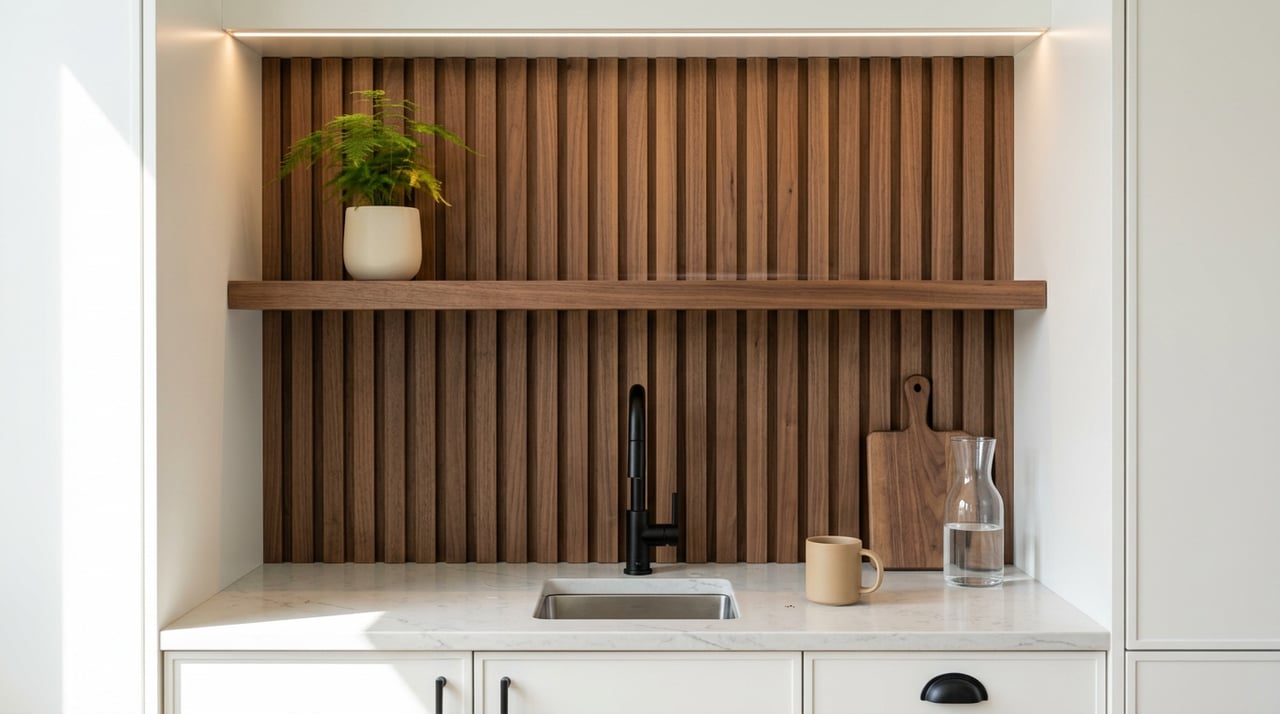
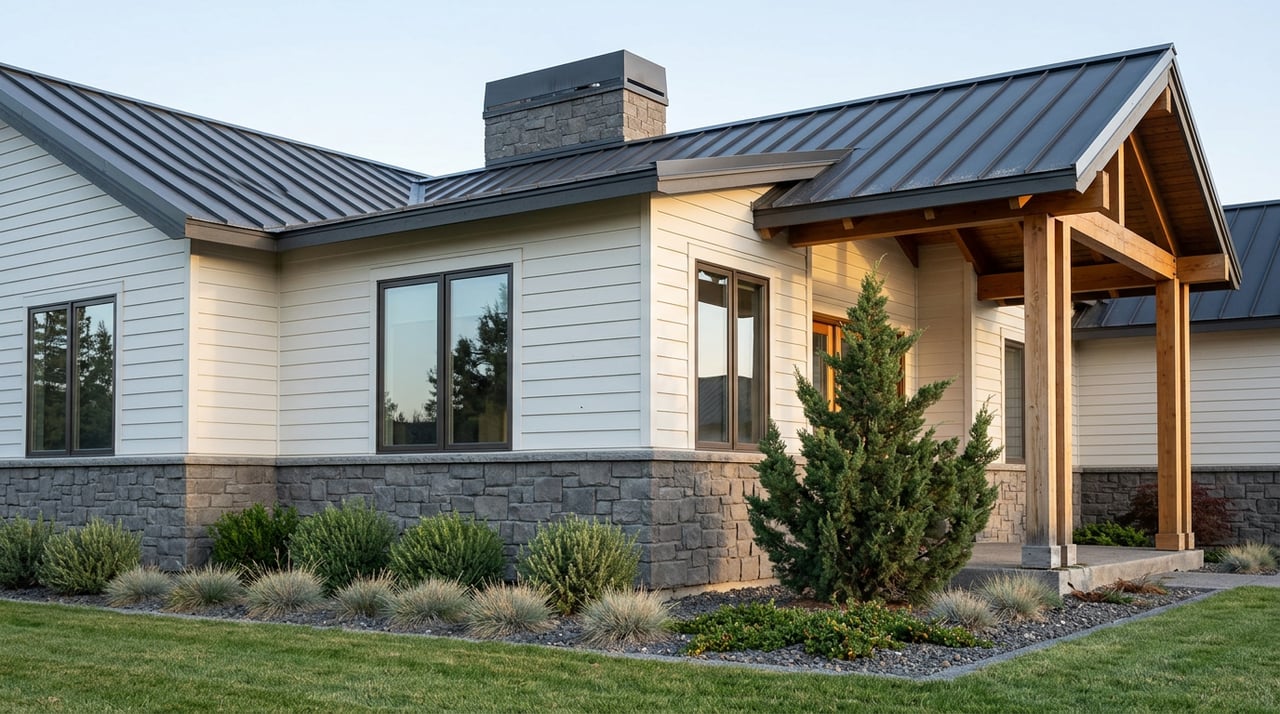
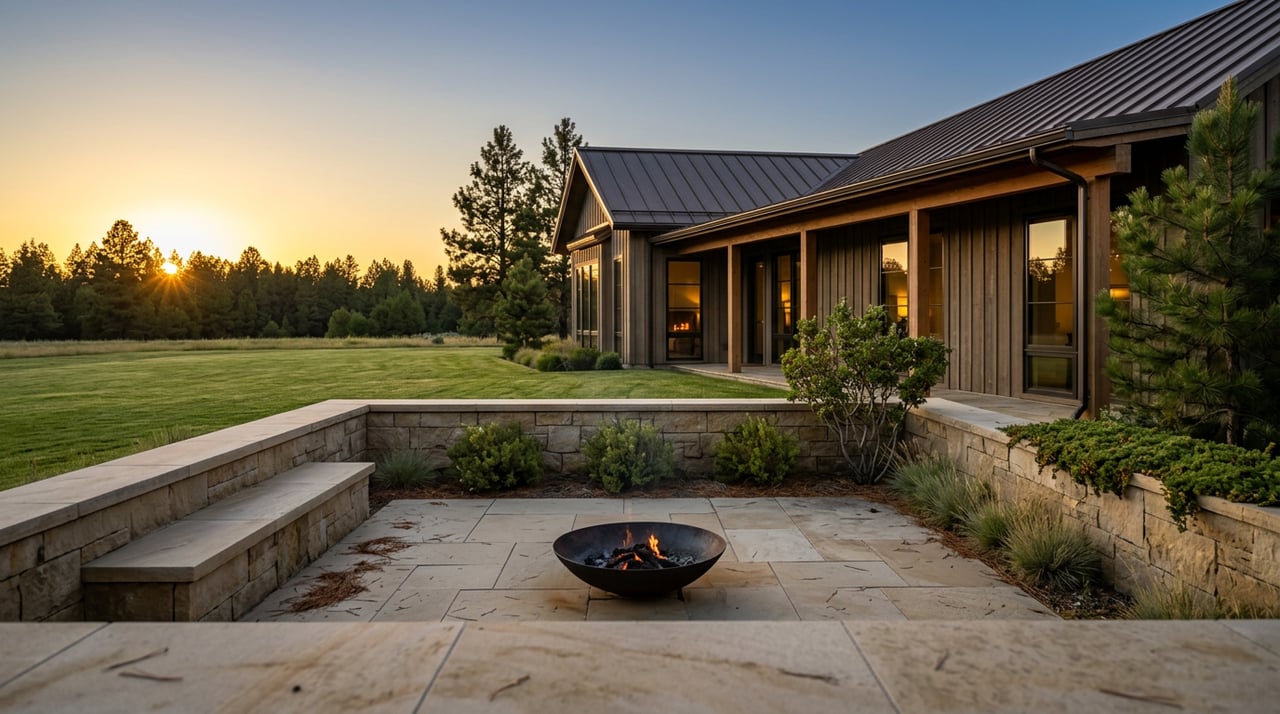
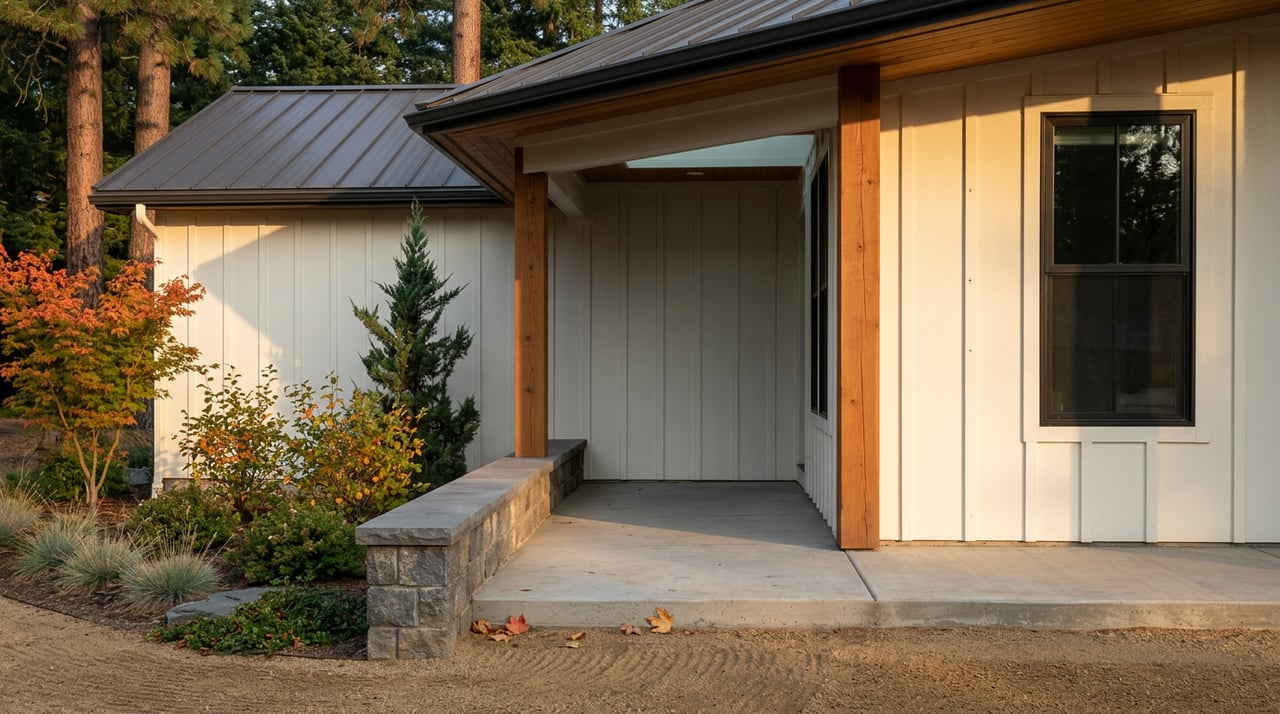
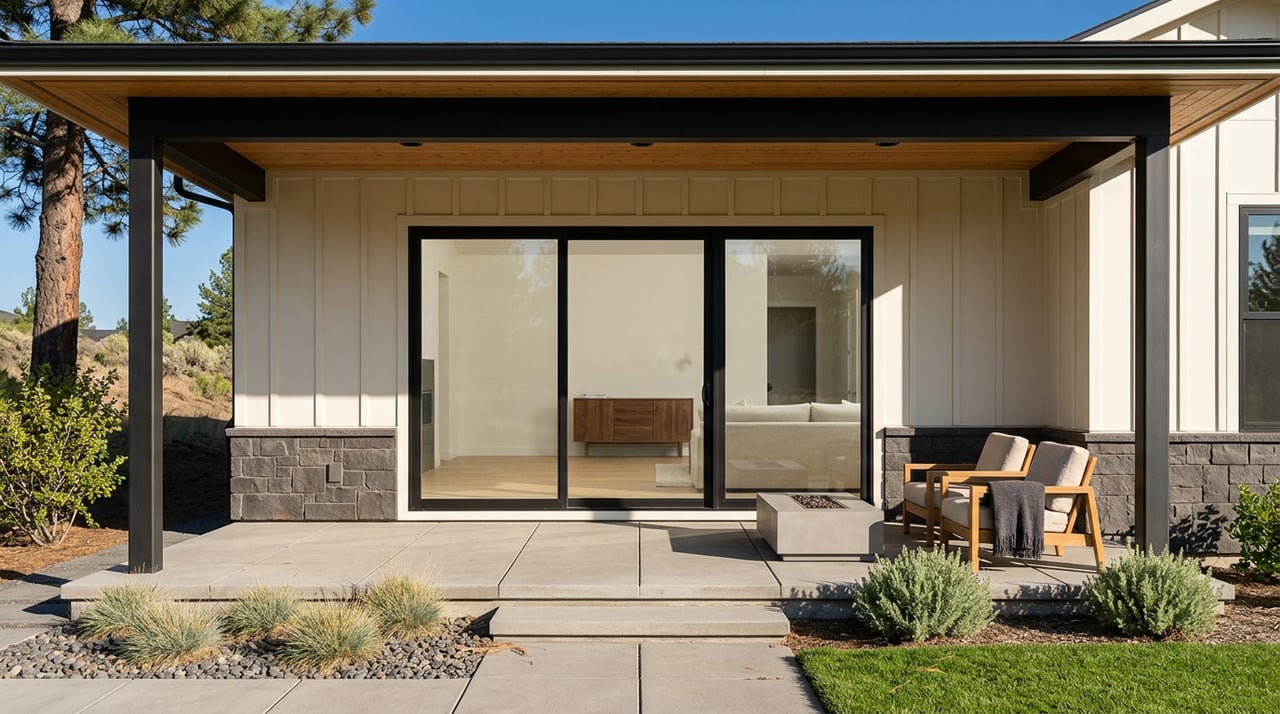
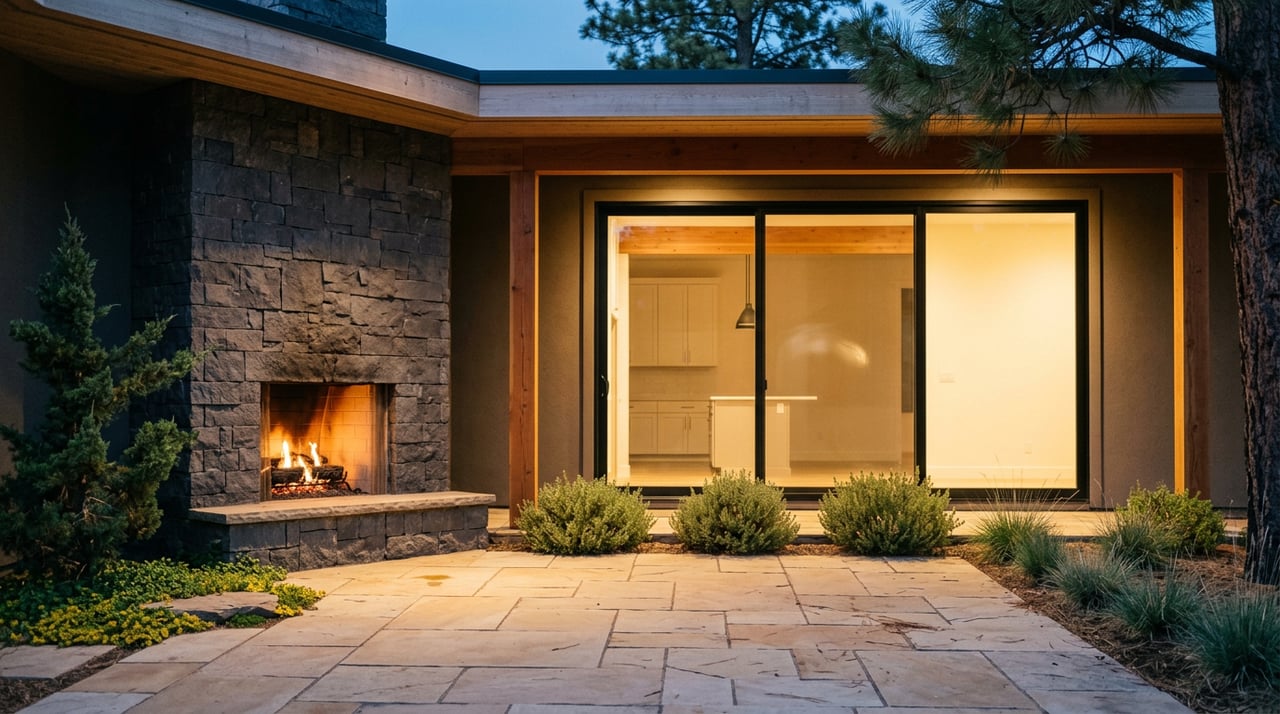
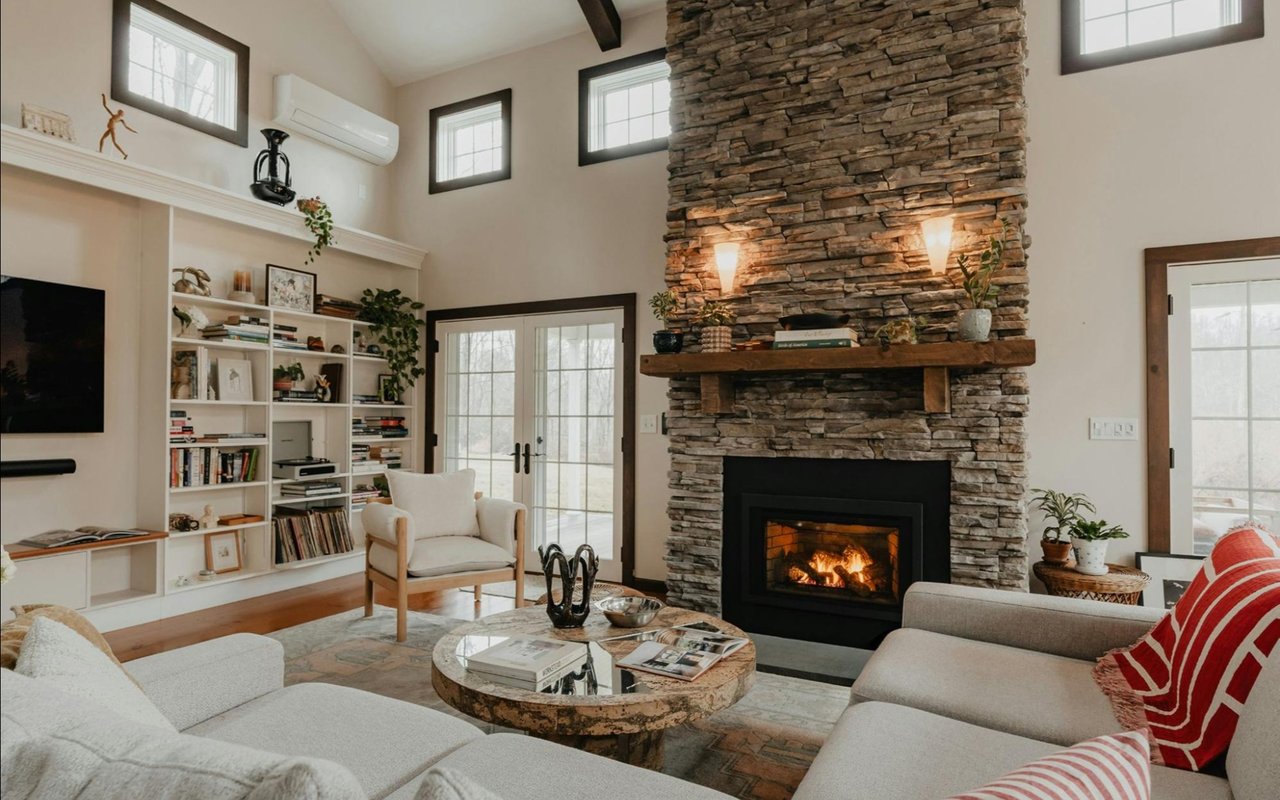
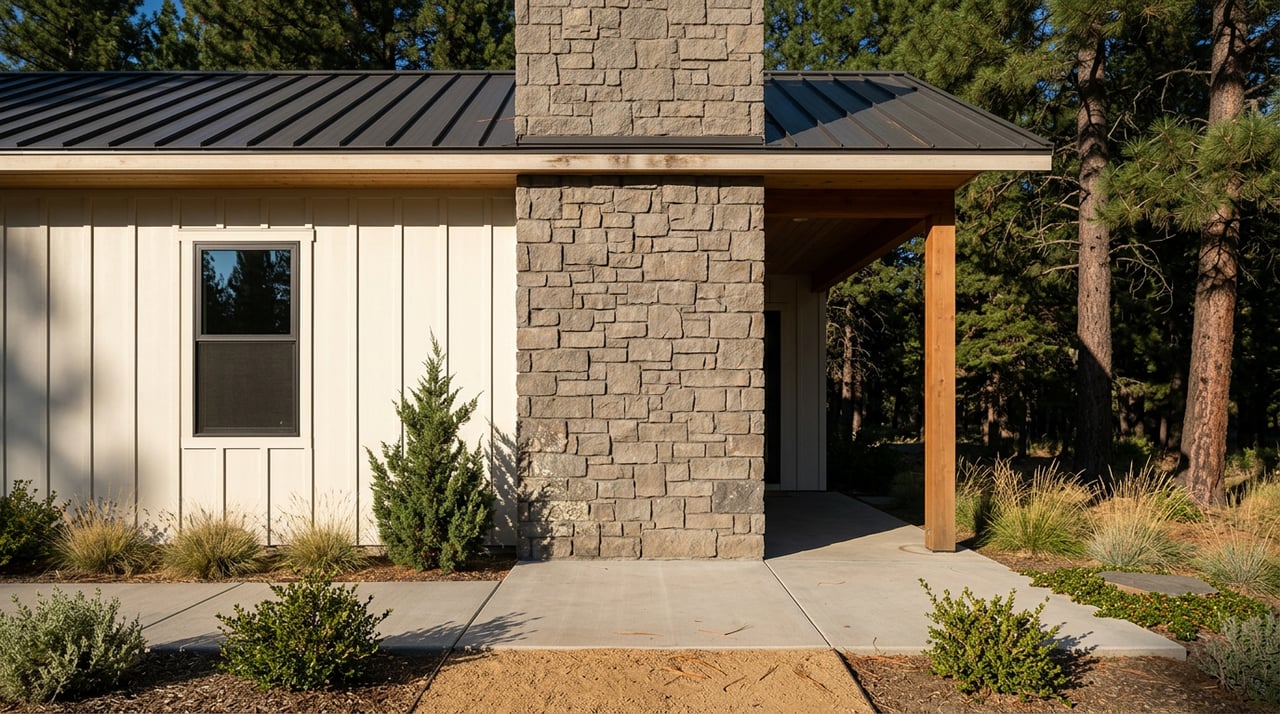
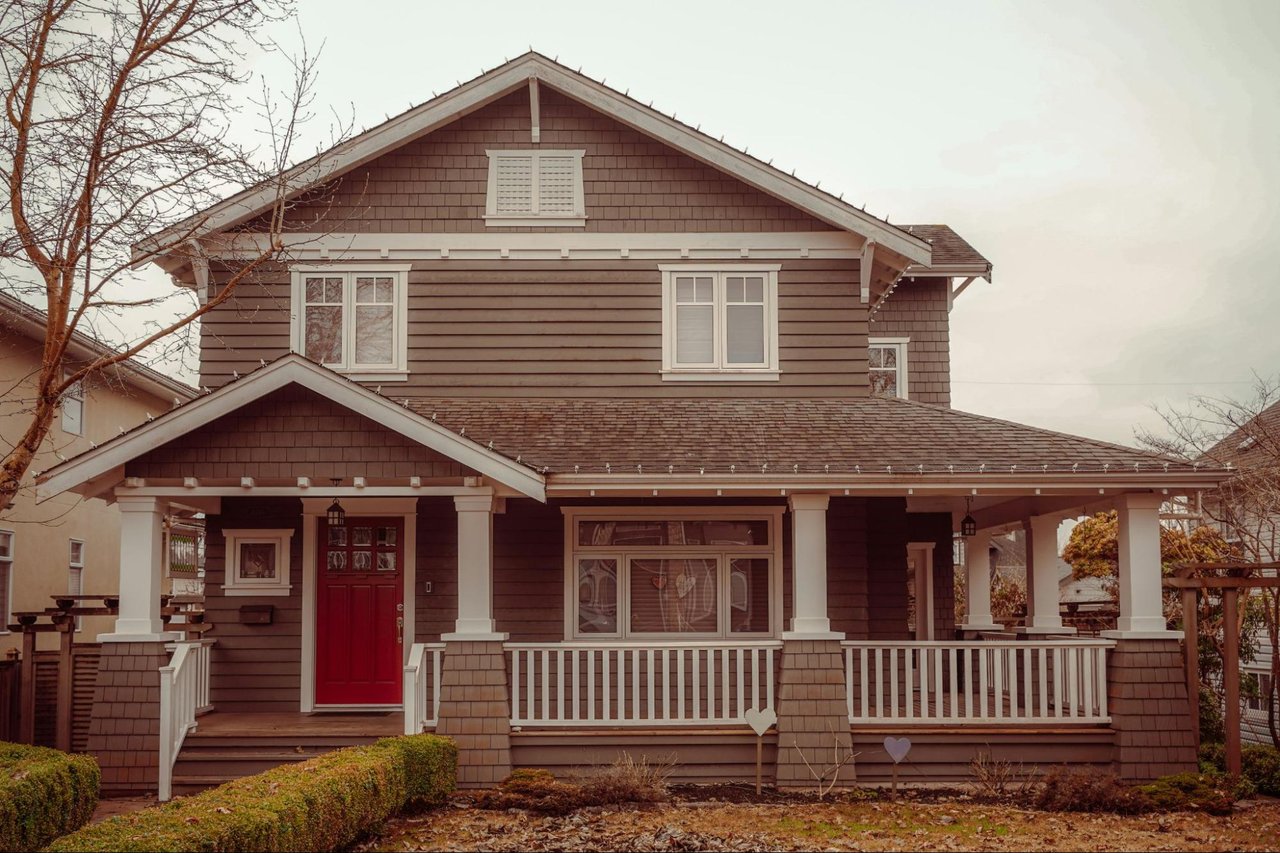
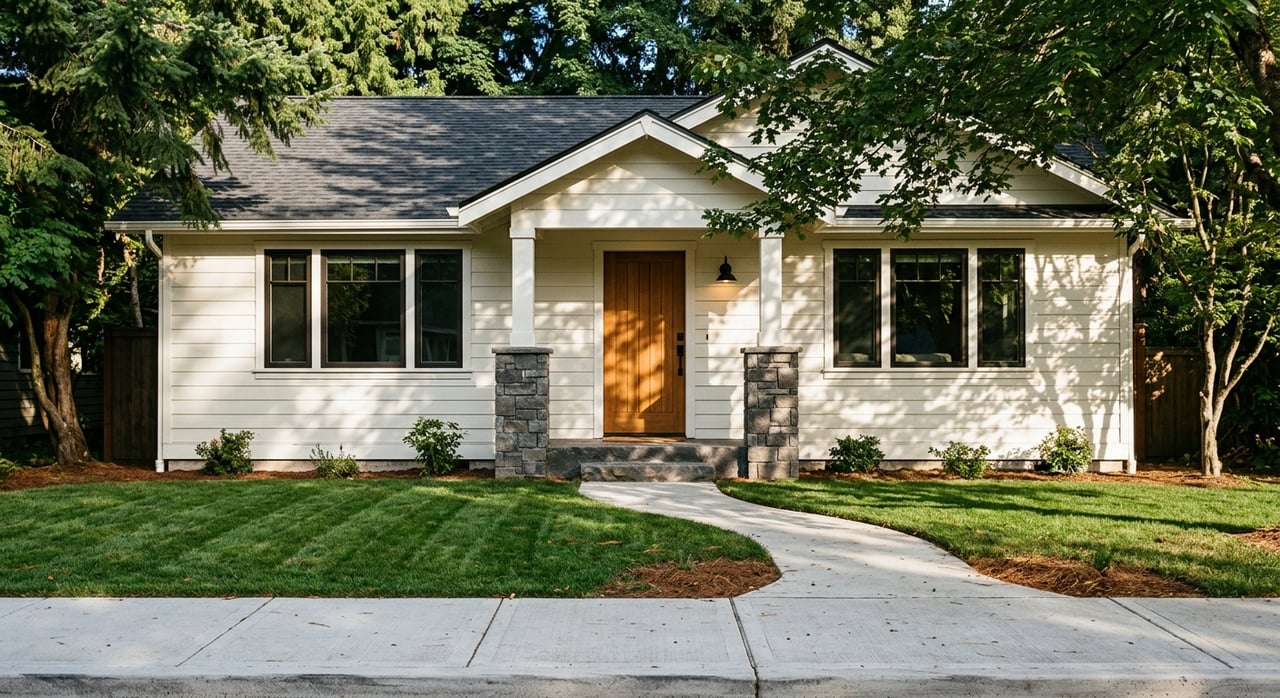
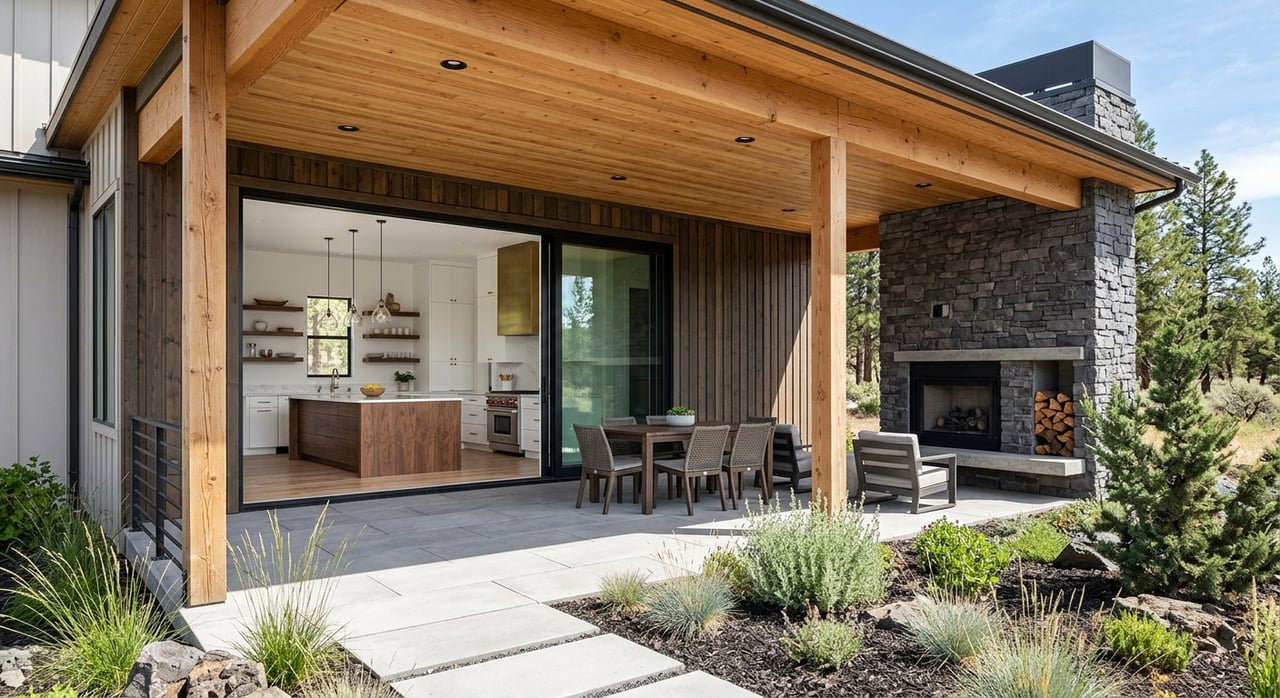
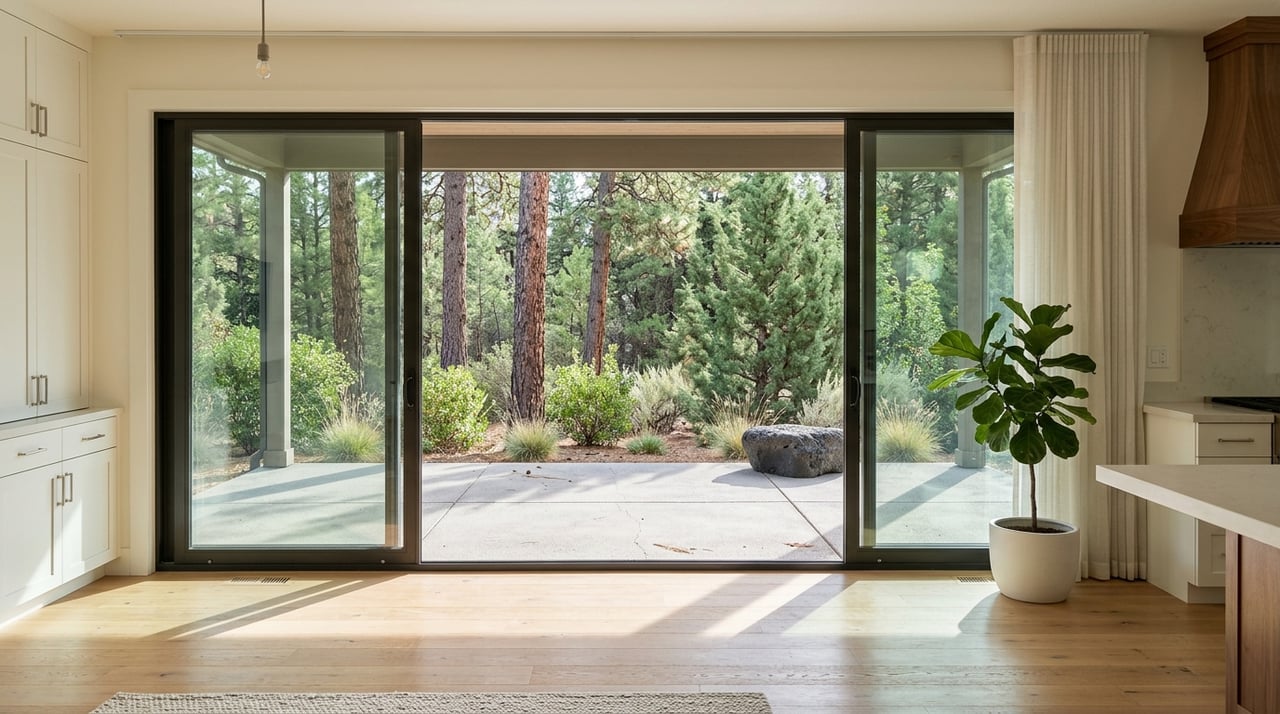
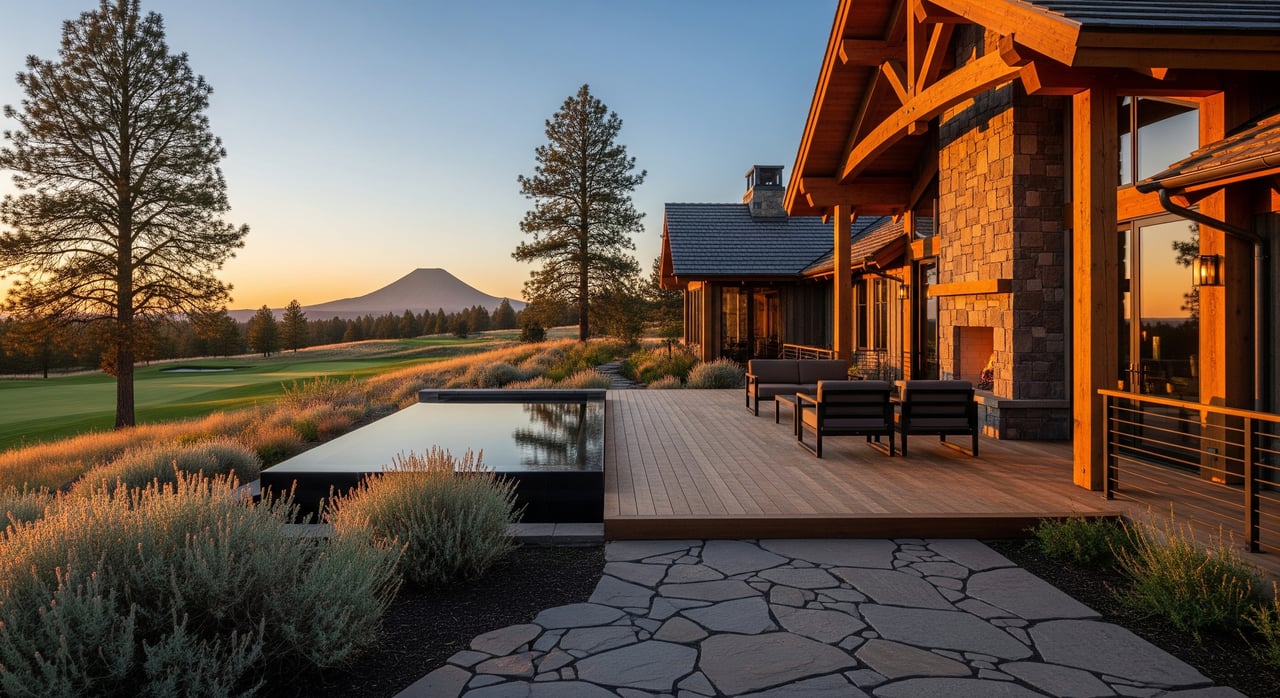
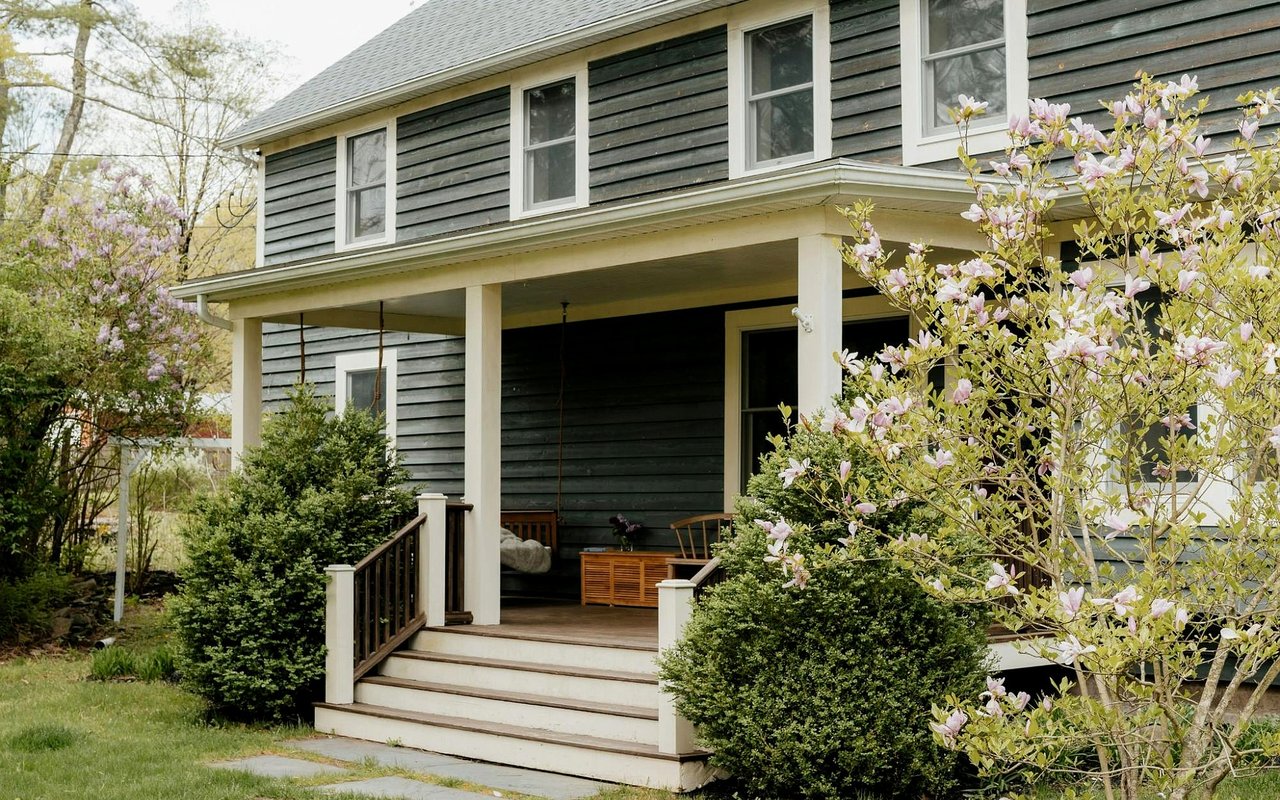
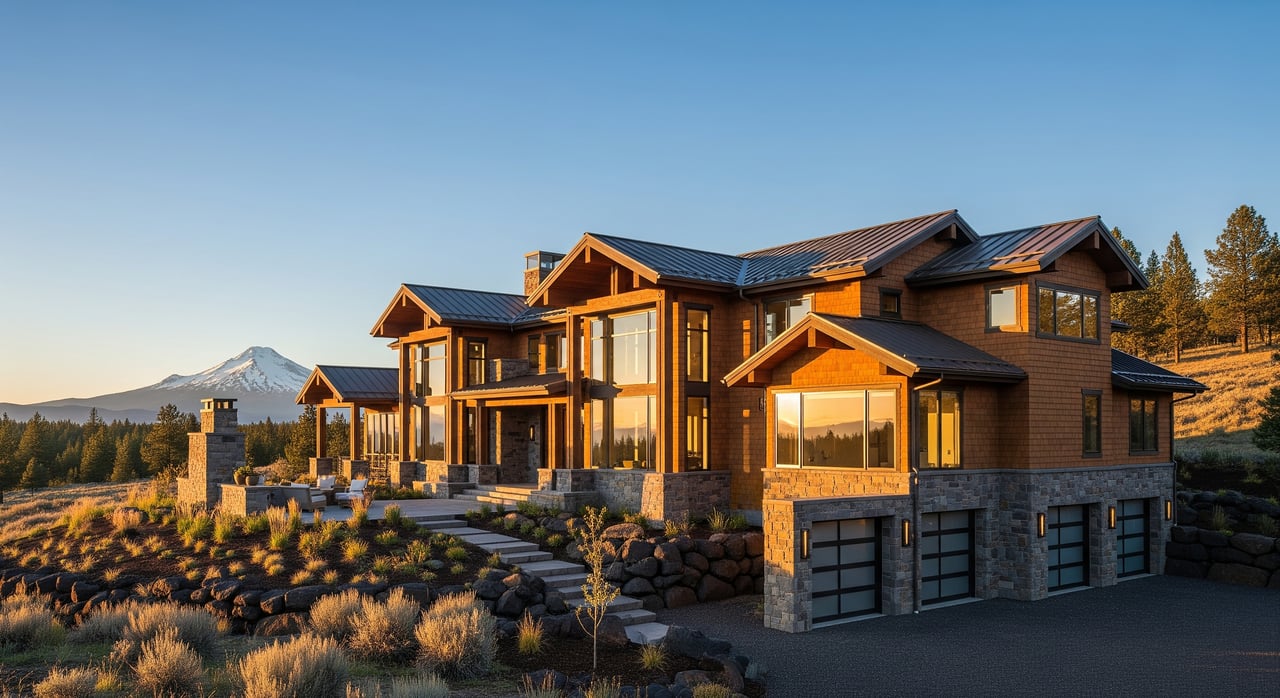
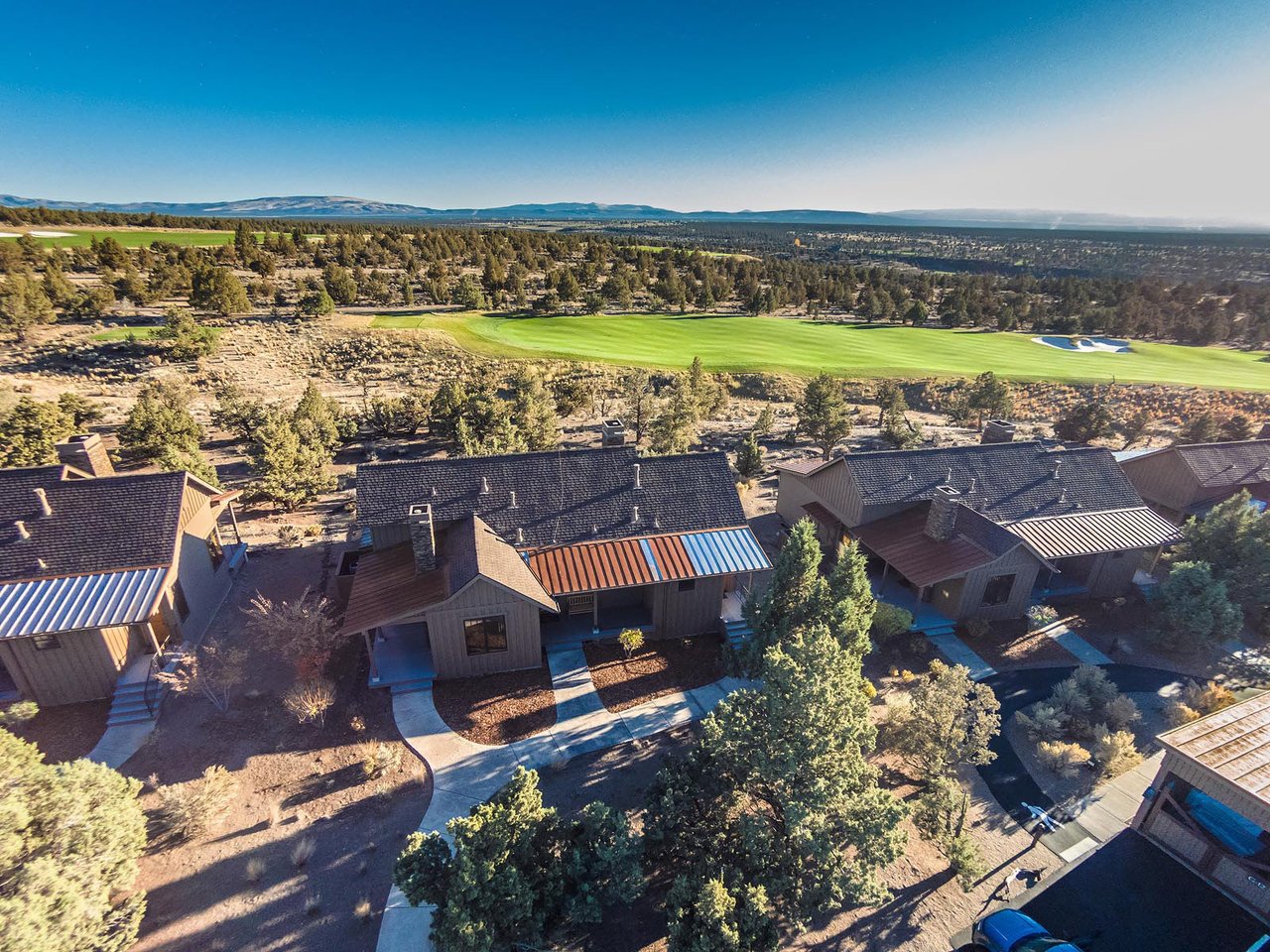
Three archetypes dominate. Pacific Northwest Contemporary rules the upper ridgelines, where architects use massive floor-to-ceiling glass to frame the Cascades, paired with exposed timber, steel accents, and cantilevered decks that extend the living footprint over sloping terrain. Modern Rustic homes lean into heavy stonework, rough-sawn wood siding, and earth-toned palettes designed to visually dissolve into the basalt and pines — rooflines here often echo the slope of the Butte itself. And throughout the mid-slope developments built in the 1990s and early 2000s, Classic Craftsman and Prairie-style homes offer broad overhanging eaves, deep covered porches for the high-desert sun, and detailed hand-crafted stone and woodwork.
What ties all of these together is the engineering reality of building on a volcanic cinder cone. Architects working on the Butte have become experts at daylight basements, multi-tiered floor plans anchored directly into basalt rock, and grading that steps homes down the hillside rather than flattening it. Done right, this produces stunning multi-level outdoor viewing platforms. Done wrong, it produces expensive drainage and retaining wall problems — which is why builder and architect selection matters more here than in almost any other Bend neighborhood.
If downtown Bend is the city's energetic pulse, Awbrey Butte is its deep-breath sanctuary. Lot sizes typically run from 0.5 acres to well over 1.5 acres, which is dramatically larger than standard Bend footprints — but the real magic isn't the acreage itself. It's the sightlines.
Because the ARC tightly regulates tree removal, ancient ponderosa pines and mature junipers function as natural, year-round privacy screens. It's genuinely common to sit on a back deck and have neighboring homes completely masked by the forest, even when they're only a couple hundred feet away. Privacy on the Butte isn't a fence or a hedge — it's a tree canopy that took a century to grow.
The neighborhood itself is a grounded mix of retirees, remote professionals, and established families. Streets are winding, often steep, and frequently end in quiet cul-de-sacs with essentially zero through-traffic. What you hear from a back deck is wind through the pines, occasional dog walkers, and the crunch of a mule deer herd passing through the yard. The shared ethos among neighbors is a real reverence for the setting — everyone participates in maintaining defensible space, respecting wildlife, and keeping the hillside quiet.
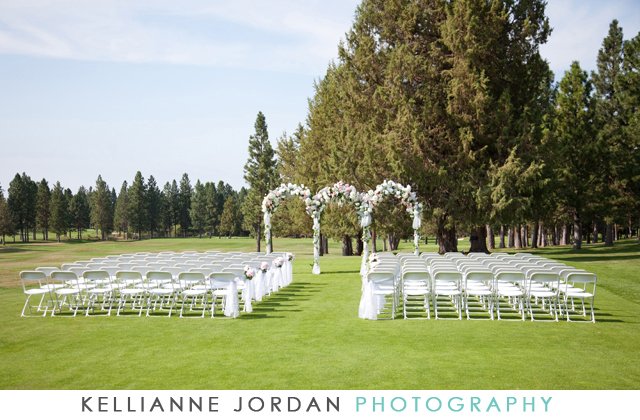
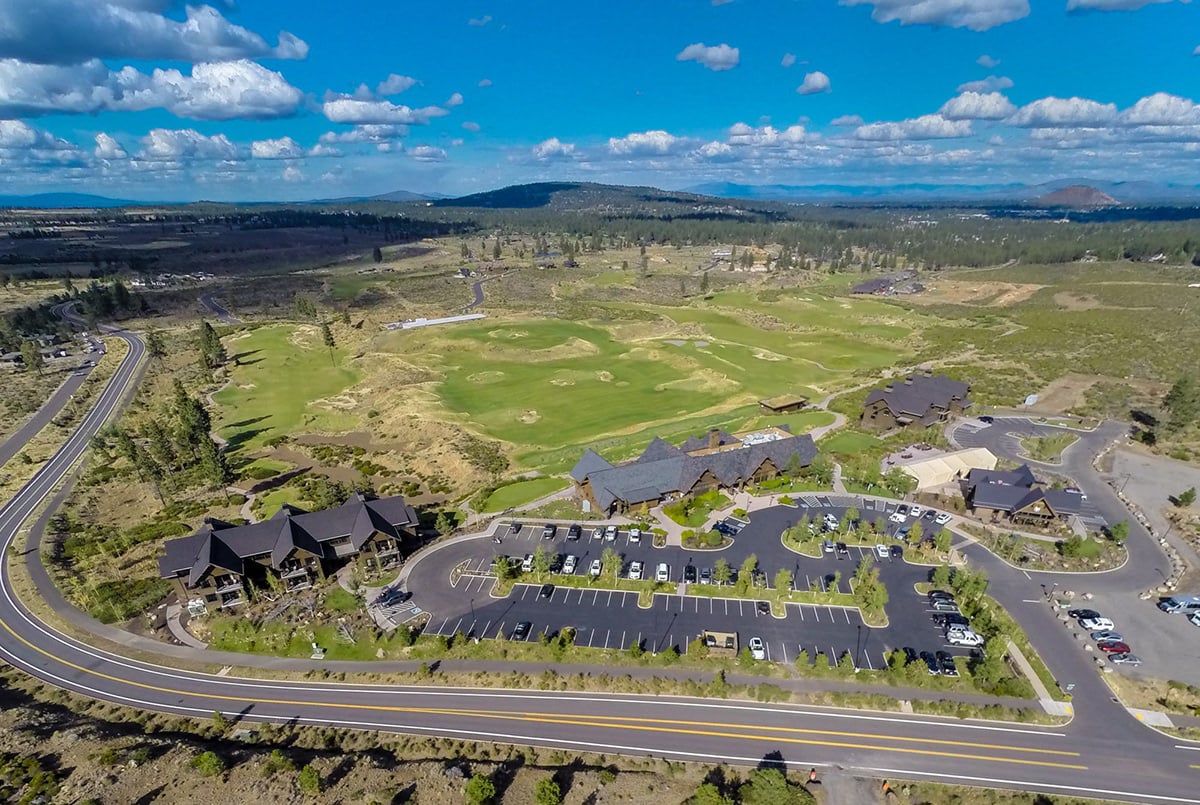
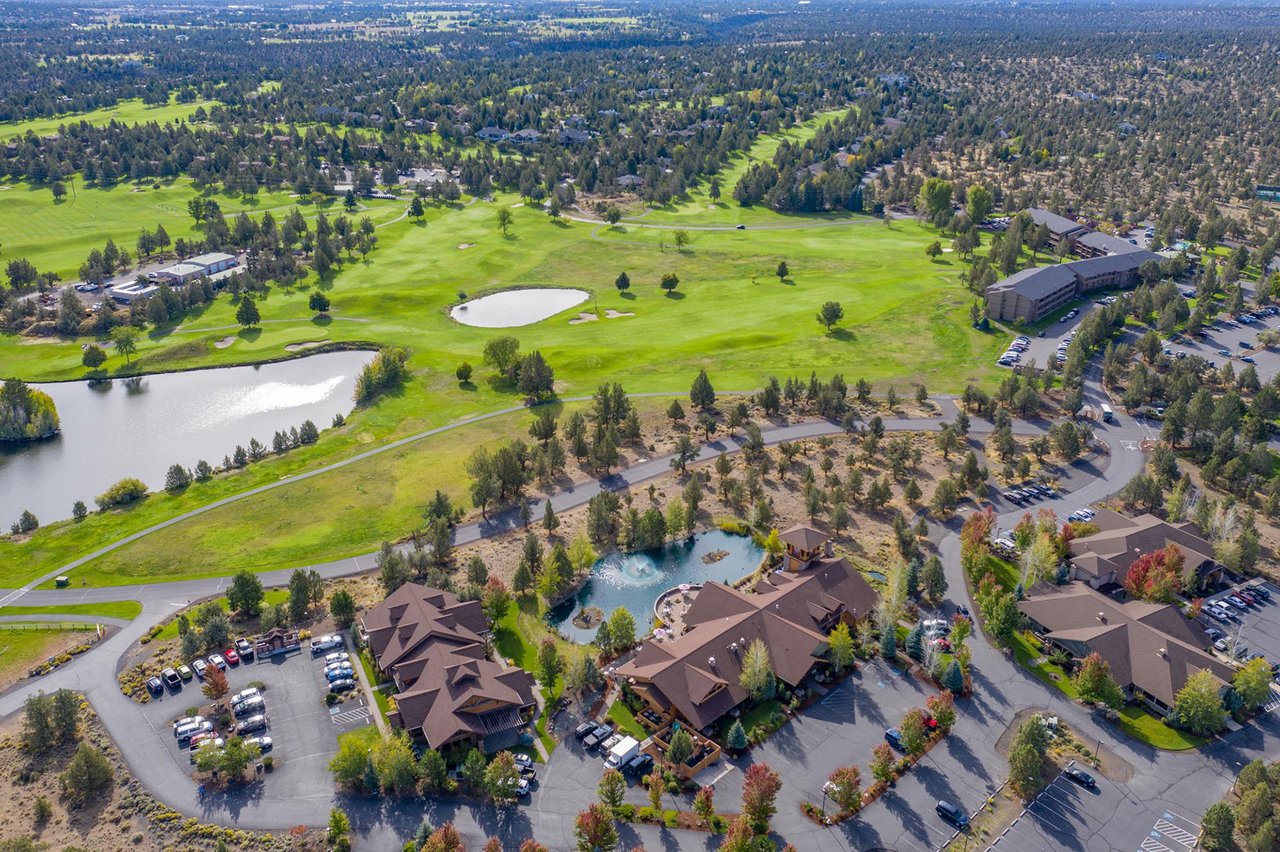
Awbrey Glen anchors the social and recreational life of the Butte's northwestern flank. Established in 1993 and now a fully private, member-owned facility, it has evolved into something more meaningful than a golf course — it's a vibrant sub-community with its own gravitational pull.
The 18-hole championship course was designed by Gene "Bunny" Mason and stretches from 5,400 to over 7,000 yards, winding through ponderosa pines, lakes, and red-hued basalt outcroppings with the Cascades as a backdrop. One genuinely unique feature is The Loop, the club's Golf Learning Center — home to Central Oregon's only 5-hole par-3 course, which has become a favorite for families, juniors, and members sharpening their short game without committing to 18 holes.
Beyond the course, the clubhouse functions as a neighborhood living room, framing Cascade views over dinners and social events. Members also have access to a dedicated fitness facility and a summer pool complex with a lap pool, kiddie pool, and hot tub. The homes surrounding the club — including some gated pockets with generous lots — form a distinct enclave within the larger Butte, where cruising to the clubhouse by golf cart is a standard part of daily life.
Living on the Butte means the outdoors starts at your driveway. The hillside is threaded with pocket parks and trail networks that connect residents directly into Central Oregon's larger recreation landscape without needing to load up the car.
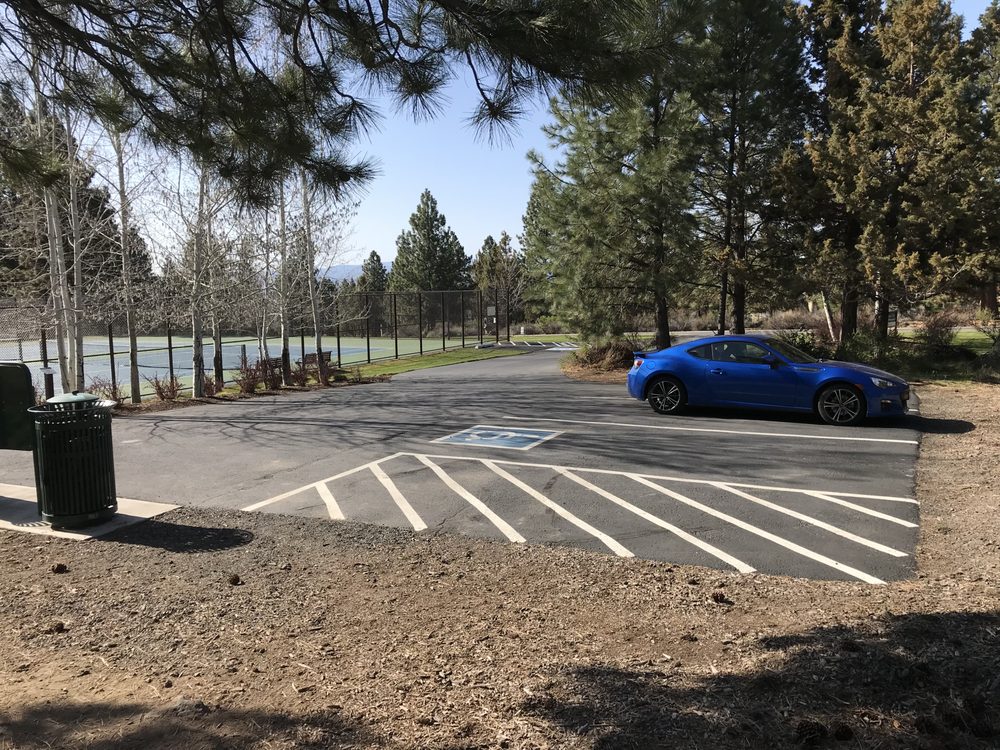
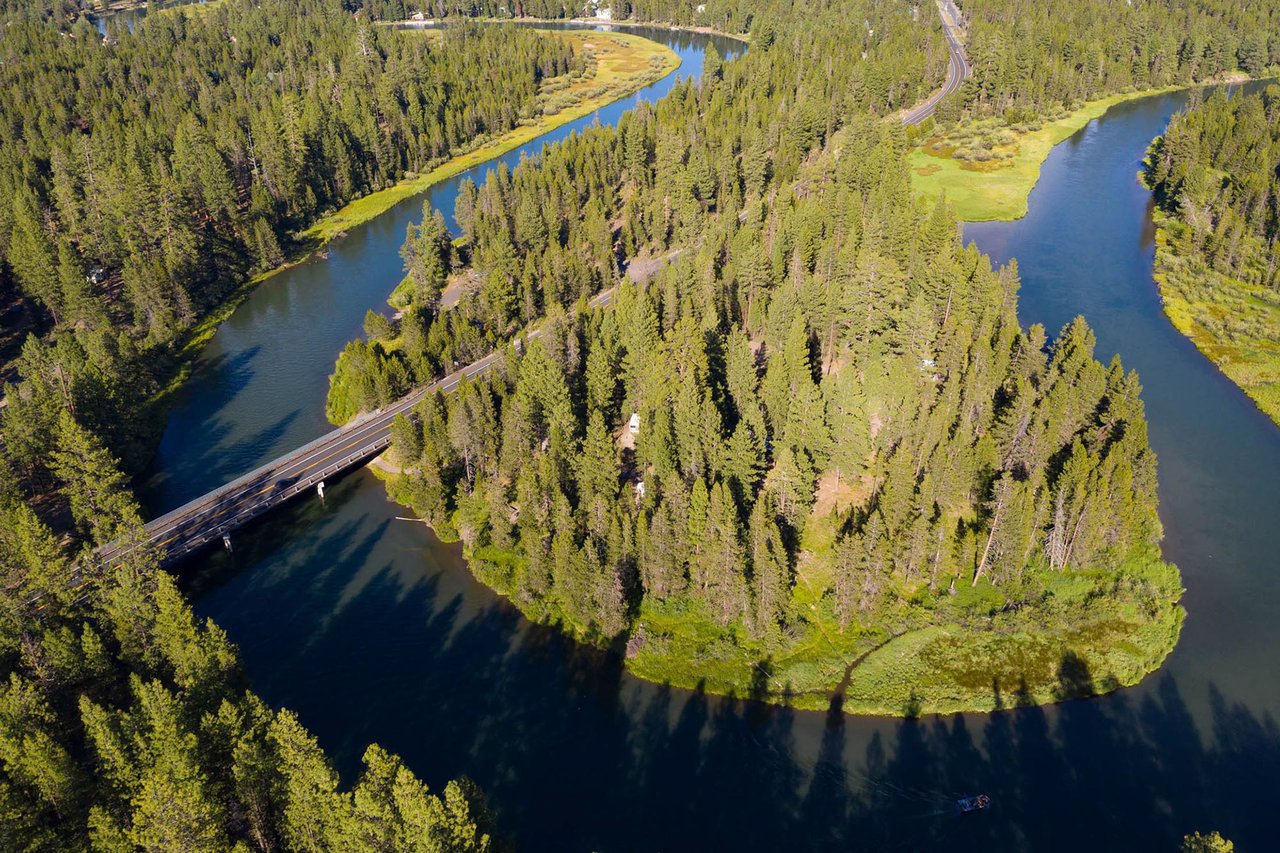
Sylvan Park and Awbrey Park are the two neighborhood staples — heavily wooded, shaded green spaces with playgrounds, picnic areas, and tennis and pickleball courts. Sylvan Park in particular offers sweeping views back down toward the city. On the northern slope, the Archie Briggs Canyon Natural Area offers a short but dramatic hike through a preserved volcanic canyon, leading to overlooks where the Deschutes River makes a sweeping bend beneath basalt rimrock walls. That trail drops down and connects directly to the Awbrey Reach of the Deschutes River Trail, giving residents foot-traffic access to miles of riverfront paths.
The larger recreation picture is where the Butte's location really shines. Shevlin Park — a 1,000-acre wonderland of old-growth forest, hiking loops, and winter snowshoe trails along Tumalo Creek — is a five-minute drive northwest. Phil's Trailhead, the undisputed gateway to Bend's mountain biking network, sits just to the west. And Mt. Bachelor is roughly 30 minutes up the Cascade Lakes Highway. Very few Bend neighborhoods offer this kind of adjacency to both in-town trails and world-class backcountry recreation.
The Butte's second great trick — after the views — is how quickly its elevation delivers you into the heart of Bend. Residents don't sacrifice convenience for privacy; they get both.
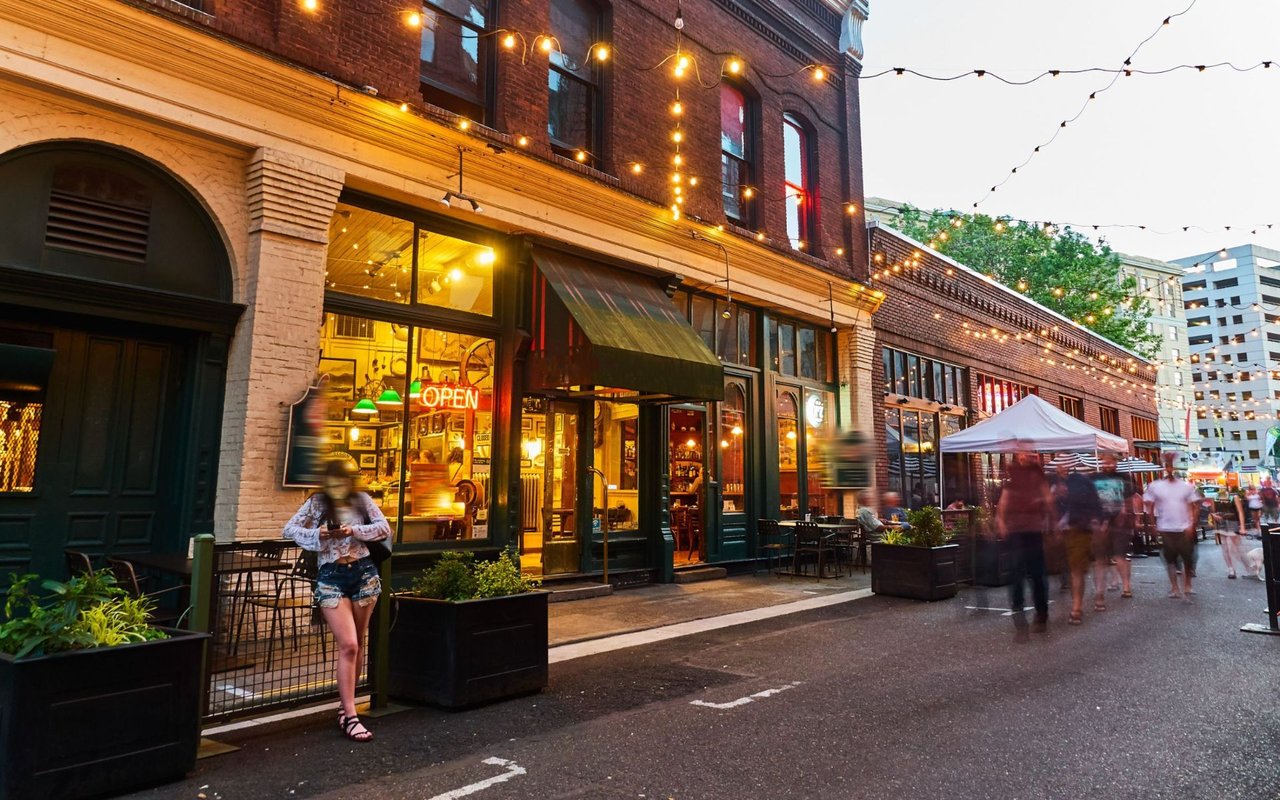
Downtown Bend is a 5-to-7-minute drop down the southern or eastern flanks, putting local boutiques, fine dining, Drake Park, and the Mirror Pond stretch of the Deschutes within easy reach. The Old Mill District — Bend's premier open-air shopping, dining, and entertainment hub, home to the Hayden Homes Amphitheater and its summer concert lineup — is roughly a 10-minute drive straight down Mt. Washington Drive. And the Deschutes River Trail loops right past the Butte's base; residents on the northern slope can walk trails through Archie Briggs Canyon directly onto the riverfront singletrack, while those on the southern and eastern slopes have a short drive to popular trailheads like First Street Rapids.
For a neighborhood that feels this remote, this level of downtown access is genuinely rare in Bend.
Awbrey Butte falls within the Bend-La Pine School District, and because the neighborhood sits inside Bend's highly regarded West Side attendance boundaries, families here are served by some of the strongest public schools in Central Oregon. Specific assignments depend on street address, but the standard pipeline for most Butte residents runs through:
Families interested in alternative public options can apply through Bend-La Pine's Choice Option system to nearby magnet schools like Highland Magnet School at Kenwood (which uses the Scottish Storyline method) or Amity Creek Magnet School (focused on experiential, community-based learning). For private education, The Montessori Center operates directly on the Butte for early childhood, and Cascades Academy — an independent PK-12 college-preparatory school with an experiential learning focus — sits just north toward Tumalo.
Downtown Bend sits at about 3,600 feet. The summit of Awbrey Butte reaches roughly 4,300 feet. That 700-foot vertical difference is small on paper and significant in daily life — especially in winter.
When a winter storm rolls through Central Oregon, downtown might see wet snow or plain rain. The same system will regularly drop several inches of heavy powder on the Butte. The neighborhood's scenic curves become genuinely steep grades, and a four-wheel or all-wheel-drive vehicle with dedicated snow tires isn't a luxury here — it's a functional requirement. The Butte can also stay trapped in a freezing cloud deck or hold heavy frost while downtown is clear.
The trade-off is that spring and summer are exceptional. On sizzling July and August afternoons when the rest of Bend hits 90 degrees, the Butte catches cool mountain breezes. And because the high-desert air is so thin, heat escapes rapidly as soon as the sun drops behind the Cascades — a 90°F afternoon routinely falls into a crisp 50°F evening, which is why residents keep a fleece on the back of every chair even in mid-July. Add in Bend's roughly 300 days of annual sunshine, dramatic thunderstorms rolling across the high desert, and some of the darkest night skies you'll find near a city, and the Butte's climate becomes one of its quiet luxuries.
Because Awbrey Butte is purely residential by design, you won't find any commercial development on the hillside itself. But the corridors ringing the base of the Butte handle everyday errands without ever forcing residents downtown.
The Newport Avenue corridor at the southern base is home to one of Bend's most beloved landmarks: Newport Avenue Market, an employee-owned boutique grocery with a legendary butcher counter, deep specialty selection, and a 60-foot "Great Wall of Beer" that's become part of West Side culture. A Whole Foods Market sits across the river to the north, easily reached from the Butte's northeastern slopes. Running parallel to Newport is the Galveston corridor, lined with Bend classics like The Victorian Café (a brunch institution), 10 Barrel Brewing, and rotating food cart pods.
The eastern base of the Butte connects directly to 3rd Street (Business Route 97), providing immediate access to hardware stores, gas stations, and auto services. And St. Charles Medical Center — the region's primary hospital and trauma center — is a straightforward 10-to-12-minute drive east, meaning top-tier healthcare is always within a short radius.
The Butte's demographic skews established, affluent, and nature-oriented, with a median age hovering in the mid-40s to early 50s. This is a neighborhood for people who value quiet evenings, privacy, and immediate access to the outdoors — not nightlife.
Three buyer profiles dominate. Active retirees and empty nesters find an ideal fit here — the proximity to Awbrey Glen and River's Edge golf, paired with low-maintenance custom homes, makes it a top landing spot for the Bend retirement crowd. Remote executives and professionals are drawn to the combination of high-speed connectivity, quiet cul-de-sacs, and a distraction-free work-from-home environment. And established families — roughly a quarter of Butte households — choose the neighborhood for its safe streets, large lots, and access to top-tier West Side public schools. Across all three groups, the common thread is a shared appreciation for what the Butte protects: the trees, the views, and the quiet.
Awbrey Butte is one of Bend's signature addresses, but it isn't the right fit for every buyer — and being clear-eyed about the trade-offs matters far more than being sold on the postcard.
The neighborhood is a certified Firewise Community, which means genuine wildfire risk and genuine homeowner responsibility. Owners are obligated to maintain defensible space — clearing lower tree limbs, removing flammable brush like bitterbrush, keeping gutters free of pine needles — and home insurance premiums reflect the geographic risk profile. The Architectural Review Committee enforces meaningful oversight; if you want to paint your house an unconventional color, clear-cut trees for a view, or leave garbage bins on the curb, the Butte will frustrate you. Winter mobility is a real consideration — the extra 700 feet of elevation produces more snow, more ice, and steeper driveways than anywhere else in central Bend. And walkability simply isn't part of the equation up on the hillside; you can drive to nearly everything in 5 to 10 minutes, but you'll be driving.
The honest verdict: you'll love Awbrey Butte if you want a private, wooded estate with dramatic mountain or canyon views, appreciate architectural individuality, and want to feel deeply removed from the city while still being 10 minutes from a downtown dinner. You should probably look elsewhere — Northwest Crossing, the standard East Side, or one of Bend's flatter West Side pockets — if you want walkable streets, sidewalks full of kids on bikes, a lighter HOA touch, or a neighborhood that doesn't ask anything of you in the winter.
Buying or selling on Awbrey Butte rewards local knowledge — the kind that comes from actually knowing which ridge lines hold snow the longest, which builders handle basalt lots best, and which streets sit inside which school boundaries. That's where Team Fitch Real Estate comes in. Led by Principal Broker Nicole Fitch alongside Matt Fitch and Ani Weber, and partnered with John L. Scott Central Oregon, our team is made up of longtime Bend residents with deep community ties and a hands-on approach to every transaction. Recognized with the 2025 John L. Scott Chairman's Circle Award for top performance in the Central Oregon market, we specialize in helping buyers and sellers navigate the Butte's unique architecture, view premiums, HOA nuances, and hillside engineering realities.
If you're thinking about buying on Awbrey Butte, selling a home on the hillside, or just want a candid conversation about how the neighborhood compares to other Bend luxury enclaves, we'd love to hear from you.
Team Fitch Real Estate | John L. Scott Central Oregon
50 SW Bond St, Suite 1, Bend, OR 97702
📞 (541) 749-0875
Awbrey Butte has 2,573 households, with an average household size of 3. Data provided by the U.S. Census Bureau. Here’s what the people living in Awbrey Butte do for work — and how long it takes them to get there. Data provided by the U.S. Census Bureau. 6,215 people call Awbrey Butte home. The population density is 2,273 and the largest age group is Data provided by the U.S. Census Bureau.
Total Population
Population Density Population Density This is the number of people per square mile in a neighborhood.
Median Age
Men vs Women
Population by Age Group
0-9 Years
10-17 Years
18-24 Years
25-64 Years
65-74 Years
75+ Years
Education Level
Total Households
Average Household Size
Average individual Income
Households with Children
With Children:
Without Children:
Blue vs White Collar Workers
Blue Collar:
White Collar:
There's plenty to do around Awbrey Butte, including shopping, dining, nightlife, parks, and more. Data provided by Walk Score and Yelp.
Explore popular things to do in the area, including Nineteen At Awbrey Glen, North Sister, and Summit Park.
| Name | Category | Distance | Reviews |
Ratings by
Yelp
|
|---|---|---|---|---|
| Dining | 0.77 miles | 2 reviews | 3/5 stars | |
| Active | 0.42 miles | 2 reviews | 4/5 stars | |
| Active | 0.66 miles | 3 reviews | 3.3/5 stars | |
| Active | 0.93 miles | 1 review | 5/5 stars | |
| Active | 0.99 miles | 4 reviews | 5/5 stars | |
| Active | 1.44 miles | 0 reviews | 0/5 stars | |
|
|
||||
|
|
||||
|
|
||||
|
|
||||
|
|
||||
|
|
ADDRESS 50 SW BOND ST STE 1 BEND OR 97702
ADDRESS 50 SW BOND ST STE 1 BEND OR 97702