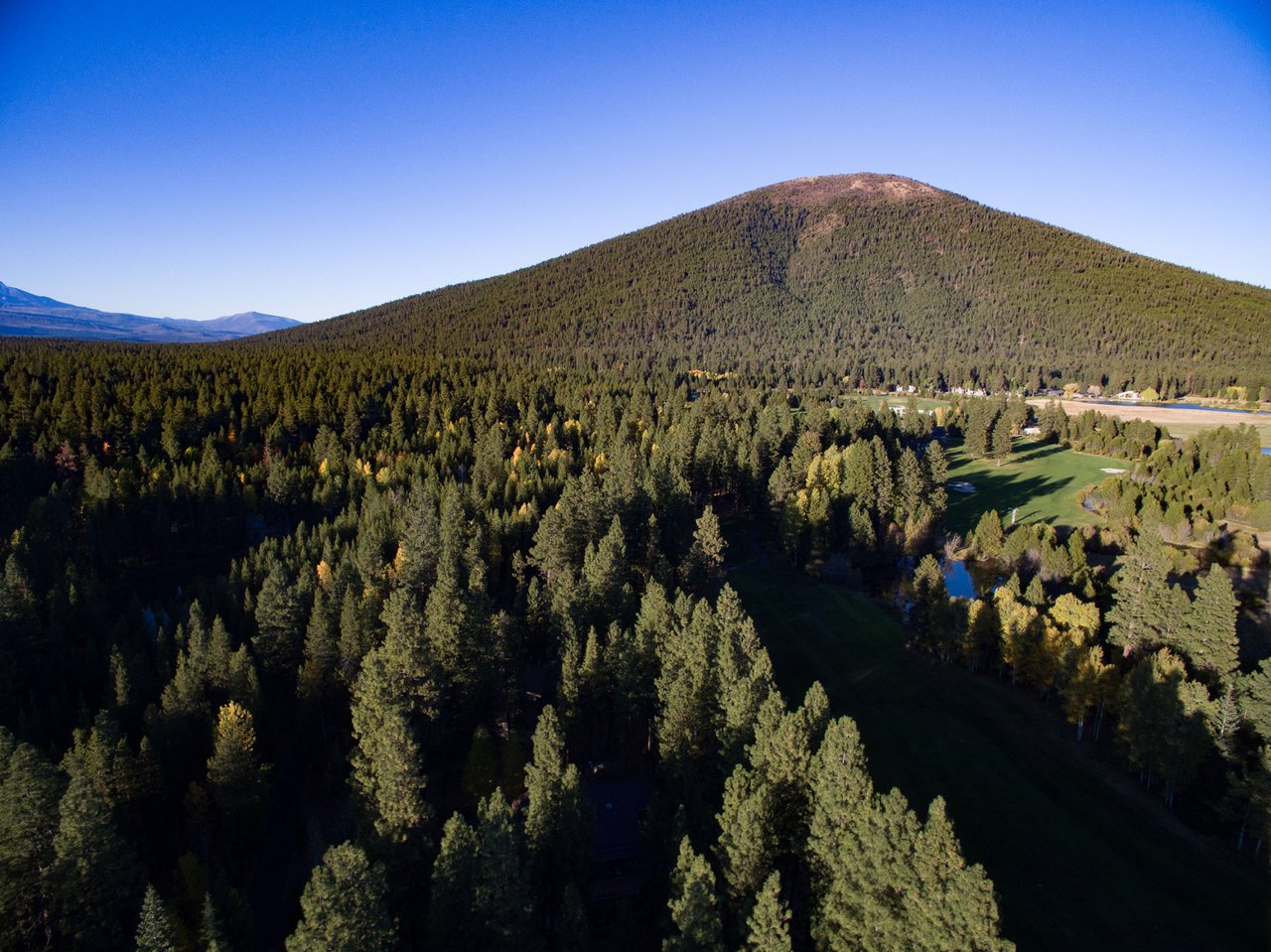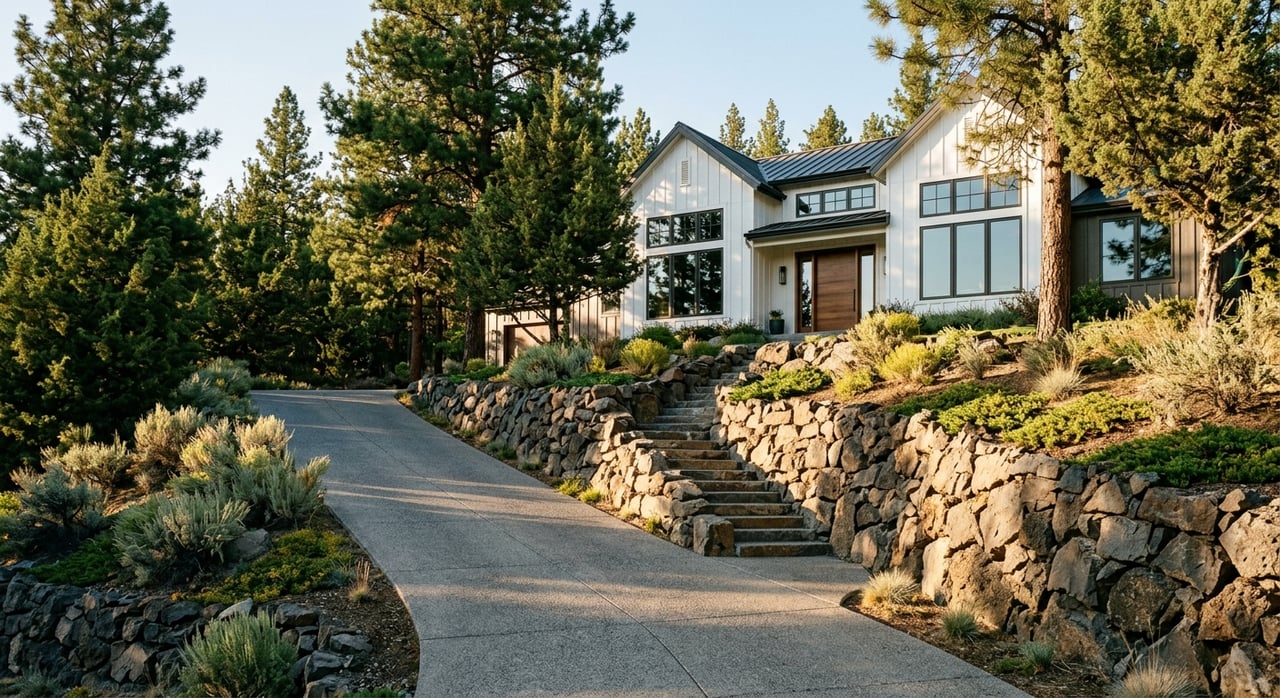
Wondering whether buying on Awbrey Butte is really about the view, or if the bigger story is the slope, the street, and the rules that come with the property? That is a smart question to ask. If you are considering a home here, you are not just choosing a Bend address. You are weighing topography, access, ownership responsibilities, and private community rules that can shape daily life. This guide will help you evaluate those details with more confidence. Let’s dive in.
Awbrey Butte Is Not One Thing
Awbrey Butte is an official neighborhood district in Northwest Bend, but it is not a single, uniform housing product. The City of Bend treats neighborhood districts and homeowners associations as different things. A district is a city-recognized forum for community issues like land use, transportation, and safety, while an HOA is a private organization with dues, rules, and design standards.
That matters because a home can be located within the Awbrey Butte neighborhood district and also fall under a separate subdivision or property-specific HOA. In practical terms, two homes with an Awbrey Butte address may come with very different rules, costs, and ownership experiences.
The district includes many named communities, such as Awbrey Glen, Awbrey Park, Awbrey Pines, Awbrey Point, Awbrey Woods, Champion Ridge, Compass Corner, Copperstone, Hawk’s Ridge, North Rim on Awbrey Butte, River’s Edge Village, and others. That mix is a good reminder to evaluate each pocket on its own merits instead of assuming the entire Butte feels or functions the same way.
Views Depend on the Parcel
The views are a major draw, but they are not guaranteed simply because a home sits on Awbrey Butte. City planning documents identify Awbrey Butte as Bend’s highest point at 4,214 feet, and they note that parts of the area have slopes of 15% or more. On terrain like that, view value is often tied to the lot’s exact position and the way nearby parcels can still develop.
Some views are naturally helped by the hill’s geometry. Others may feel wide open today because a neighboring lot is vacant, lower, or lightly improved. That is a big difference when you are thinking about long-term enjoyment and resale.
In areas governed by the Awbrey Butte Owners Association, design review requirements show how site-specific this can be. Plans may need to include topographic surveys, grading details, tree-removal locations, adjacent-home locations, and proposed ridge elevations. That tells you sightlines and visual impact are being reviewed at the parcel level, not assumed at the neighborhood level.
Questions to Ask About Views
When you tour a property, it helps to look beyond the obvious panorama and ask a few deeper questions:
- Is the view protected by the natural shape of the land?
- Are nearby lots buildable, and could future construction affect the view corridor?
- Could tree growth or regrading change what you see over time?
- How does the home’s orientation affect sunlight, glare, and indoor comfort during different seasons?
A great view on paper is not always the same as a view that holds up well over time.
Slopes Affect Daily Living
Slope is one of the most important practical issues on Awbrey Butte. Steeper terrain can influence construction, drainage, winter driving, sidewalk maintenance, and the overall ease of getting in and out of your property.
The City of Bend has flagged steep-slope areas as places where cut-and-fill, erosion, slumping, winter safety, and visual impact need careful attention. That does not mean every property has a problem. It does mean you should look closely at how the lot works, not just how the home looks.
Driveways deserve extra attention here. A beautiful home with a steep approach may feel very different during winter conditions than it does on a sunny showing day. Garage aprons, turns, and street approach angles can all affect everyday convenience.
What to Review on Sloped Lots
If you are buying on the Butte, consider these points carefully:
- The steepness of the driveway and access points
- The location of retaining walls and whether they appear integral to the lot’s stability
- Grading around patios, walkways, and hardscaped areas
- Whether the lot layout makes snow and ice management more demanding
- How easy it is to walk from the street to the front door in winter conditions
These details may sound small at first, but they can shape your ownership experience in a very real way.
Drainage and Infrastructure Matter
On hillside property, drainage should never be treated as an afterthought. City guidance on steep terrain notes that development can disrupt natural drainage patterns and increase erosion concerns. The Awbrey Butte design guidelines also call for grading information, retaining-wall design, and on-site water retention planning for runoff from impervious surfaces.
The City of Bend has also invested in neighborhood-scale improvements tied to Awbrey Butte infrastructure. Those projects include South Awbrey Butte drainage improvements, Newport Corridor work related to runoff, and the Awbrey Butte Waterline Improvement Project to improve water delivery, resiliency, reliability, capacity, and fire flow.
That does not mean every lot has a drainage or utility issue. It does suggest that runoff and infrastructure performance are meaningful topics in this area, especially on hillside parcels.
Smart Drainage Questions for Buyers
As part of your due diligence, ask:
- Where does stormwater go on this property?
- Is there a documented drainage route or retention feature on the lot?
- Are there retaining walls, drains, or stabilization features that the owner maintains?
- Does the HOA maintain any of these elements, or are they private responsibilities?
Clear answers can help you understand both maintenance expectations and future repair exposure.
HOA Rules Can Shape the Property
For many buyers, HOA review is where Awbrey Butte becomes more complex than expected. In areas governed by the Awbrey Butte Owners Association, new homes must be reviewed and approved by the Architectural Review Committee before construction begins. The association notes that there is no single required style, but homes must meet high architectural standards and fit with surrounding properties.
The review process is detailed. Plans may include site plans, surveys, renderings, grading details, utility screening, retaining walls, and other exterior elements. If you are buying an existing home, that level of oversight still matters because it may affect future exterior changes, additions, landscaping decisions, or parking expectations.
Oregon law also gives planned community associations broad authority over rules, budgets, assessments, and common property management. Under Oregon’s Planned Community Act, an HOA must establish a reserve account for major maintenance, repair, or replacement items that typically need attention in more than one and less than 30 years. For you as a buyer, that makes HOA health about more than monthly dues.
Documents to Request Before You Buy
If a property is subject to an HOA, ask for:
- CC&Rs and bylaws
- Architectural guidelines for the specific parcel or subdivision
- Current budget and dues schedule
- Reserve study and maintenance plan
- Any history of special assessments or reserve shortfalls
- Any pending or recently recorded rule amendments
- Confirmation of whether the property is in the neighborhood district only, an HOA only, or both
This is one of the best ways to understand whether the home is a fit for your goals and comfort level.
Compare Micro-Locations, Not Just Prices
Because Awbrey Butte includes many distinct communities and lot types, your real comparison is often one pocket versus another. A ridge lot may offer stronger view appeal, while a lower-slope lot may offer simpler access and easier winter use. An older section may feel different from a newer or more tightly planned pocket.
Some areas may be more custom and secluded. Others may be closer to golf-oriented or amenity-adjacent settings. Some may carry more detailed private restrictions, while others may feel more flexible.
That is why broad neighborhood labels only go so far. The better question is how a specific location on the Butte matches the way you want to live, maintain, and use the property over time.
A Better Buying Framework for Awbrey Butte
If you want to evaluate homes here with clarity, focus on four things at once:
- View durability: Is the outlook naturally protected or dependent on nearby conditions?
- Slope practicality: How will the lot function during winter and in daily use?
- Drainage and site design: Where does water go, and what site features require attention?
- HOA scope: What rules, approvals, dues, and reserve obligations come with the property?
When you look at Awbrey Butte through that lens, the neighborhood becomes much easier to understand. You can separate cosmetic appeal from long-term fit and make a decision based on how the property will actually live.
If you are considering a home on Awbrey Butte, working with a local team that understands Bend’s hillside neighborhoods can make the process far more informed. For tailored guidance on specific pockets, lots, and ownership considerations, connect with Team Fitch Real Estate.
FAQs
What is the difference between the Awbrey Butte neighborhood district and an HOA?
- The neighborhood district is a City of Bend-recognized community forum, while an HOA is a private association that may collect dues and enforce property rules, design guidelines, and maintenance standards.
Do all homes on Awbrey Butte have HOA rules?
- No. A home may be located in the Awbrey Butte neighborhood district without being in the same private HOA as another nearby property, so you need to confirm what governs the specific parcel.
Are views on Awbrey Butte protected automatically?
- No. Views are often site-specific and may depend on topography, adjacent lot development, tree growth, and design-review standards that apply to nearby parcels.
Why do slopes matter when buying on Awbrey Butte?
- Slopes can affect driveway access, winter safety, drainage, retaining walls, erosion concerns, and the day-to-day maintenance load of the property.
What HOA documents should buyers request for an Awbrey Butte property?
- You should request the CC&Rs, bylaws, architectural guidelines, current budget, dues schedule, reserve study, maintenance plan, and any history of special assessments or recent rule changes.
What should buyers ask about drainage on an Awbrey Butte lot?
- Ask where stormwater goes, whether the lot has retention or drainage features, and whether any walls, drains, or slope-related improvements are maintained by the owner or the HOA.