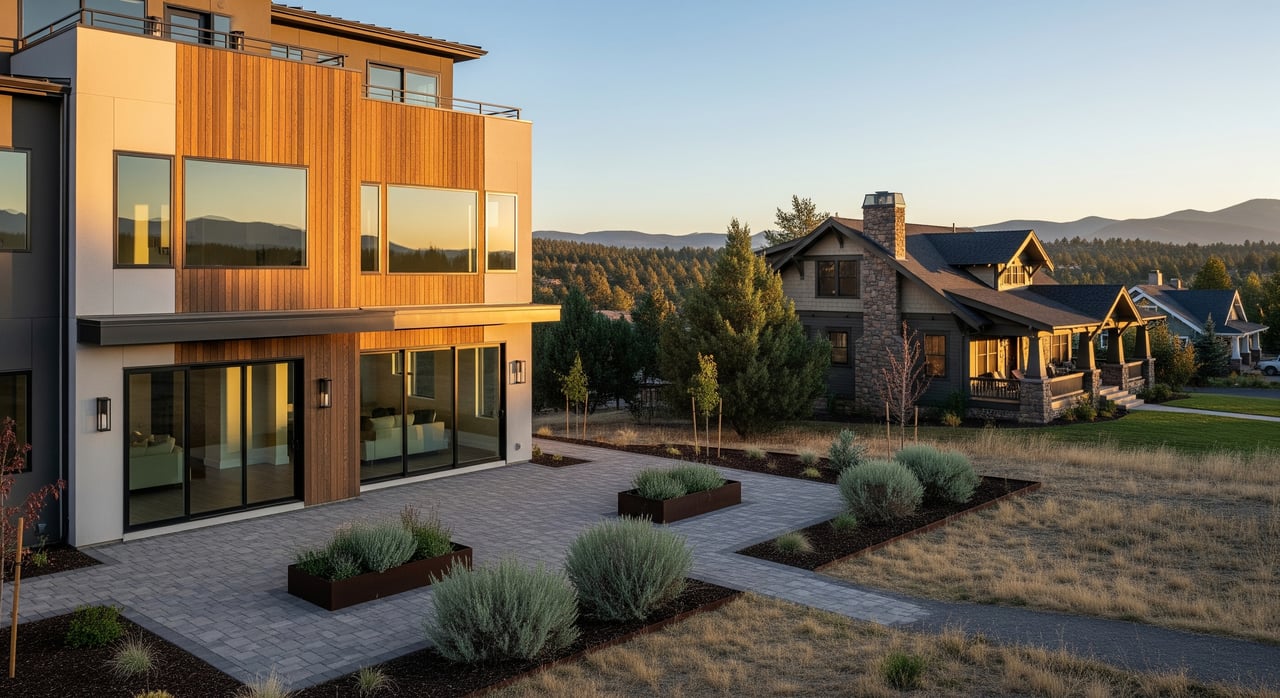
Thinking about buying in Redmond and torn between a townhome and a single-family house? You’re not alone. Both options can work well in Central Oregon, but the right fit depends on your budget, lifestyle, and long-term plans. In this guide, you’ll learn how costs, HOAs, maintenance, amenities, financing, and resale play out locally so you can move forward with confidence. Let’s dive in.
Redmond options at a glance
Redmond offers a mix of single-family homes across established neighborhoods and newer subdivisions, with attached options more common in planned communities and select infill areas. You’ll find townhomes and condos clustered in communities with shared amenities, including resort-style developments near Redmond such as the Eagle Crest area. Single-family homes remain the dominant option citywide and appeal to buyers who value privacy, yard space, and flexibility for exterior projects.
If you want lower maintenance and convenient amenities, a townhome can be a strong fit. If you prioritize a larger yard, storage, or more freedom to personalize, a detached home can be the better match. The good news: Redmond offers both across a range of styles and ages.
Cost comparison: what to budget each month
Buying costs vary by property, financing, and condition, but you can forecast most recurring expenses. Here’s how the two options stack up.
Mortgage payment
Your monthly loan payment depends on price, down payment, interest rate, and program. In many markets, townhomes transact at a lower price point than comparable single-family homes, but this varies by neighborhood and age of the property. Focus on the home’s total monthly cost rather than price alone.
Property taxes
Deschutes County calculates property taxes based on assessed value and local levies. Ownership type does not change tax rates, but lot size and improvements often influence assessed value. For a realistic estimate, review the specific property’s current tax history and contact the assessor for questions.
HOA dues (commonly for townhomes)
Most townhome or condo communities include monthly HOA dues that cover common-area landscaping, exterior maintenance, insurance on shared elements, and amenities. Dues vary widely. Underwriters count dues in your debt-to-income ratio, which can affect what you qualify for. Ask for a breakdown of what dues include, whether reserves are funded, and if the community has a history of special assessments.
Insurance
- Single-family homes: You’ll carry a homeowner’s policy that covers the structure and liability.
- Townhomes/condos: Coverage depends on the master policy. Many buildings have an “all-in” policy for the structure and common elements, and owners add an HO-6 (walls-in) policy for interiors and contents. Others use a “bare walls” approach that shifts more to owners. Confirm the master policy and deductibles before you write an offer.
Utilities and maintenance
Townhomes typically have smaller private yards and fewer exterior systems to maintain, which can reduce ongoing maintenance and utility bills. Single-family homes usually have more roof, siding, yard, fencing, and driveway to care for, plus potentially higher utilities due to a larger footprint. A common rule of thumb is to set aside around 1 to 2 percent of a single-family home’s value each year for maintenance. Attached homes may require less, but needs depend on age, systems, and climate.
Special assessments and surprise costs
- Townhomes/condos: If an HOA underfunds reserves or defers projects, owners may face special assessments. Review the reserve study, budget, meeting minutes, and any planned capital work.
- Single-family homes: You control the timing of big-ticket items. Roofs, HVAC, windows, or siding can still arrive all at once depending on age and condition.
HOA rules and due diligence for attached homes
HOAs help manage shared property. They can make ownership simpler, but they also add rules and financial responsibilities. Before you buy, review:
Documents to request
- CC&Rs, bylaws, and rules and regulations
- Current budget, reserve study, and balance sheet
- Insurance certificates and master policy summary
- Meeting minutes from the last 12 to 24 months
- Any rental rules or short-term rental policies
These documents reveal how the community operates, what’s covered, and whether owners are discussing upcoming repairs or assessments.
Reserves and assessment risk
A well-managed HOA plans ahead. Healthy reserves and a recent reserve study reduce the risk of surprise costs. Low reserves can be a red flag, especially in older buildings. Ask about upcoming projects, prior assessments, and any studies or bids already in progress.
Insurance structure and liability
Clarify what the master policy covers, including roofs, exteriors, and common areas, and what falls to you as the unit owner. Note any per-unit deductibles and whether limited common elements like patios, balconies, or assigned parking carry extra responsibilities.
Rules, noise, and exterior changes
Attached living comes with closer neighbors and shared walls. Communities outline expectations for noise, parking, pets, and common spaces. If you hope to add solar, change exterior finishes, or upgrade windows, confirm what the HOA permits. State and local rules also shape what’s allowed, so check both the HOA documents and local permitting.
Lifestyle and maintenance tradeoffs in Redmond
Outdoor space and privacy
Townhomes generally have less private outdoor space and closer proximity to neighbors. This can be perfect if you want less yardwork or a lock-and-leave lifestyle. Single-family homes offer more separation, more yard for gardening or pets, and greater flexibility for sheds, fencing, or outdoor living areas, subject to permits and local code.
Age, condition, and amenities
Newer townhome communities often feature modern finishes and updated systems, which may reduce near-term maintenance. Some carry higher dues because of amenities and exterior coverage. Older single-family homes sometimes come at a lower entry price but can require near-term capital work. Always weigh age, condition, and HOA health when comparing apples to apples.
Energy efficiency and utilities
Shared walls in attached homes can reduce heating and cooling needs compared to similar-sized detached homes. Detached homes often have more roof and lot space for potential efficiency upgrades or solar, subject to any governing rules.
Climate and wildfire considerations
Redmond’s high-desert climate brings hot summers, cold winters, and seasonal irrigation needs. Winter freeze-thaw cycles can affect irrigation lines, roofs, and exterior surfaces. Wildfire defensible space is a consideration for both attached and detached homes across Central Oregon. Location, vegetation, and topography matter more than product type, so plan for fuels reduction and insurance review wherever you buy.
Resale and financing realities
Who typically buys what
- Townhomes: Often appealing to downsizers, first-time buyers seeking lower maintenance, and buyers who prioritize amenities or a smaller yard.
- Single-family homes: Attract buyers who want more privacy, more storage, or potential for exterior projects and flexible outdoor living.
What drives resale value
- Location and access to main corridors, parks, and services
- Lot size and usable outdoor space
- Condition and level of updates
- HOA health, reserves, and reputation
- Local supply-and-demand dynamics for attached vs detached options
If new detached construction is constrained, single-family homes may see strong appreciation. If demand for low-maintenance living grows, townhomes can perform well. Your agent can help you compare recent, nearby comps for each property type.
Financing considerations
- Some condo projects must meet lender criteria for FHA, VA, or conventional loans. Project approval and investor ratios can affect eligibility.
- HOA dues count toward your monthly obligations and may reduce borrowing capacity.
- Non-warrantable projects can require larger down payments or different loan products.
Talk to a lender early so you understand your options for specific properties and communities.
Where you’ll find each option in Redmond
- Resort and planned communities: The Eagle Crest area and similar developments near Redmond often feature townhomes or condos with amenities like pools, paths, and clubhouses. These are popular with owners who prefer lock-and-leave convenience.
- Infill and higher-density zones: Attached units and duplex-style products are more likely near commercial corridors and within zones that allow greater density, closer to services and transit.
- Typical single-family neighborhoods: Throughout Redmond and in newer subdivisions, detached homes remain the most common option, often with more yard, driveway space, and flexibility for outdoor projects.
Decision checklist for Redmond buyers
Use this simple framework to choose with clarity:
- Set a total monthly budget that includes projected HOA dues, taxes, insurance, utilities, and a maintenance reserve.
- Rank your lifestyle priorities: privacy and yard space, low maintenance and amenities, storage and parking, or customization.
- For attached homes, obtain HOA docs early. Review CC&Rs, budget, reserve study, insurance, minutes, and any planned projects.
- Consider resale marketability. Ask your agent for recent, nearby comps and days on market for both property types.
- Confirm financing. Check project eligibility, typical down payment, and how HOA dues affect your debt-to-income ratio.
- Inspect age and condition. Verify boundaries for attached homes and what’s common vs private. Ask about roof age, systems, and recent upgrades.
- Think long term. Consider plans for household changes, remote work, hobbies, and storage needs, and choose the property type that fits those goals.
Which one is right for you?
If you want minimal exterior upkeep and enjoy community amenities, a townhome can be a smart, simple way to live in Redmond. If you value space, privacy, and flexibility for projects or outdoor living, a single-family home may serve you better. Both paths can be excellent investments when you focus on location, condition, and the right ownership structure for your lifestyle.
When you’re ready to compare real options and run the numbers for specific communities and properties, connect with Team Fitch Real Estate. We’ll help you weigh costs, review HOA health, and match you with a home that fits your life. Start Your Search or Book a Consultation.
FAQs
What’s the main cost difference between a townhome and a house in Redmond?
- Townhomes often have HOA dues that cover shared costs, while single-family homes usually have more direct maintenance and utility expenses; compare total monthly cost, not just price.
How do HOA dues affect my loan approval?
- Lenders include dues in your monthly obligations, which can reduce borrowing capacity; share the exact dues amount with your lender early.
Who handles exterior maintenance in a townhome community?
- It depends on the CC&Rs and master policy; many HOAs cover exteriors and landscaping, but responsibilities vary by development.
Are special assessments common for townhomes or condos?
- Assessments can occur if reserves are low or major projects arise; review the reserve study, budget, and meeting minutes to gauge risk.
Can I add solar panels or make exterior changes to a townhome?
- Possibly, but you must follow HOA rules and local permitting; confirm requirements before planning any exterior modifications.
Do single-family homes in Redmond have HOA rules too?
- Some subdivisions have HOAs with basic rules or minimal dues, while many do not; review any neighborhood guidelines during due diligence.
How does wildfire risk factor into my choice?
- Both property types need defensible space and appropriate insurance; location, vegetation, and topography matter more than whether the home is attached or detached.