Welcome to
Explore Sunriver, OR Homes in a Scenic Resort Retreat
An upscale retreat where nature, leisure, and luxury live in perfect harmony.
1,429 people live in Sunriver, where the median age is 70.1 and the average individual income is $79,273. Data provided by the U.S. Census Bureau.
Total Population
Median Age
Population Density
Average individual Income
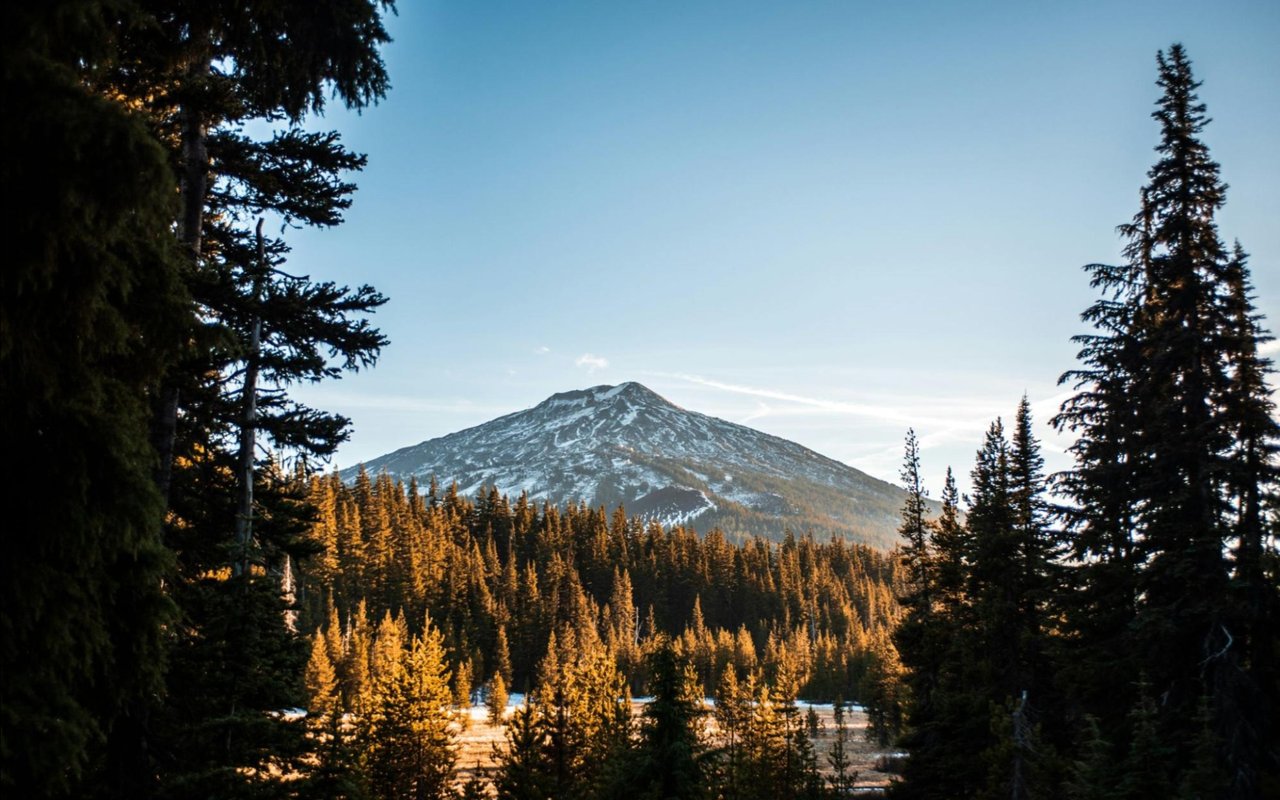
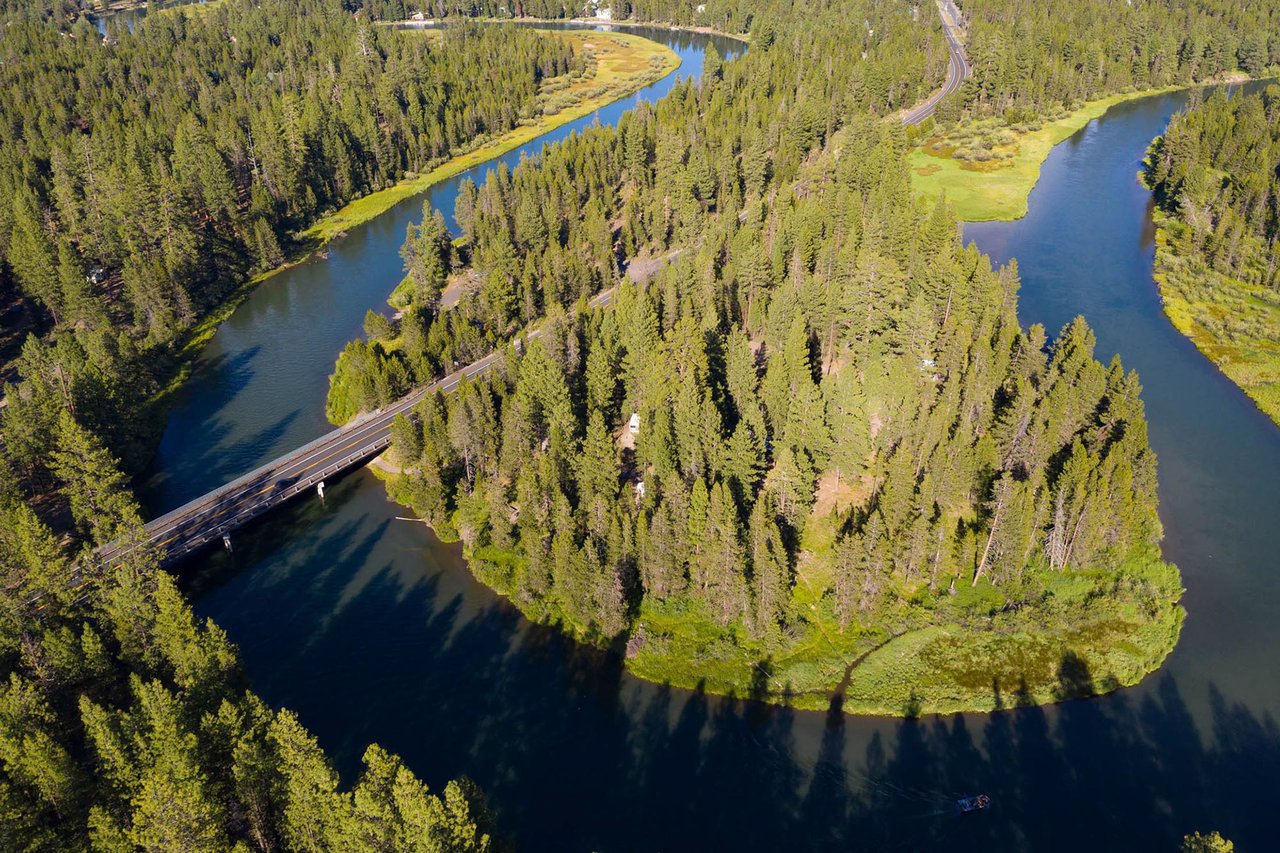
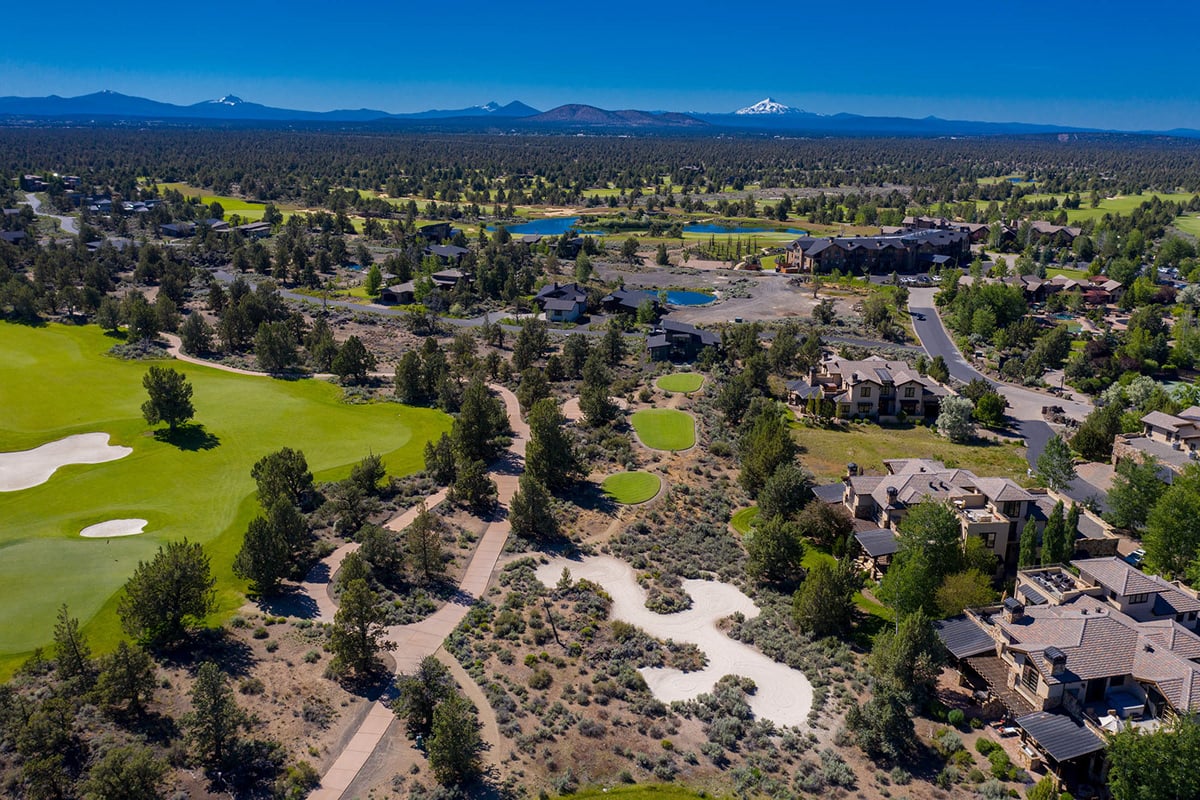
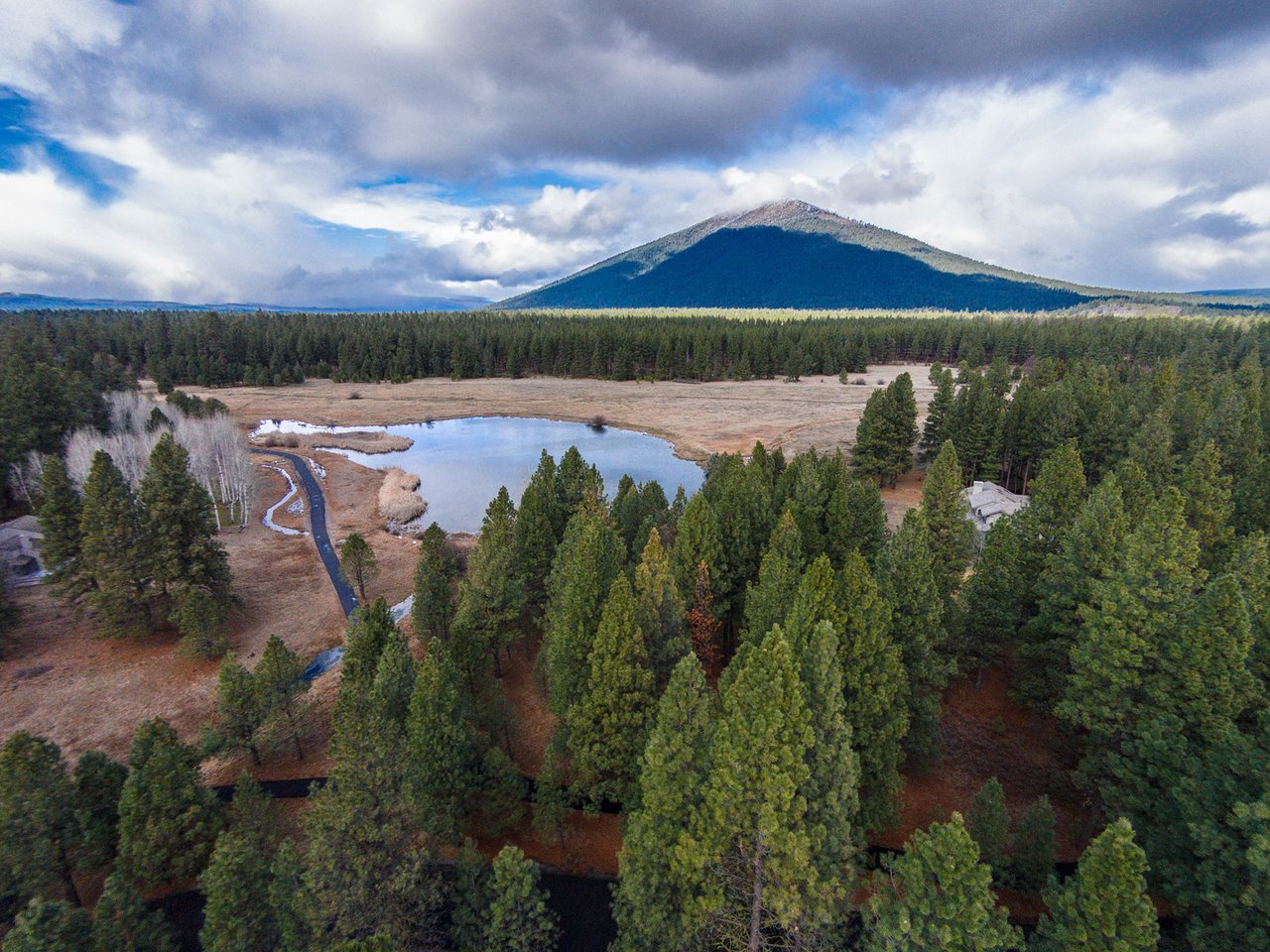
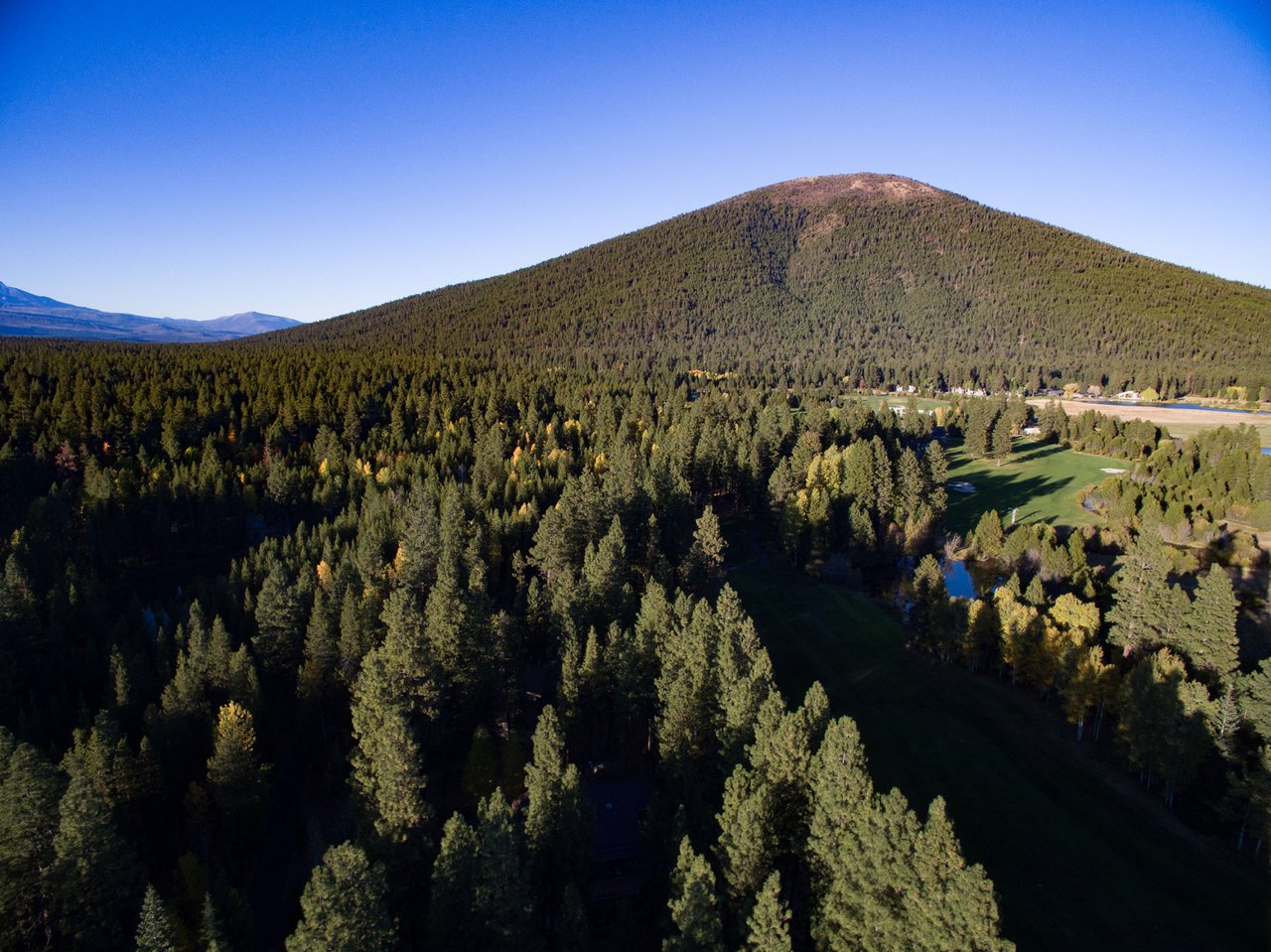
Sunriver occupies a stretch of Ponderosa pine forest along the eastern bank of the Deschutes River, about 15 miles south of Bend at an elevation of nearly 4,200 feet. It is not a subdivision and not a town in the traditional sense. It is a 3,350-acre planned unincorporated resort community in Deschutes County, governed by its own owners association and served by its own police and fire departments — which makes it one of the more unusual places to own property in Oregon.
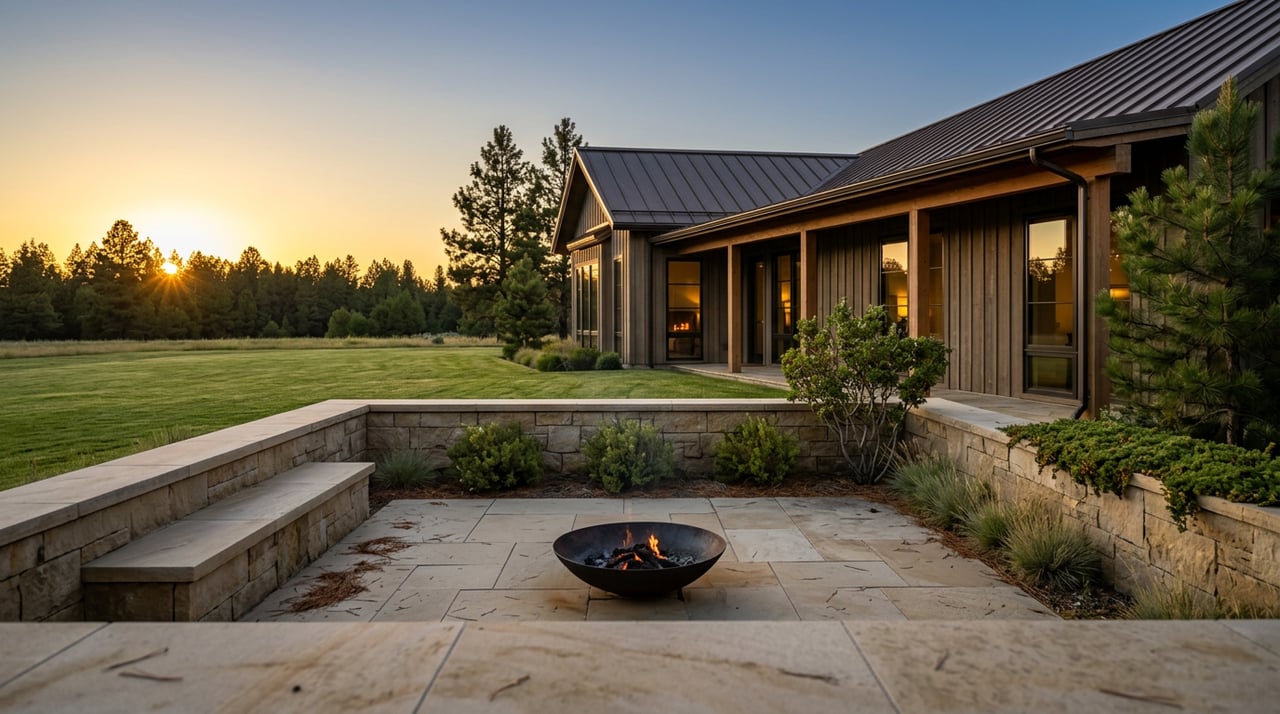
The land has a history worth knowing before you buy here. During World War II, this was Camp Abbot, a U.S. Army engineer training center. When Sunriver was master-planned in the late 1960s, the developers made a set of decisions that still define daily life: preserve the open space, keep the Ponderosa canopy intact, leave wildlife corridors uninhibited, and separate people from cars wherever possible. Fifty-plus years later, those choices are why Sunriver feels categorically different from resort developments built in the decades since.
What that means in practice is a community where roughly 15 to 20 percent of homes are occupied year-round, and the remaining 80 percent function as second homes or vacation rentals. Understanding that ratio is the single most important thing for a prospective buyer to absorb. It shapes the rhythm of the seasons, the character of your street in February versus July, and the economics of nearly every property on the market.
Sunriver deliberately rejects the street grid. There is no Main Street, no numbered avenues, no through-traffic shortcuts. Instead, the community runs on a system that takes newcomers a weekend to learn and then becomes second nature.
The traffic circles are the navigational backbone. Eleven numbered roundabouts — Circle 1 through Circle 11 — sit along the primary arterials, Abbot Drive and Beaver Drive. Locals give directions by circle number, not street name, and once you internalize the sequence you always know roughly where you are within the North, Central, and South sections. The circles also do quiet work slowing traffic, which is part of why the residential pockets stay so still.
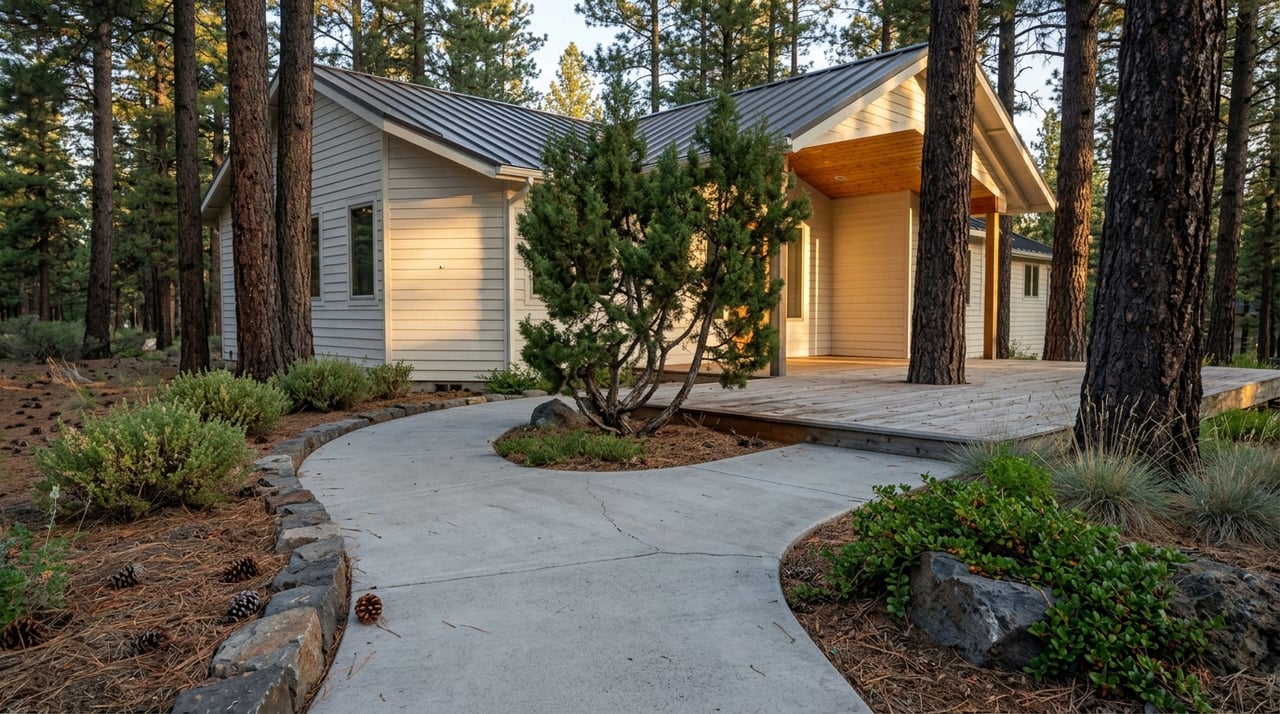
The lanes branch off those arterials into short, tree-filled cul-de-sacs with names like Modoc Lane and Topflite Lane. Homes sit nestled into the pines without front fencing, which produces the communal forest feel that defines the place. Your yard reads as continuous with your neighbor's and with the SROA common land beyond it. Some buyers find this liberating; others want a fenced perimeter and should know up front that Sunriver won't permit one.
The pathway network is the feature that most surprises first-time visitors. Over 33 miles of paved, non-motorized multi-use paths grid the entire community, and they cross major roadways through dedicated underpasses rather than at-grade crossings. You can travel from any residential lane to the Village, SHARC, Fort Rock Park, the resort lodge, the marina, or the Nature Center without ever sharing pavement with a car. E-bikes are permitted, but only Class 1 pedal-assist models; gas scooters, skateboards, and non-pedal motorized vehicles are prohibited.
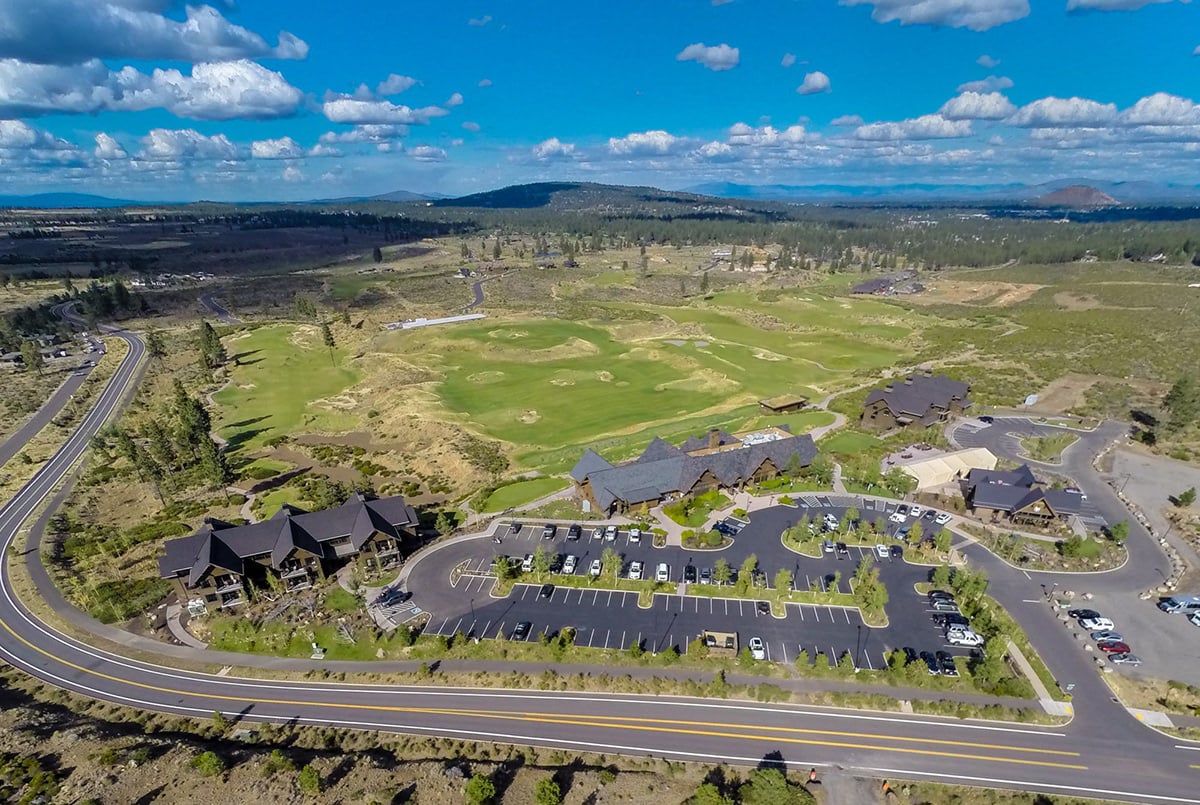
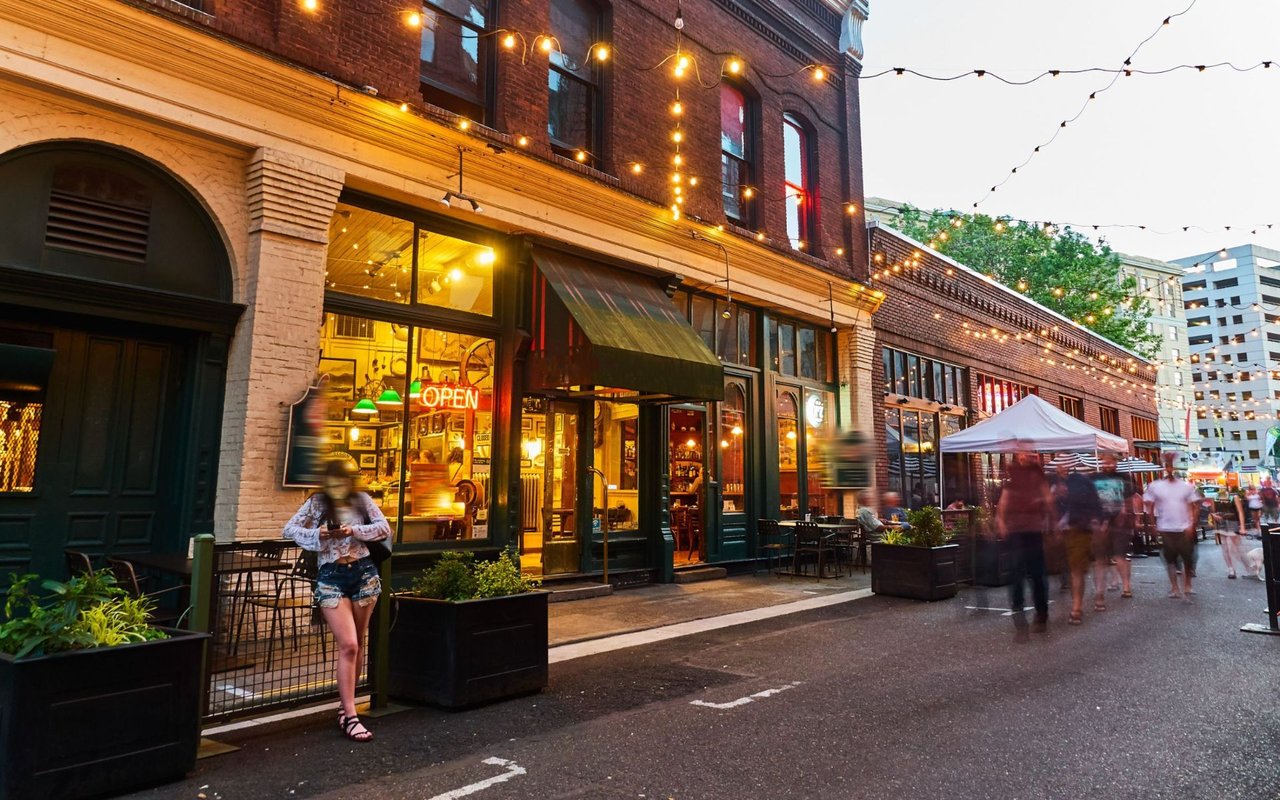
The Village at Sunriver is the commercial core, located on the south side near Circles 1 and 2. It functions as a pedestrian-only outdoor plaza and holds grocery options, outdoor outfitters, bike rental shops, boutiques, professional services, breweries, cafes, family dining, a winter ice-skating rink, and outdoor event space in summer. For a community with no formal downtown, the Village does a remarkable amount of civic work — it is where residents and visitors actually run into each other year-round.
Sunriver's housing stock reads like a timeline of resort design philosophy. Three distinct eras are represented, and they trade at meaningfully different prices.
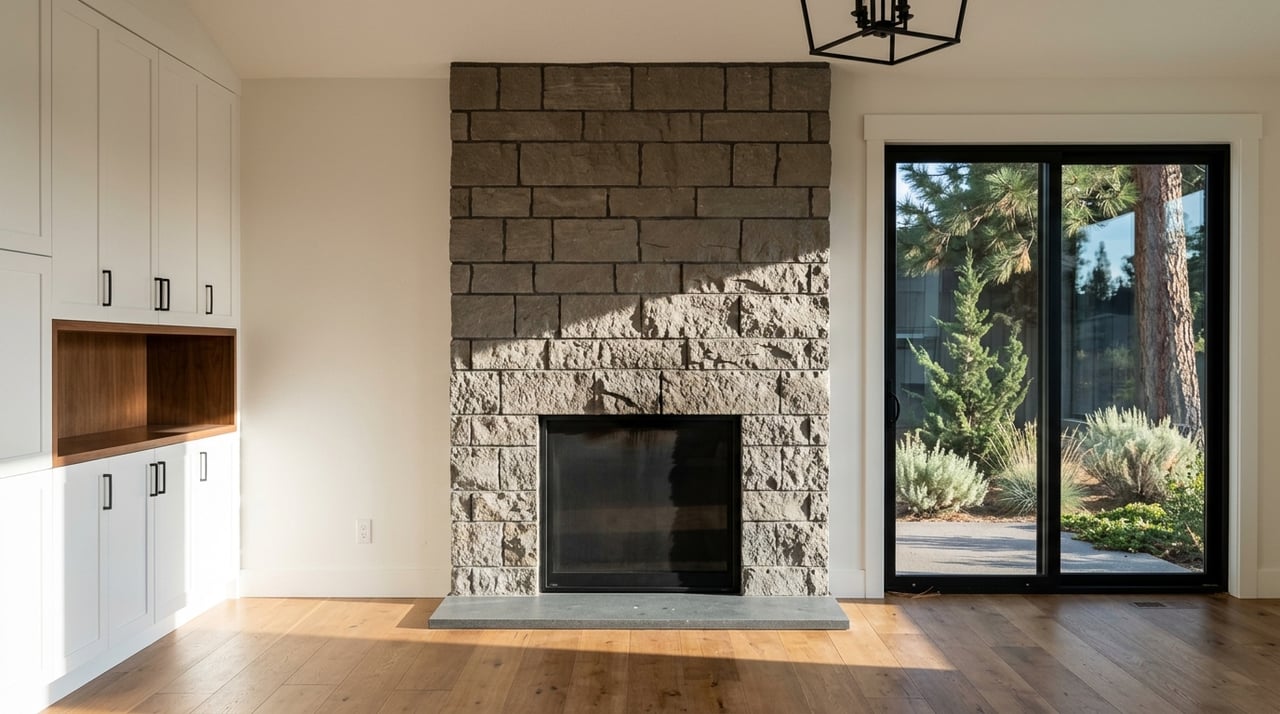
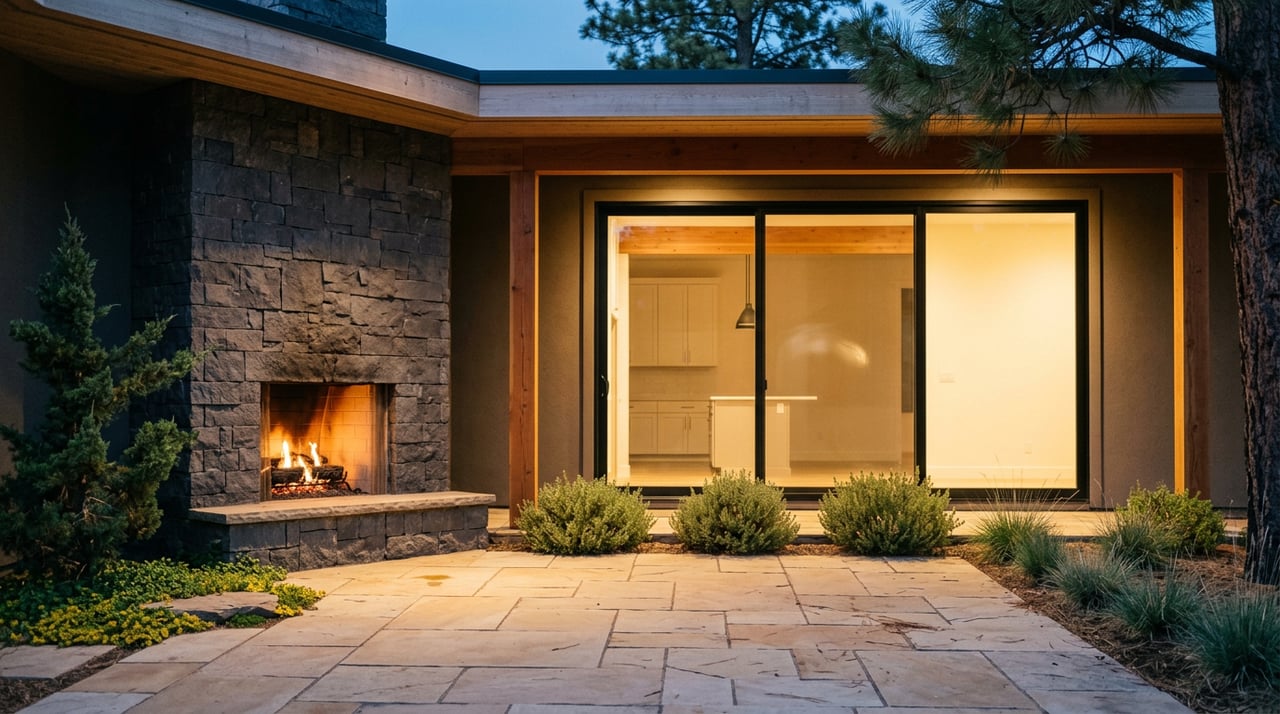
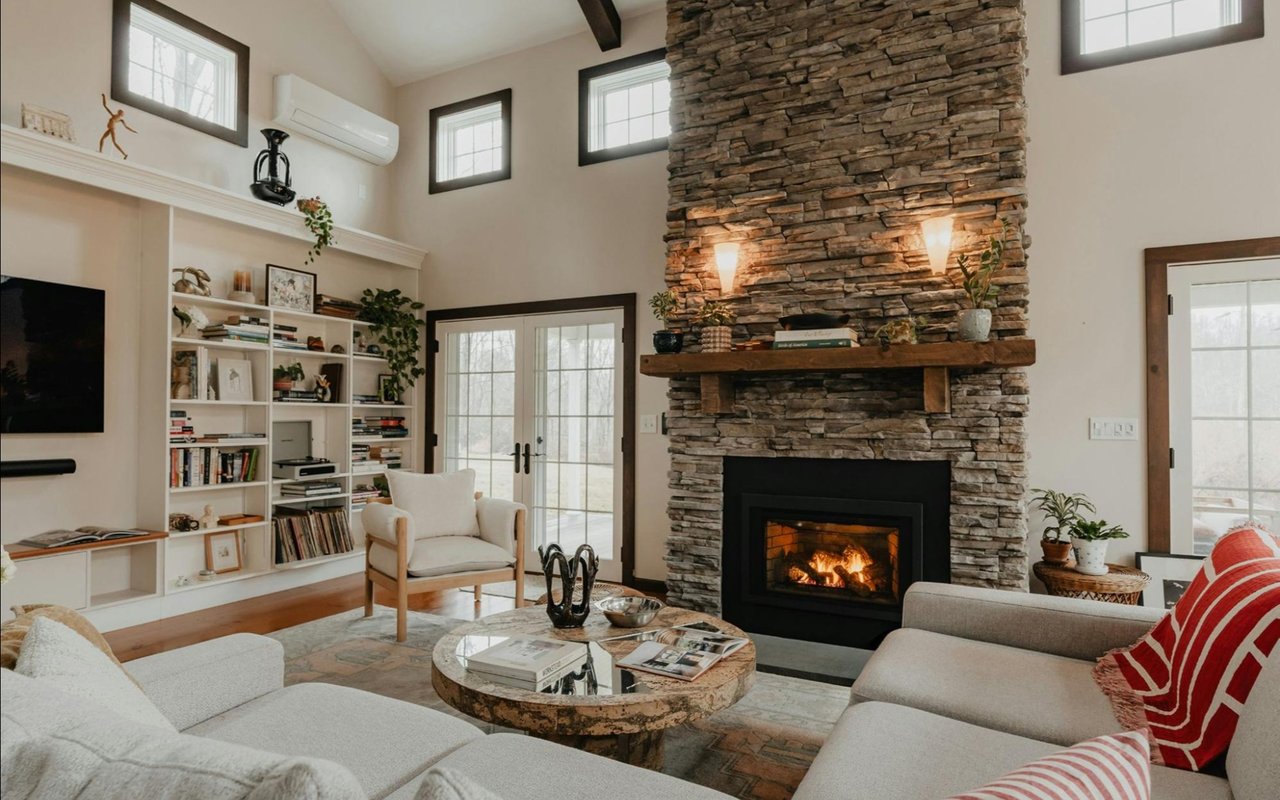
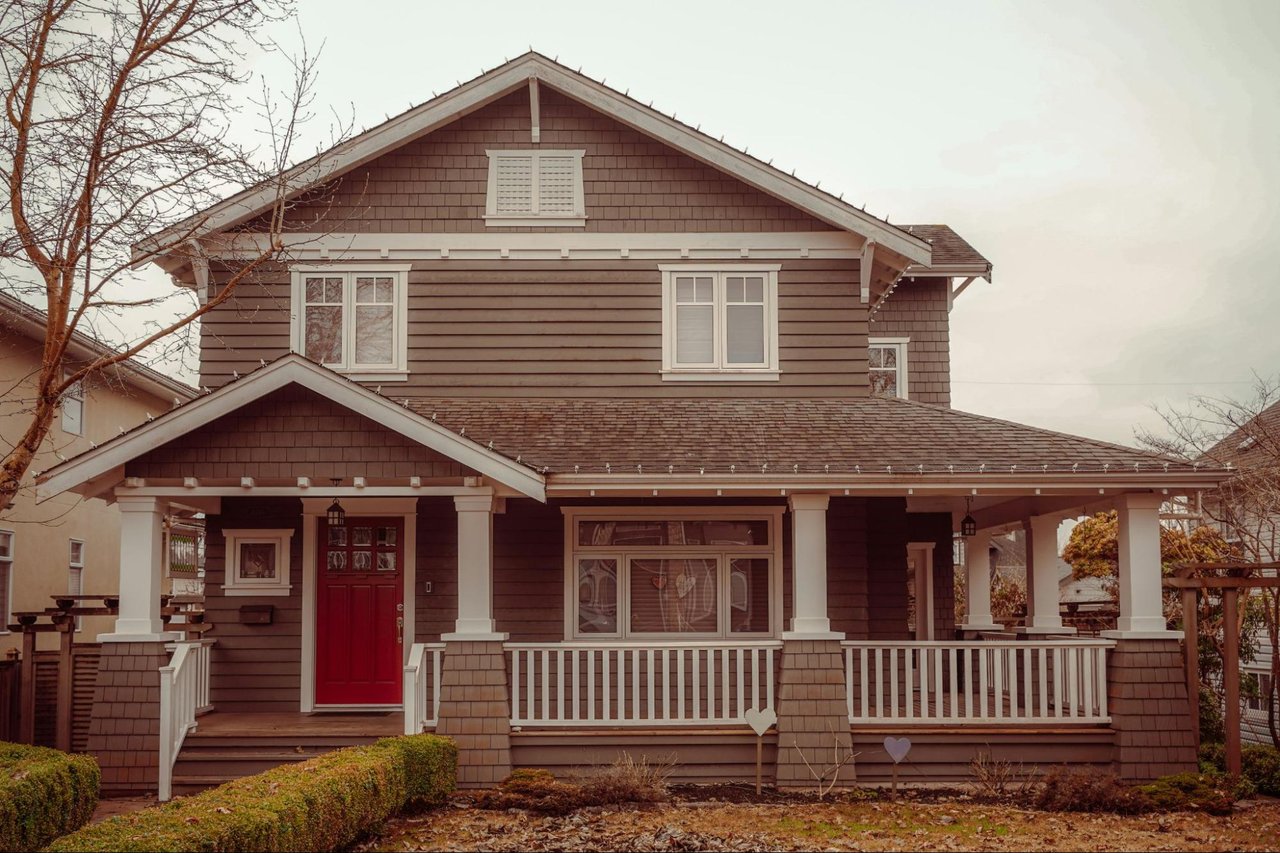
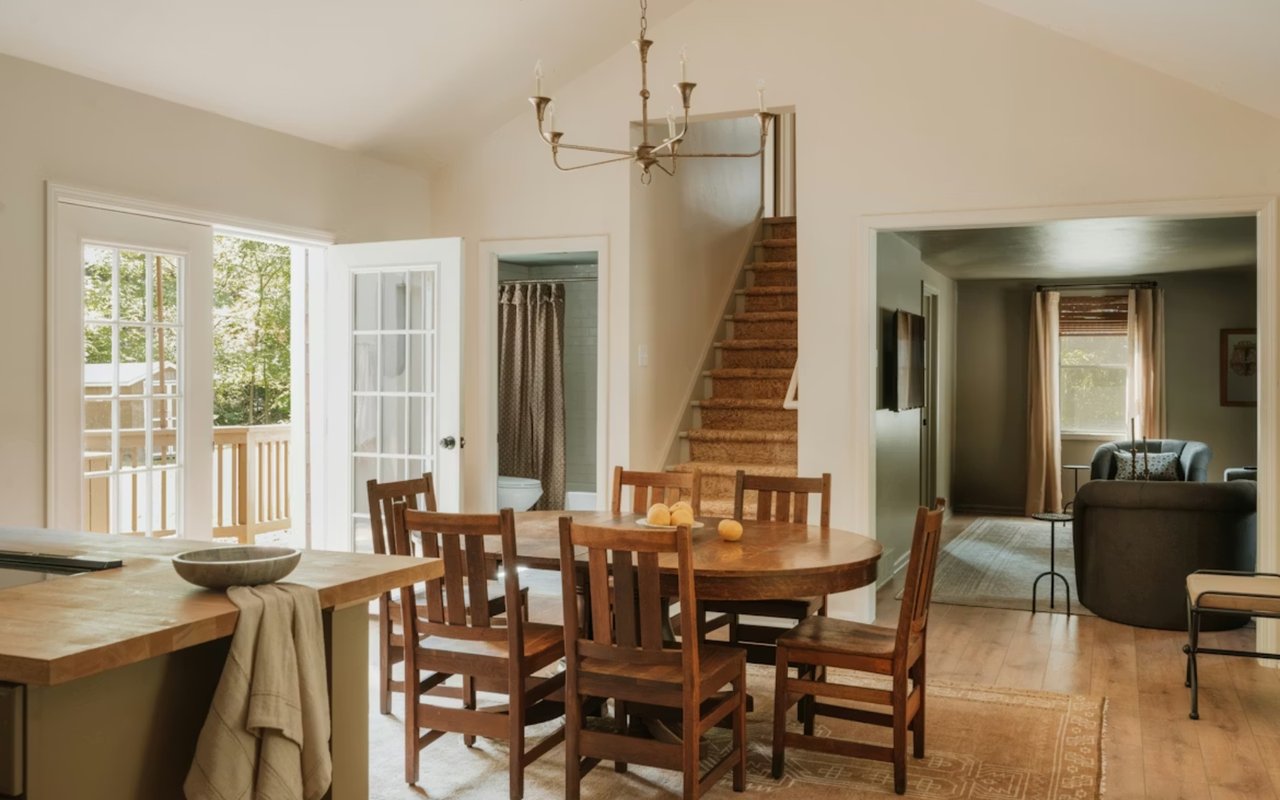
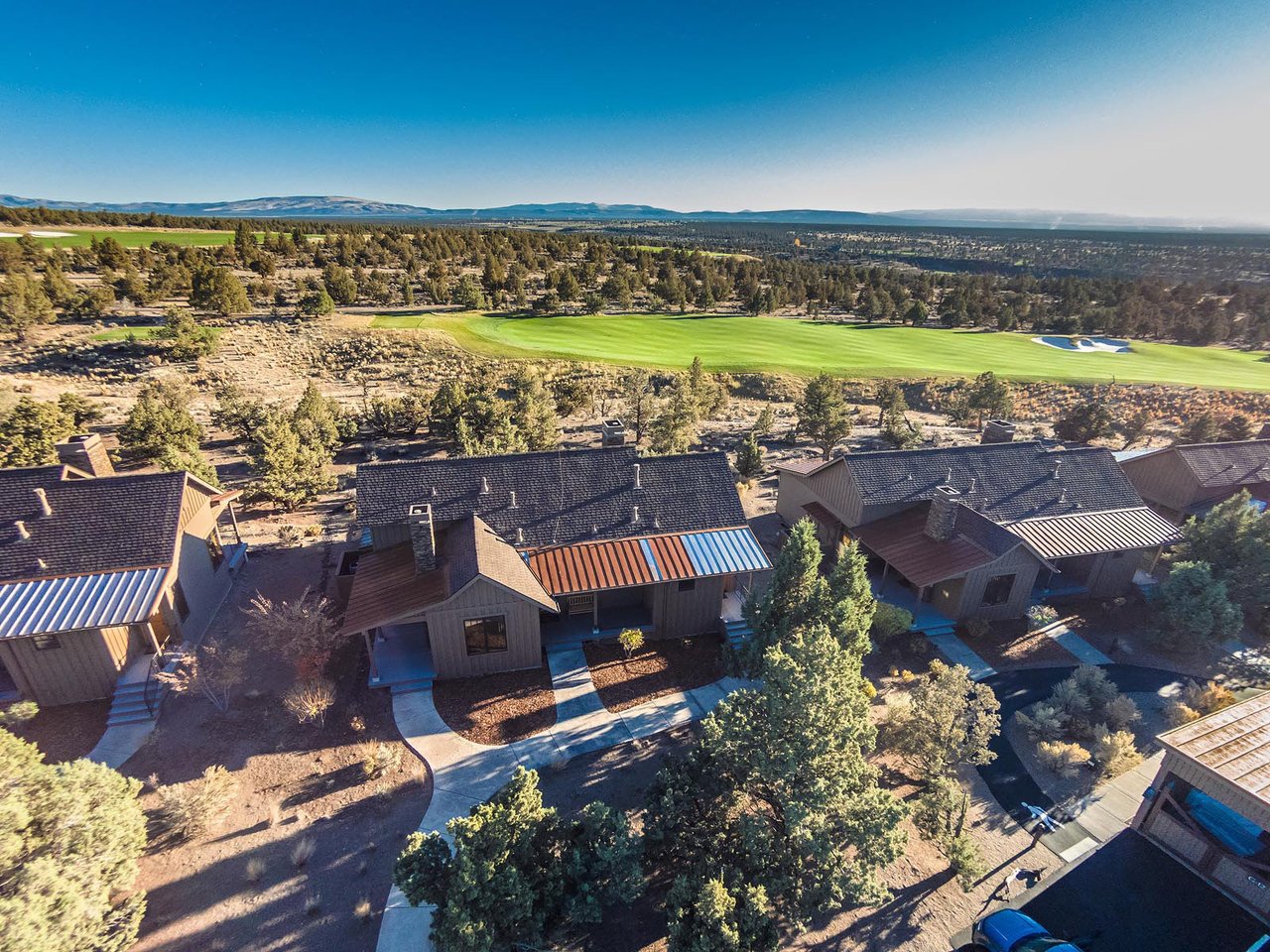
The mid-century and vintage cabins built in the 1960s and 1970s are the original backbone of the community. Expect heavy timber accents, dark cedar siding, steep gabled roofs, central masonry fireplaces, floor-to-ceiling windows aimed at the common space, and compact footprints — often 1,000 to 1,600 square feet. These homes have real charm and real limitations, and the honest question for any buyer is whether you want to live in one as-is or renovate it.
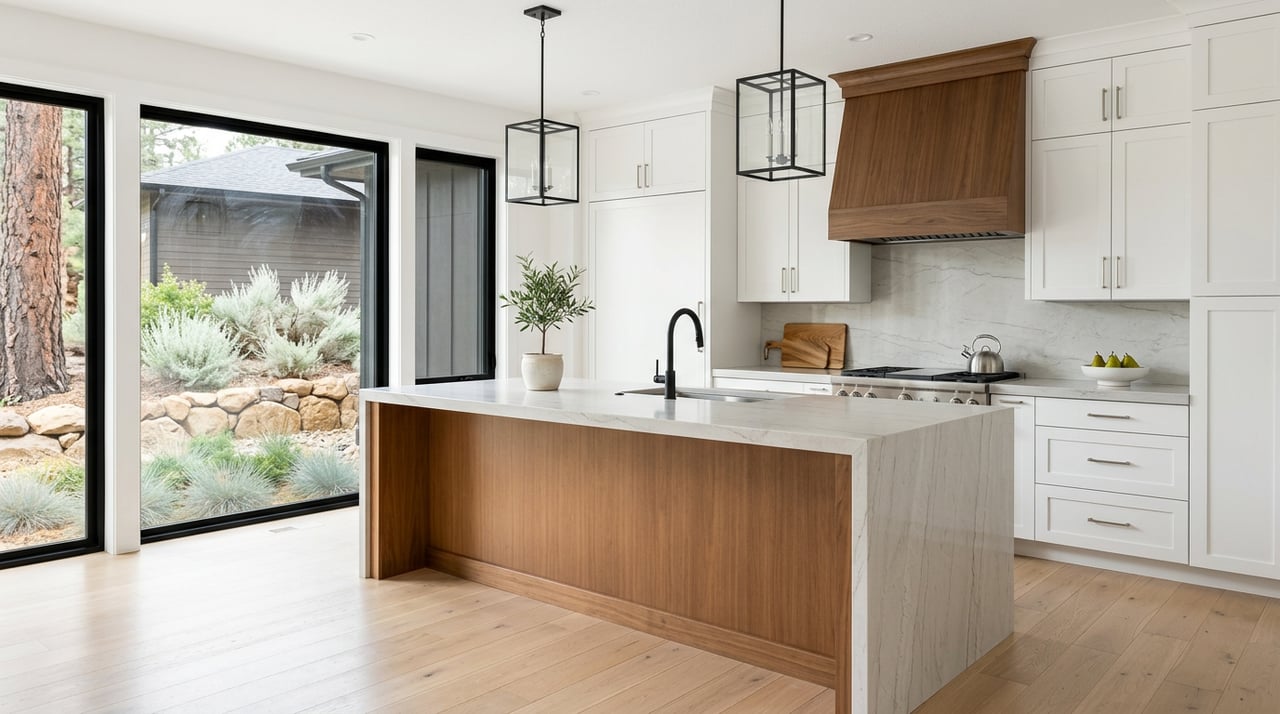
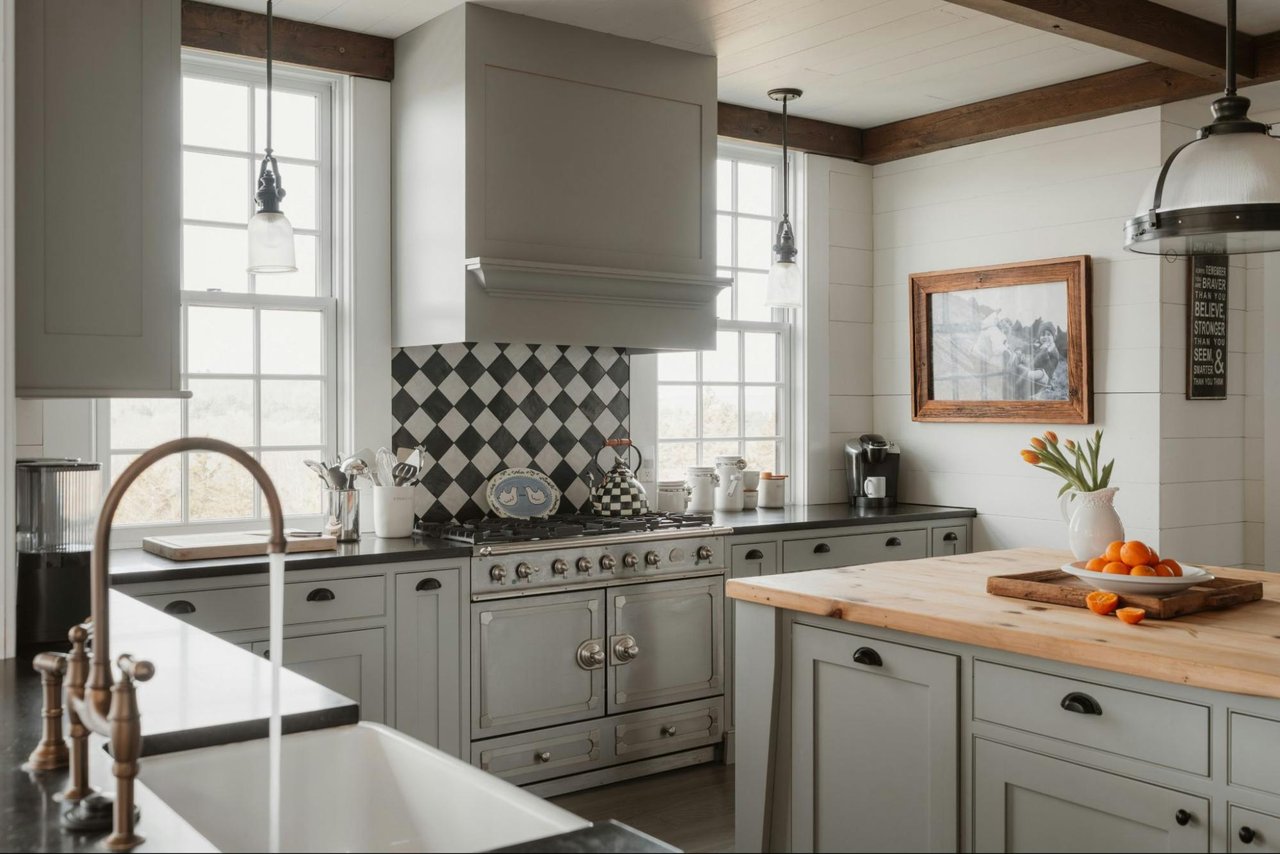
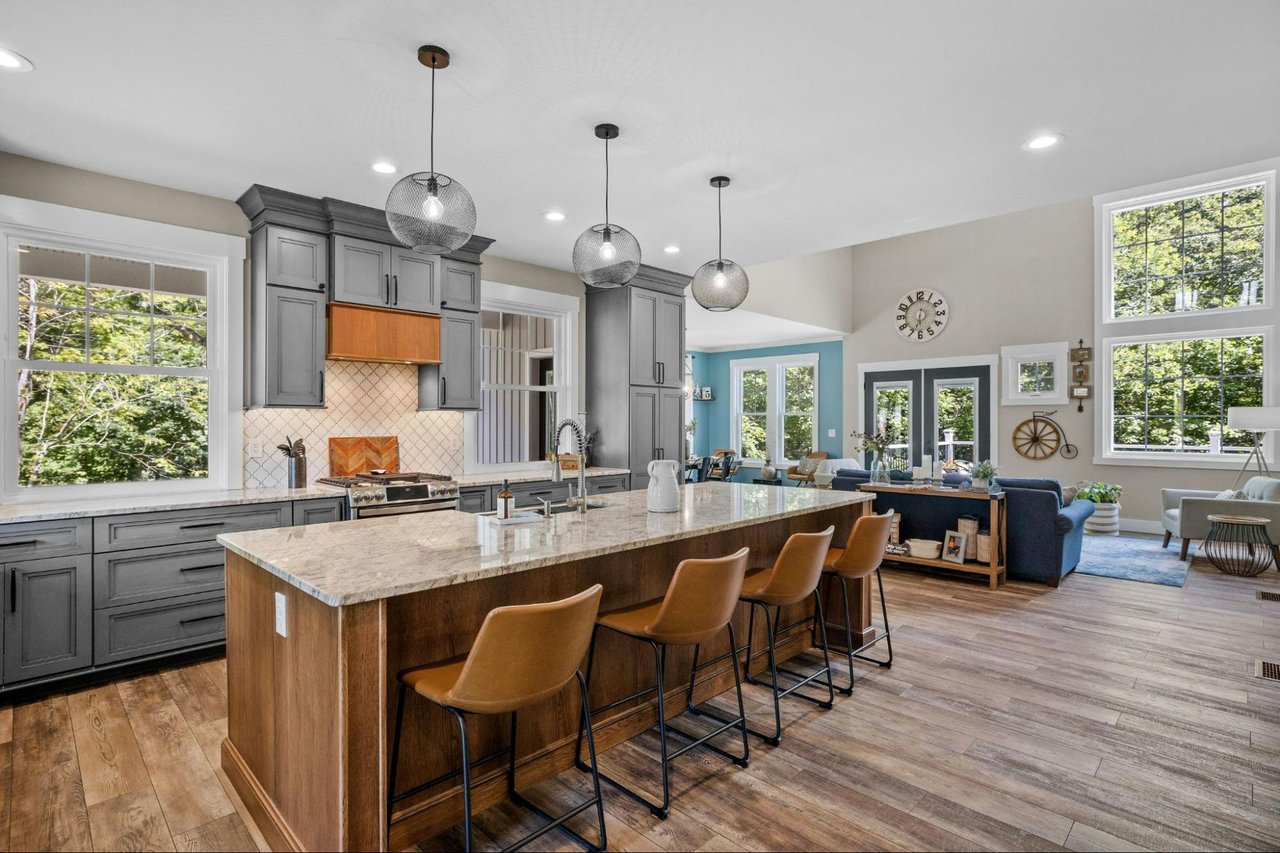
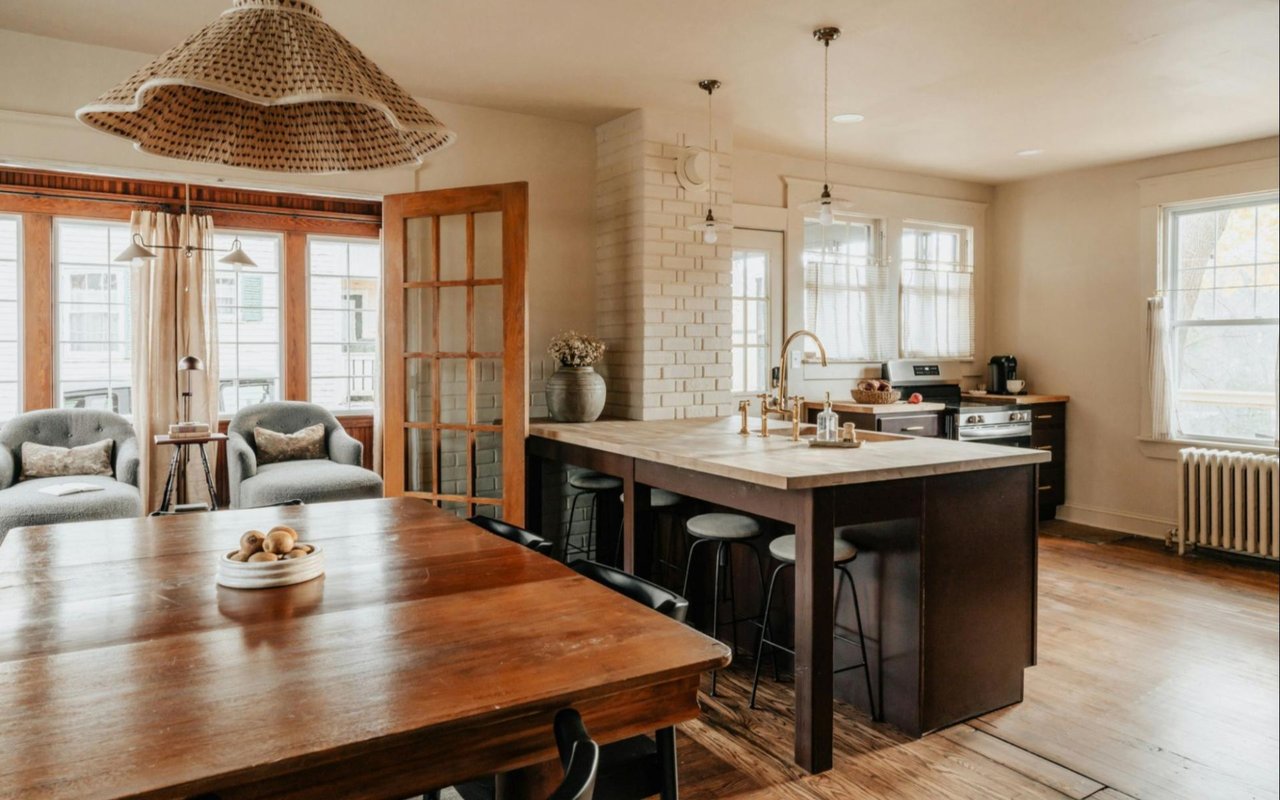
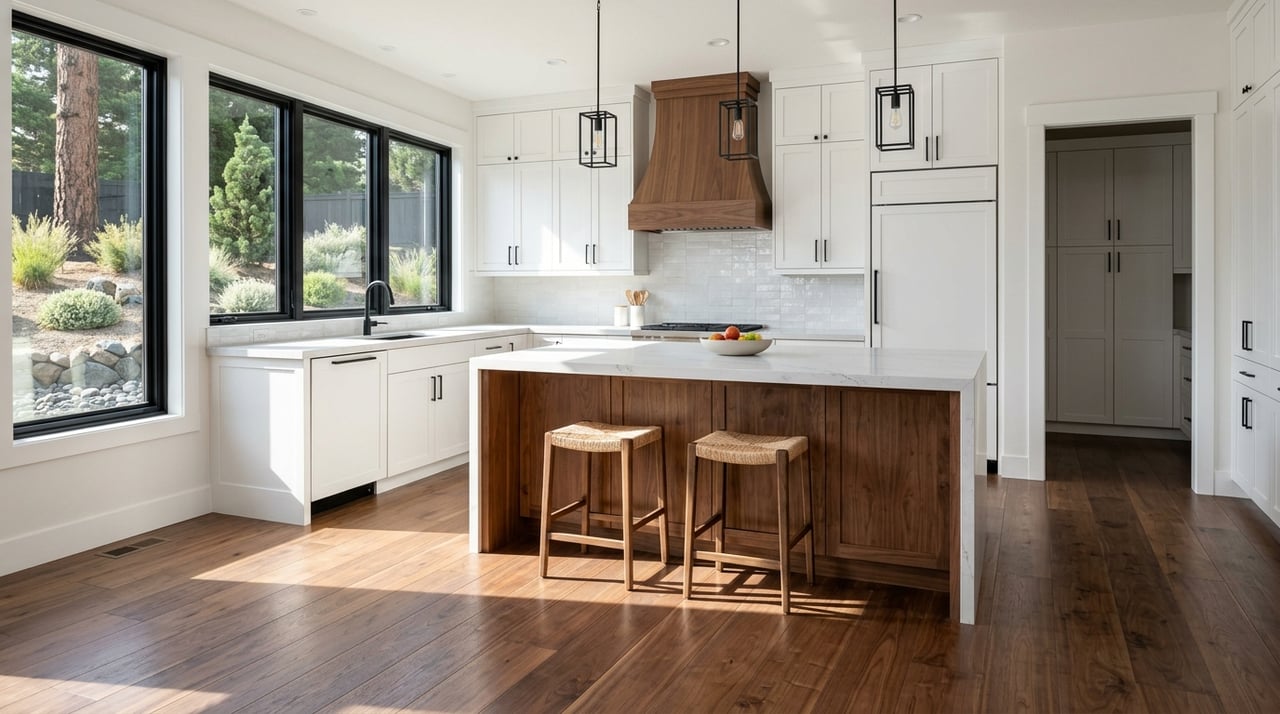
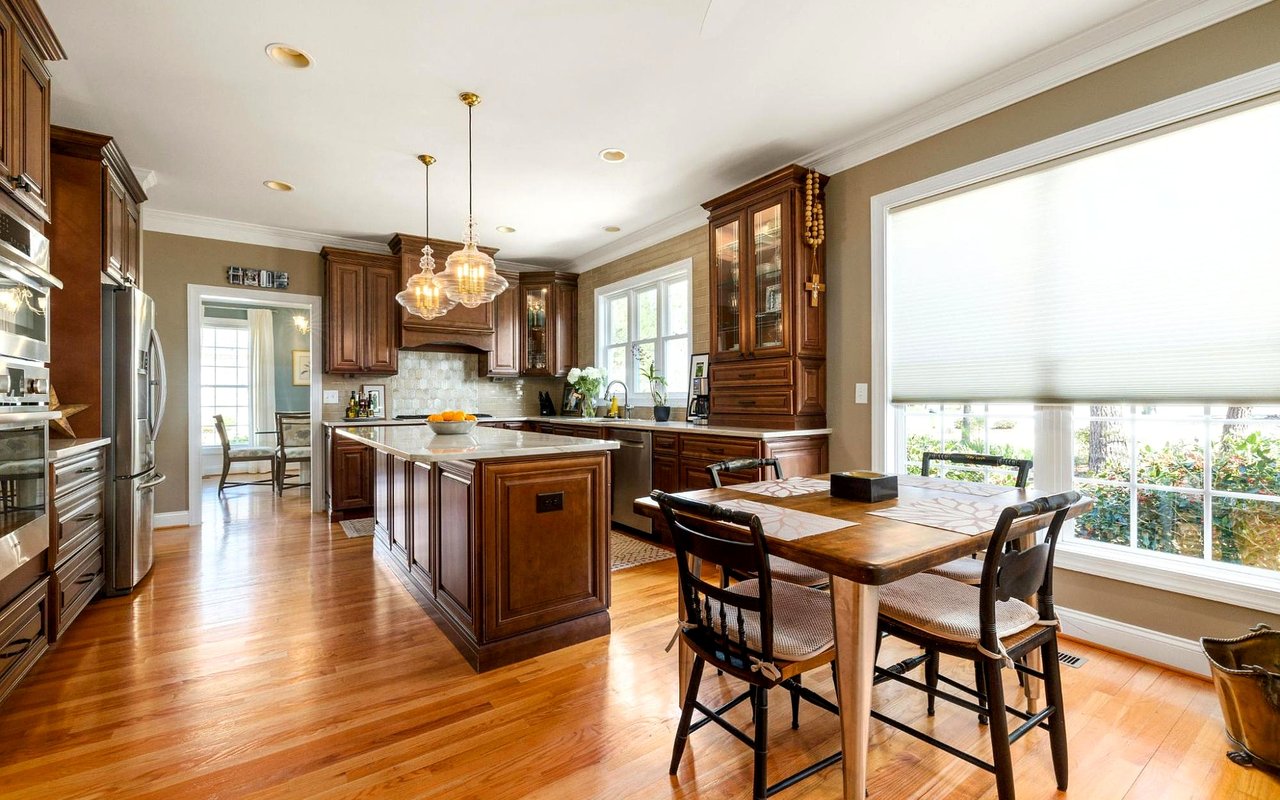
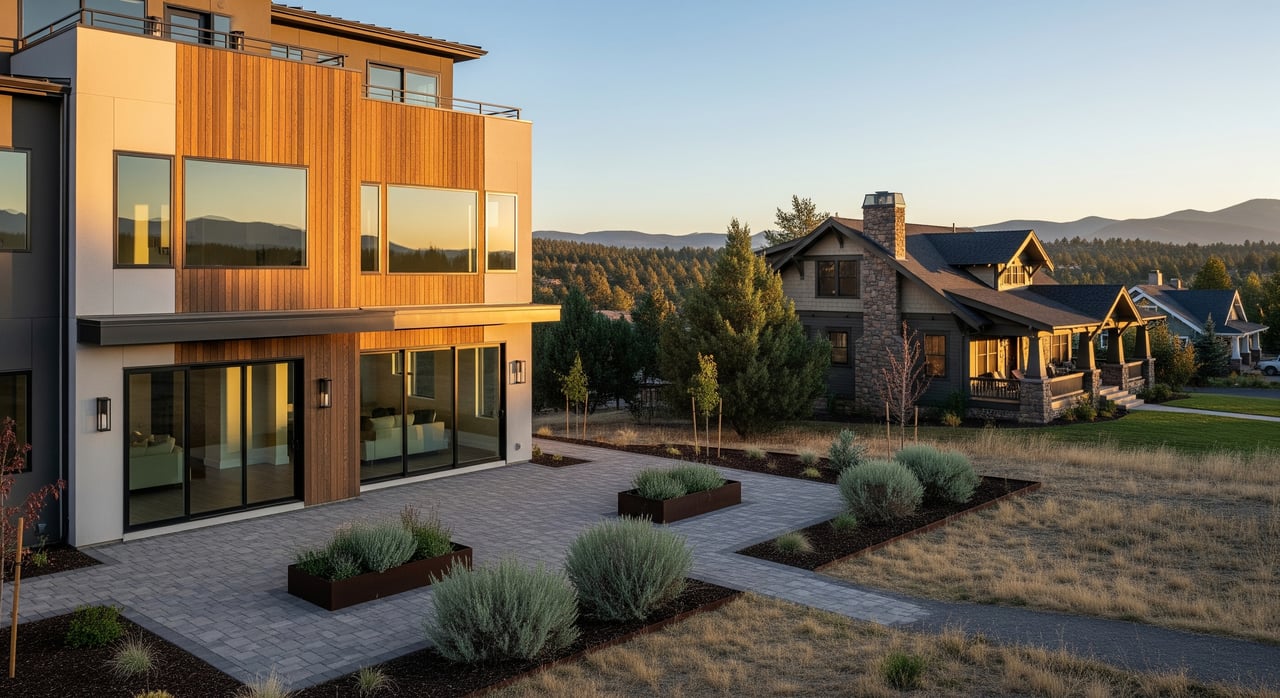
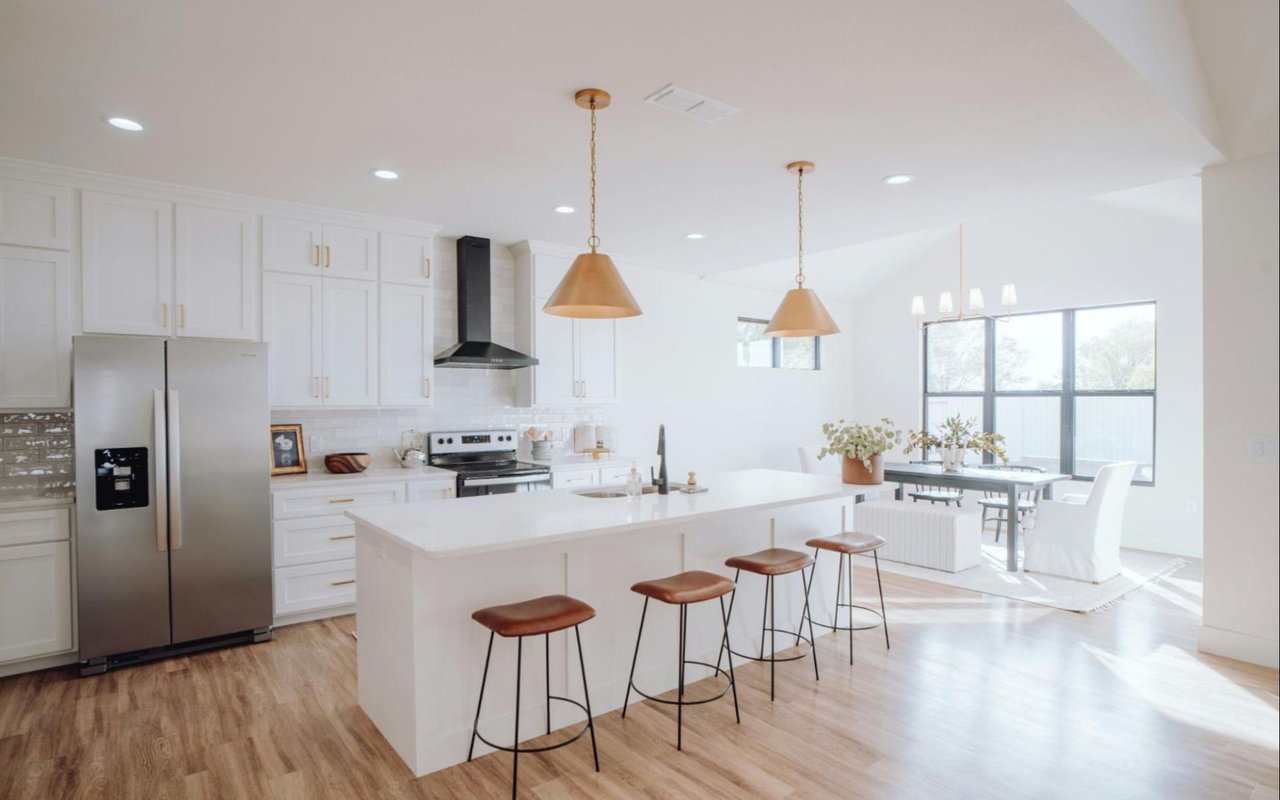
The modernized classics are where much of the market activity sits. Sustained demand from both second-home buyers and short-term rental investors has driven widespread renovation of the original 1970s and 1980s inventory. A well-executed remodel here typically means opened-up living space, quartz or granite surfaces, expanded outdoor decking with a hot tub, and updated exterior paneling — all while keeping the native aesthetic intact, because SROA design review requires it.
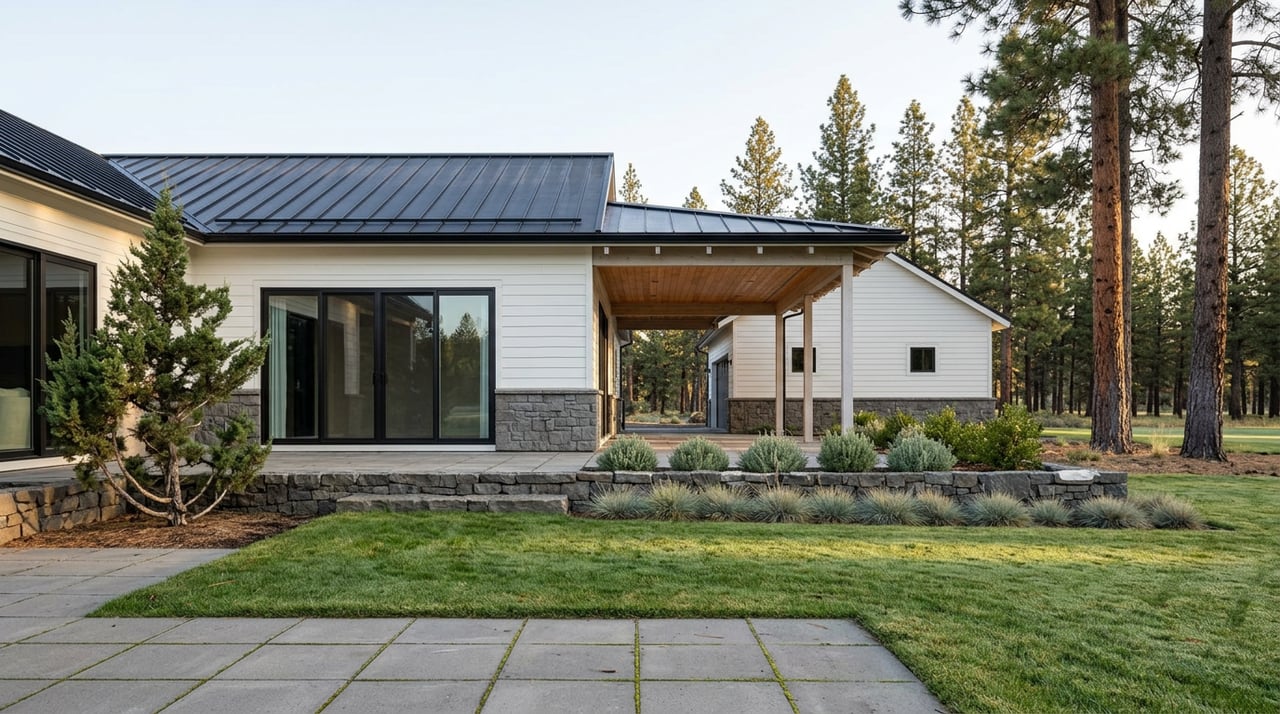
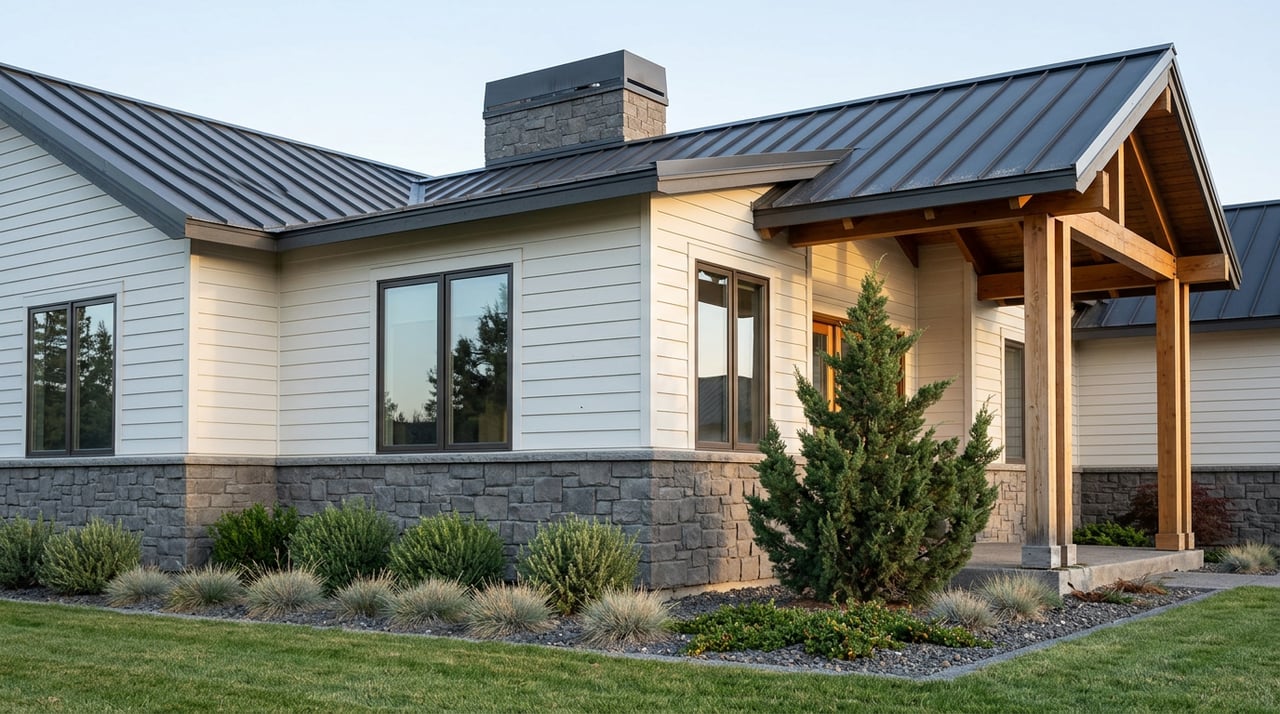
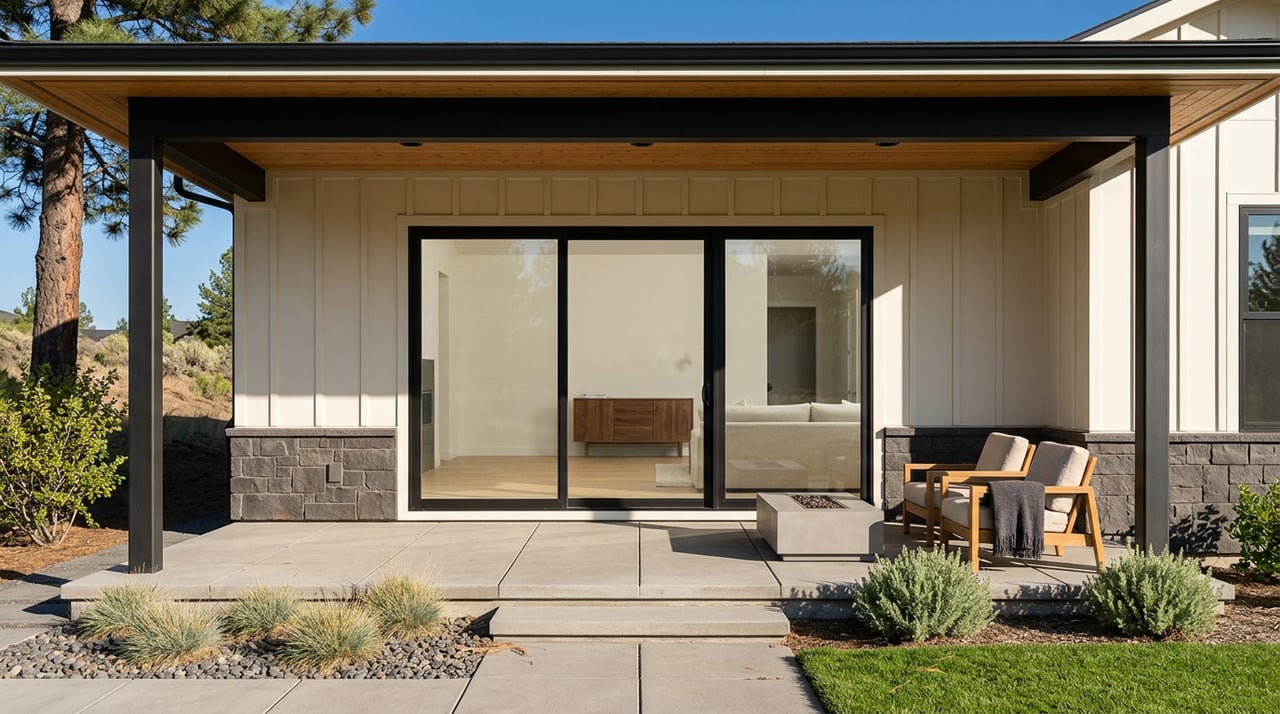
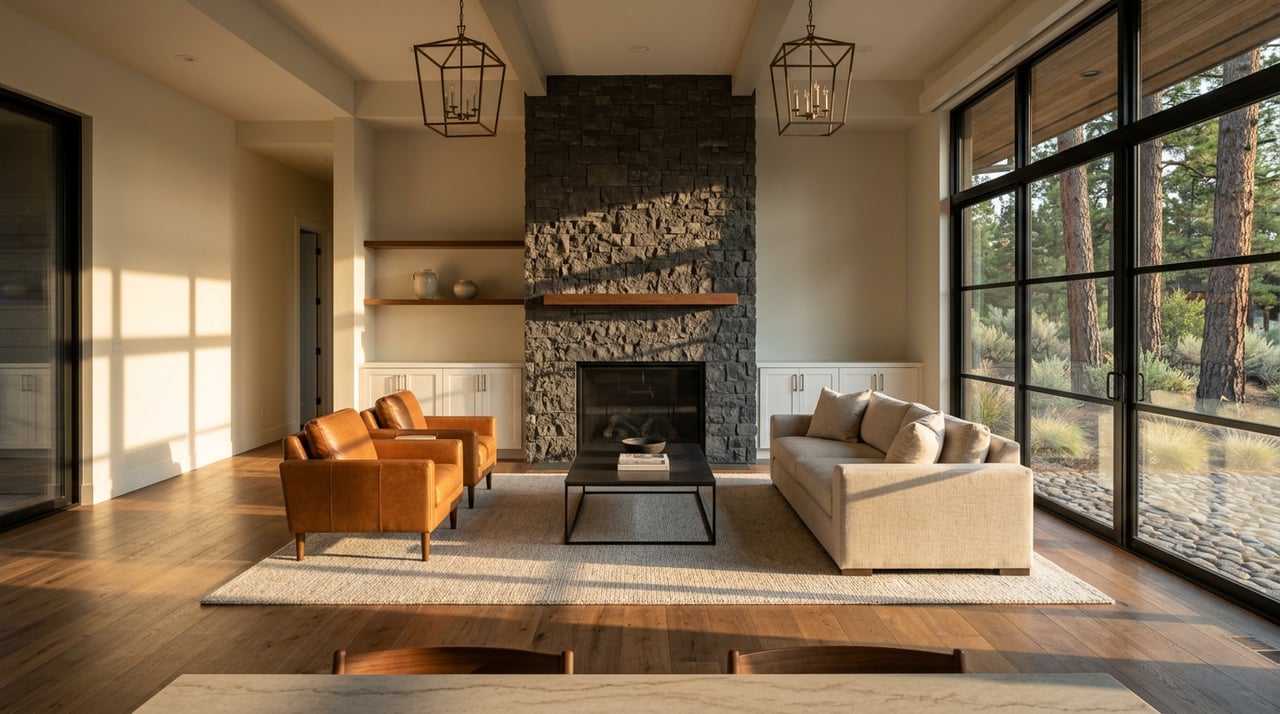
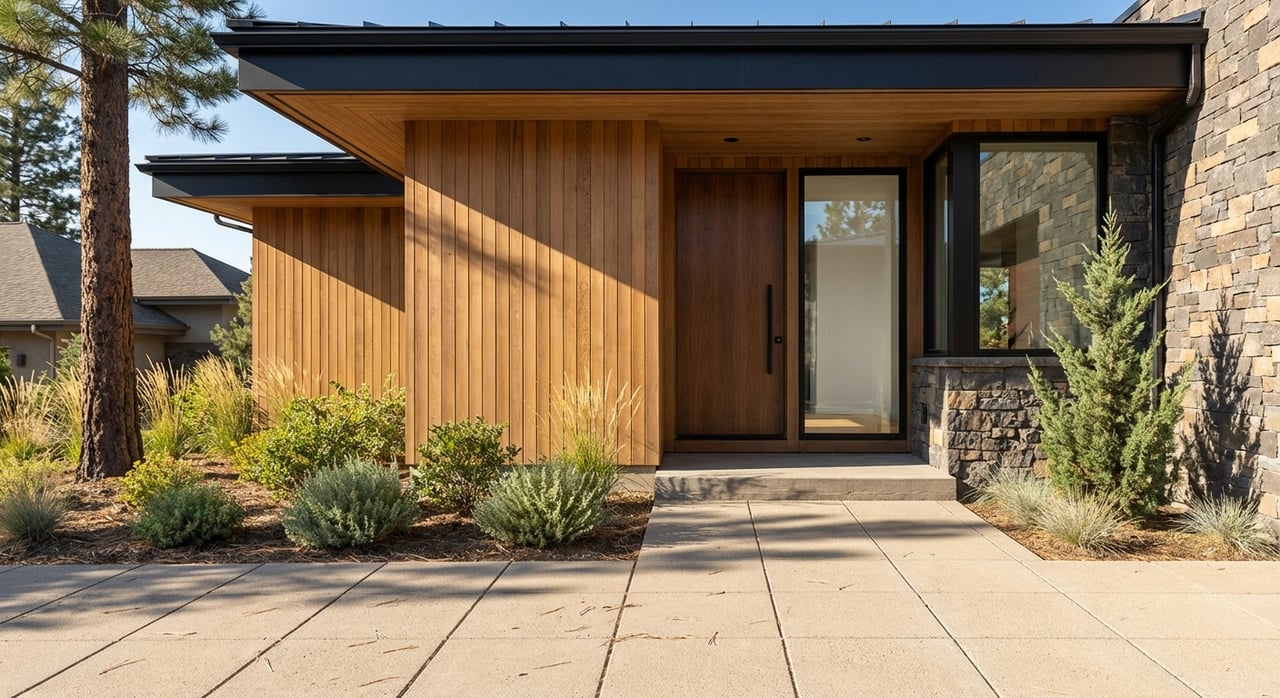
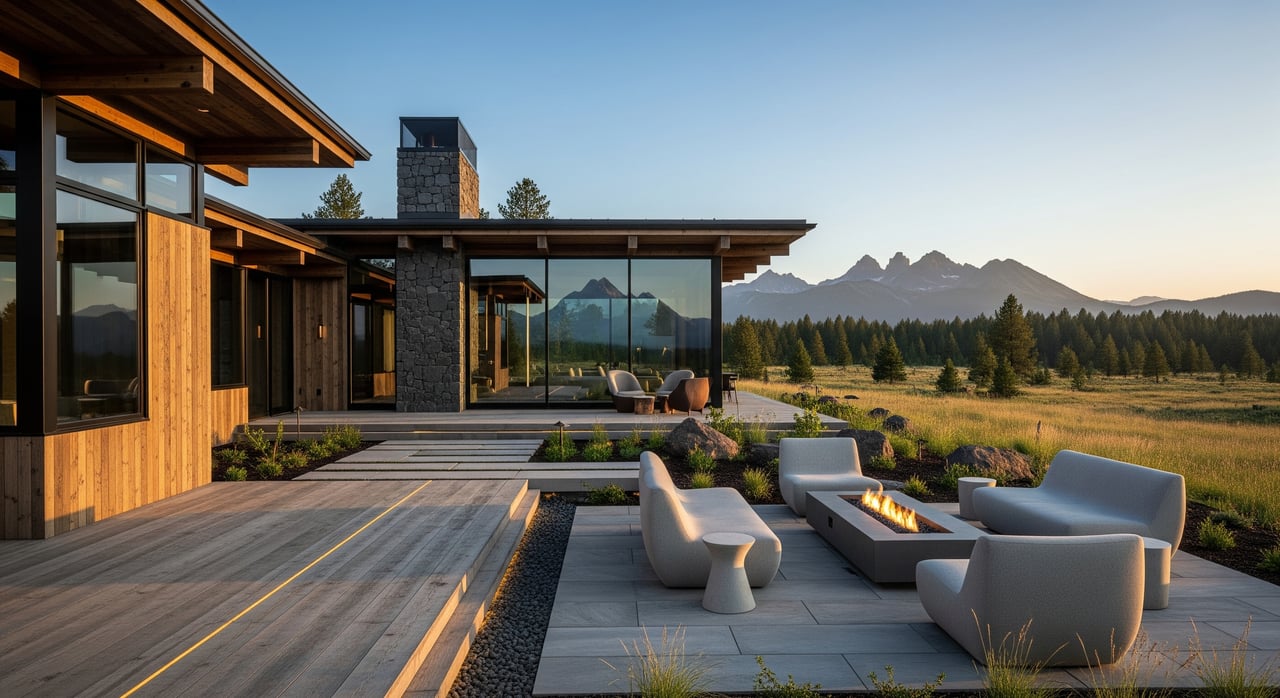
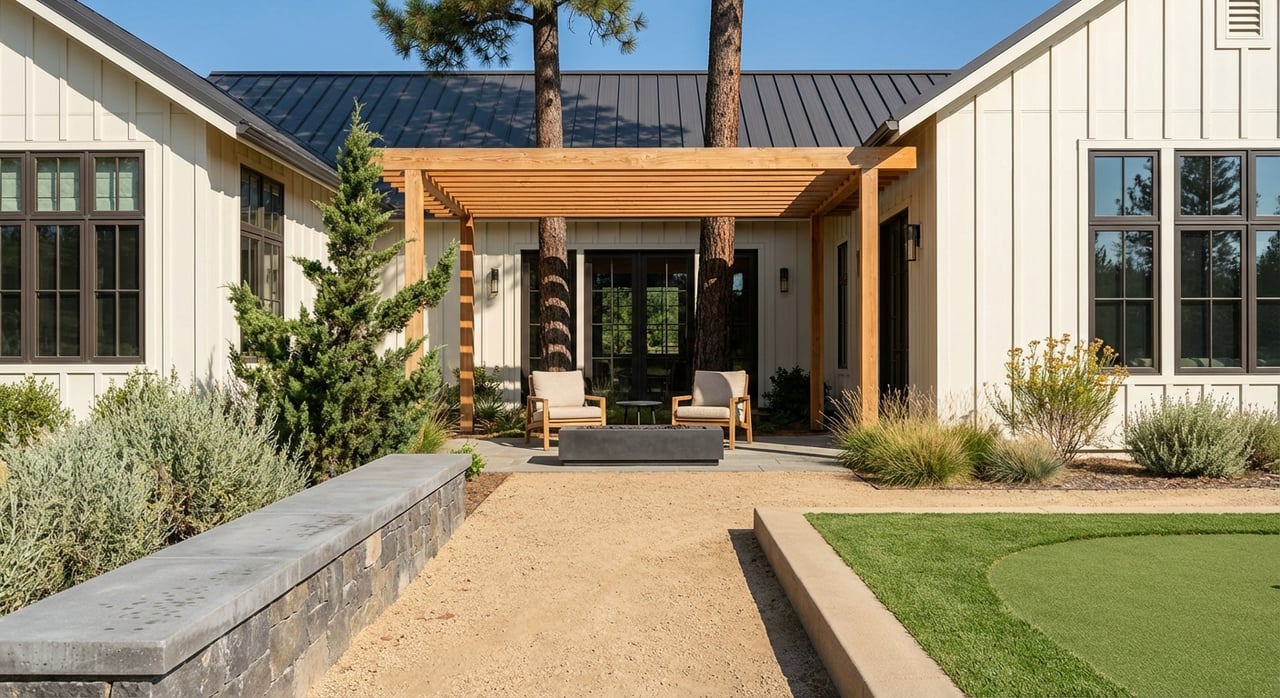
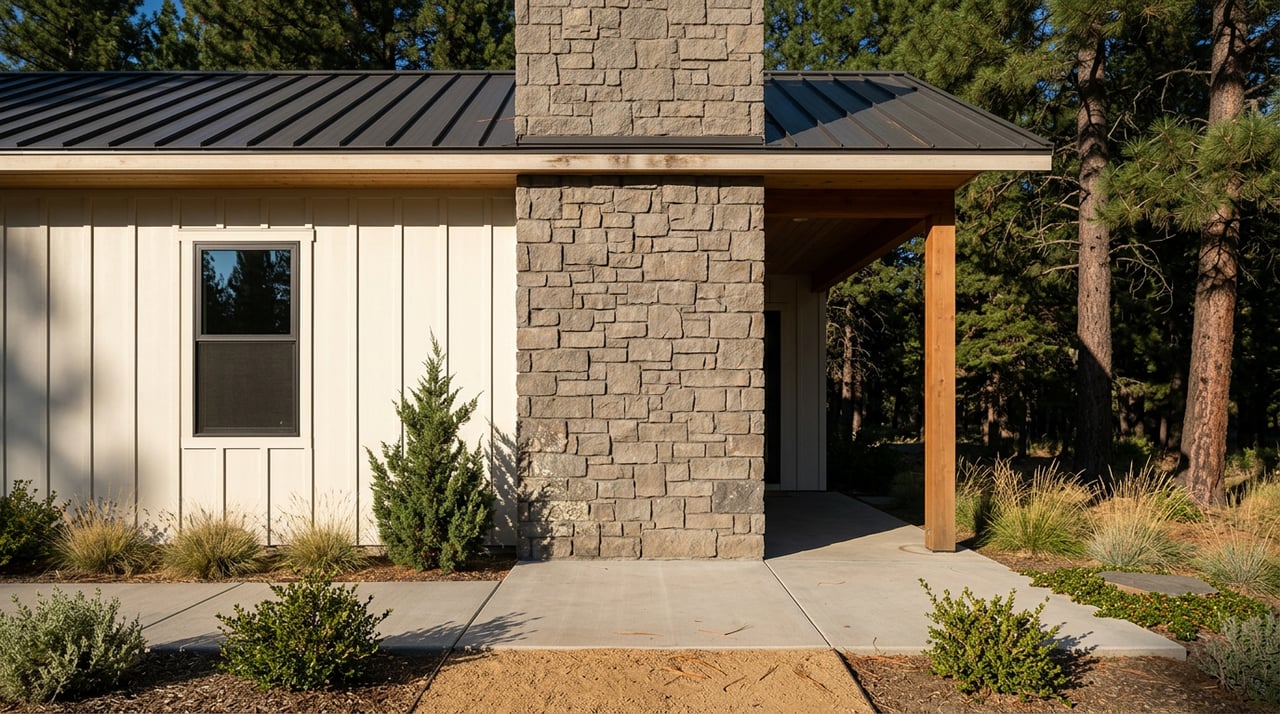
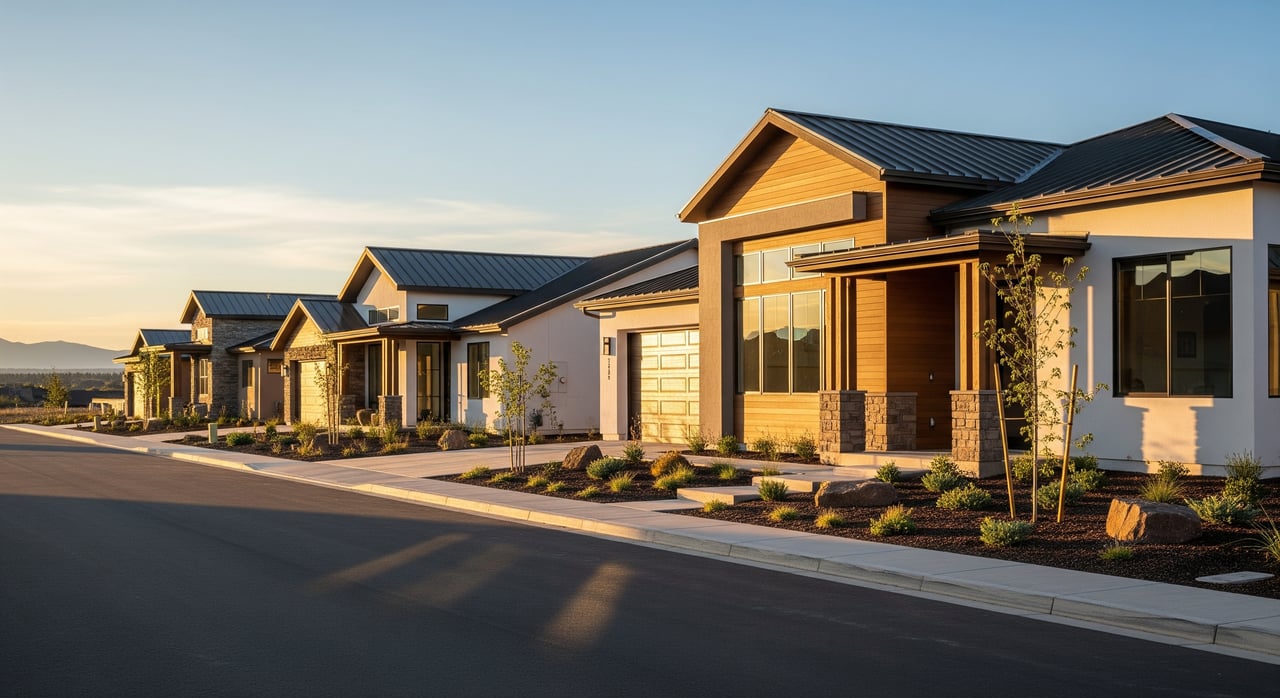
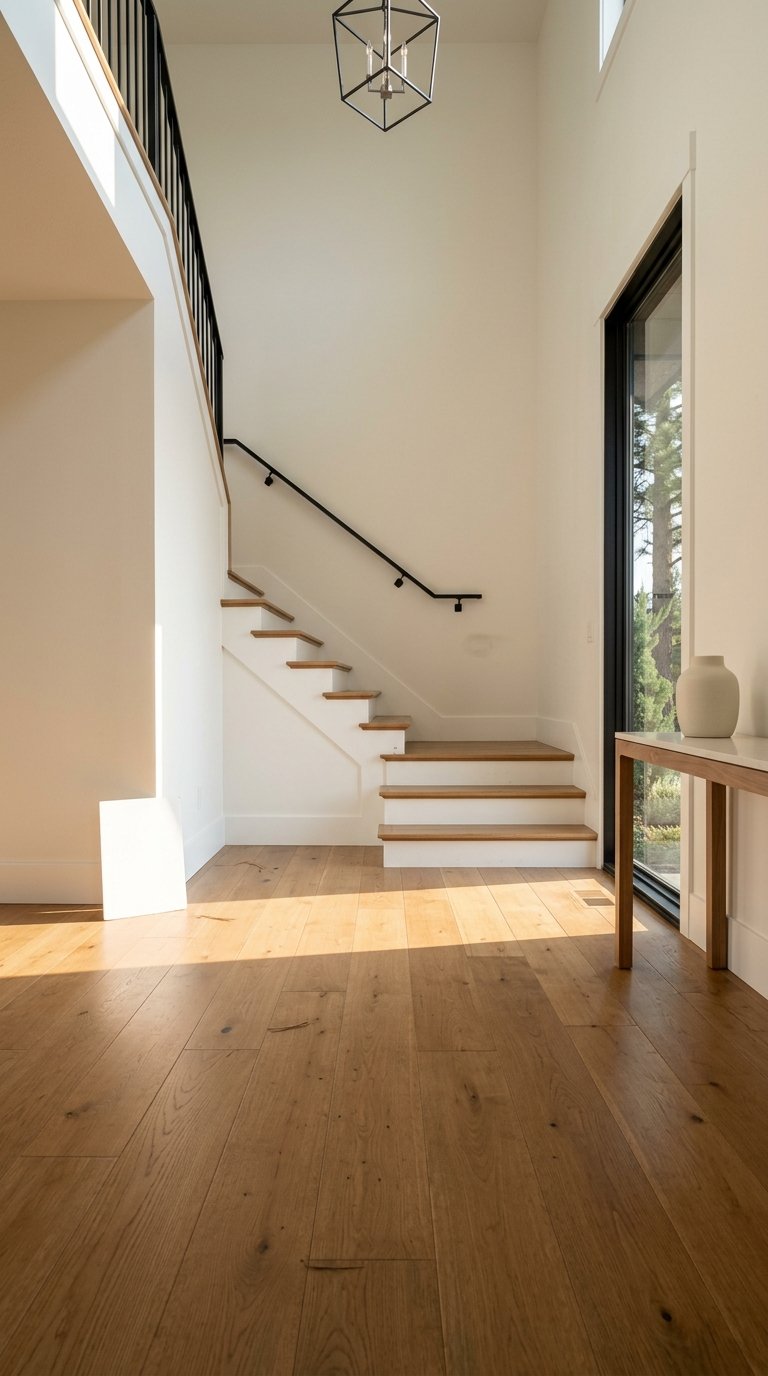
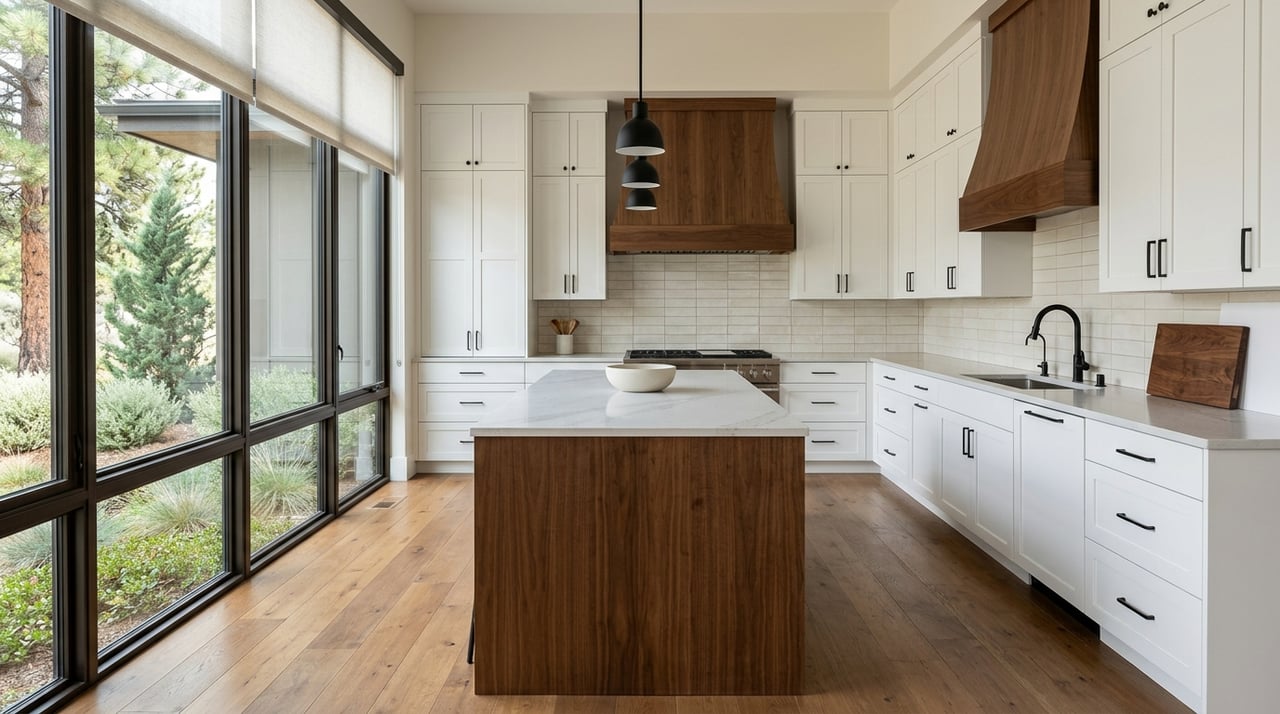
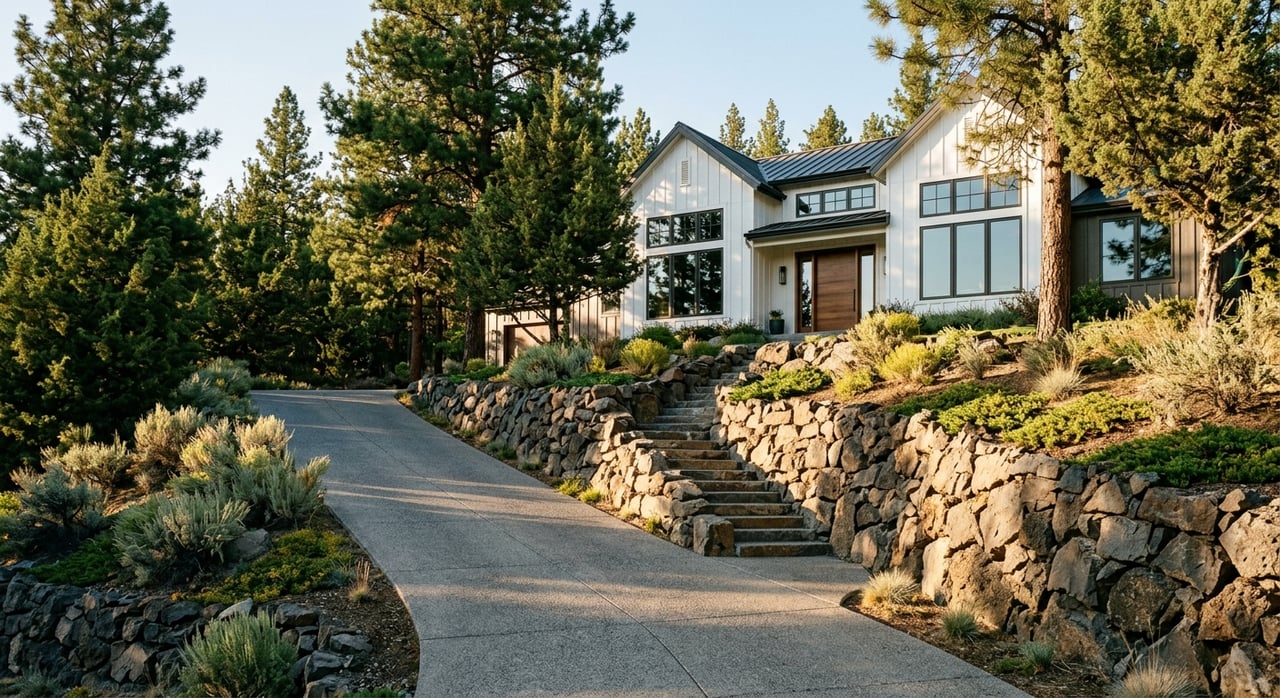
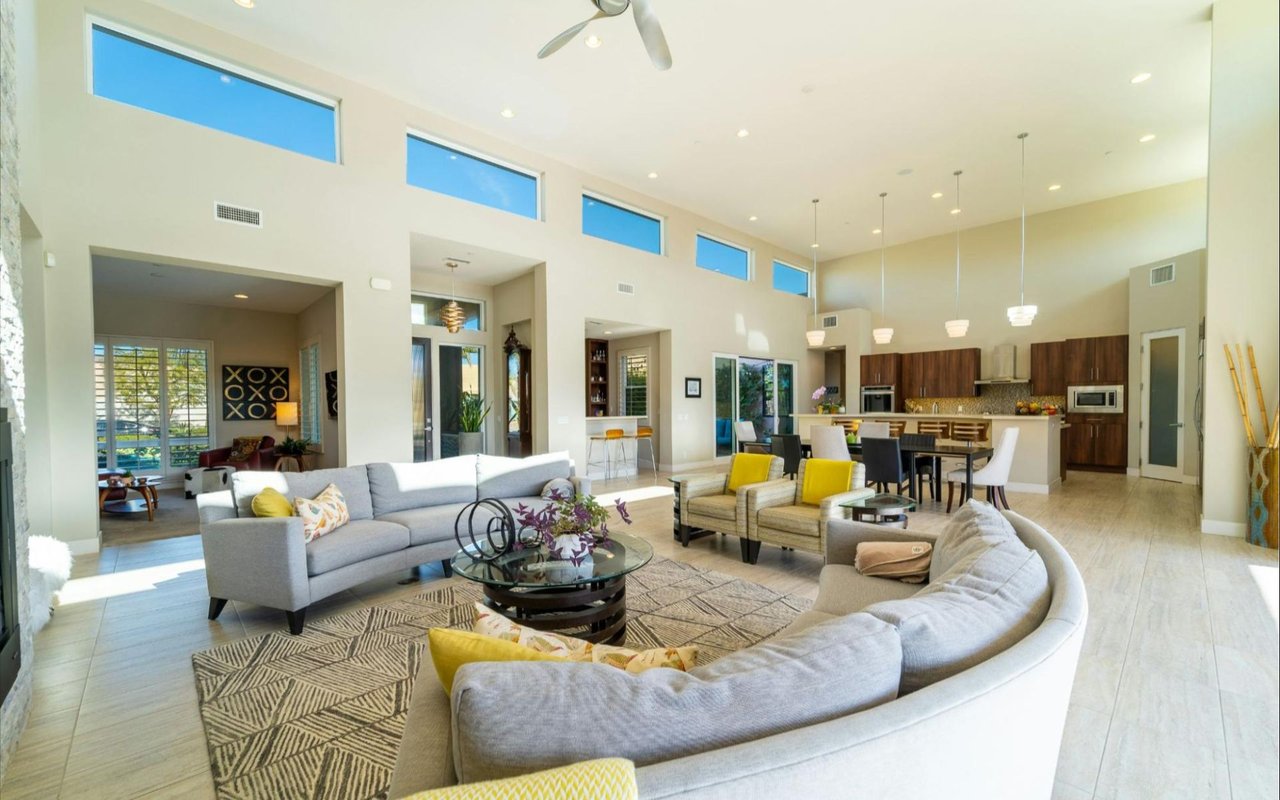
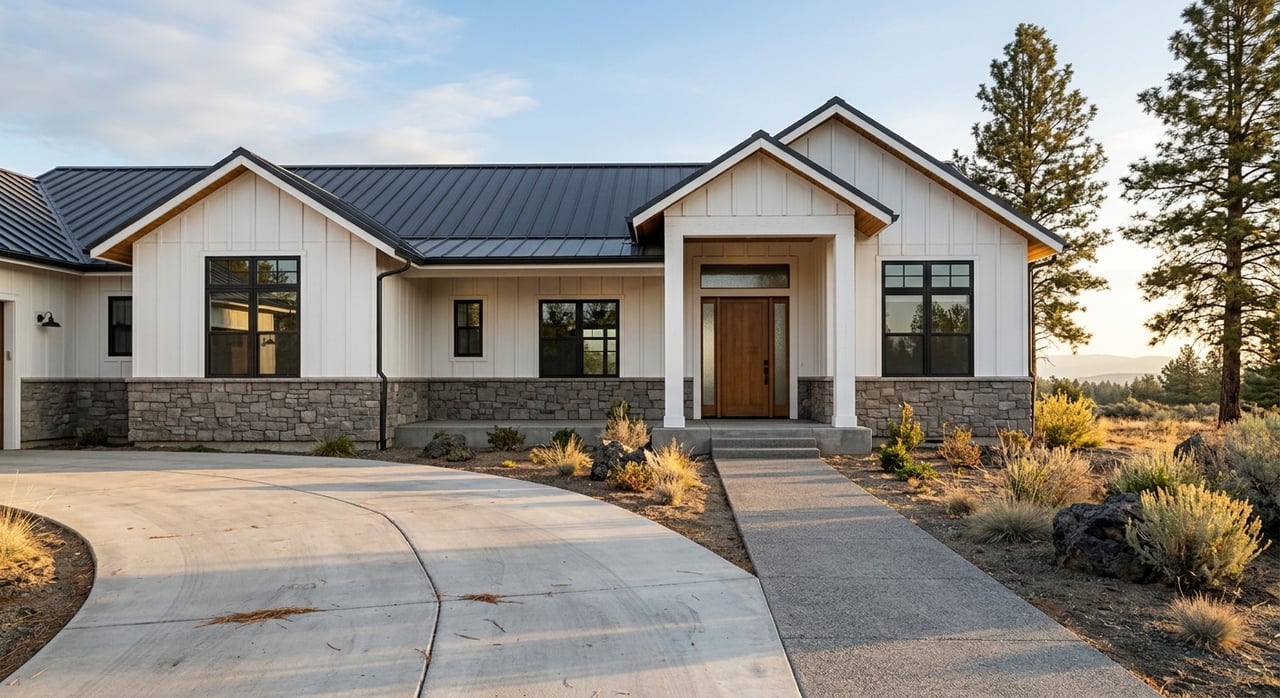
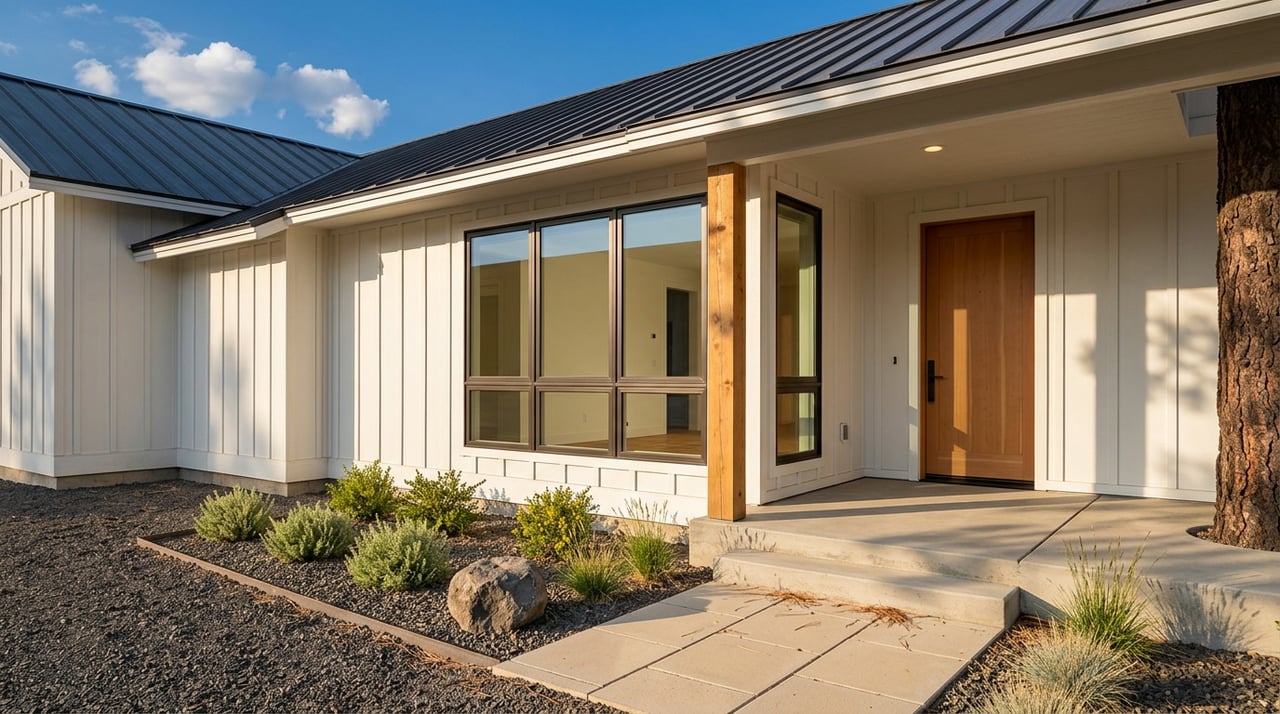
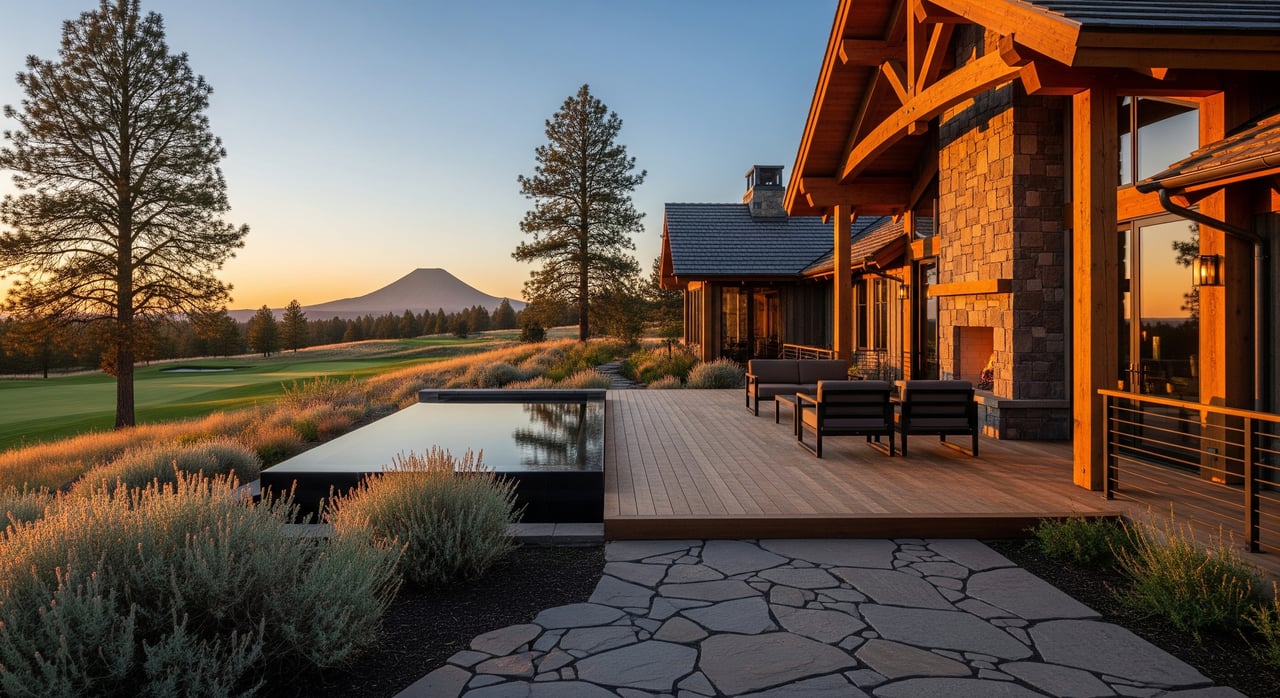
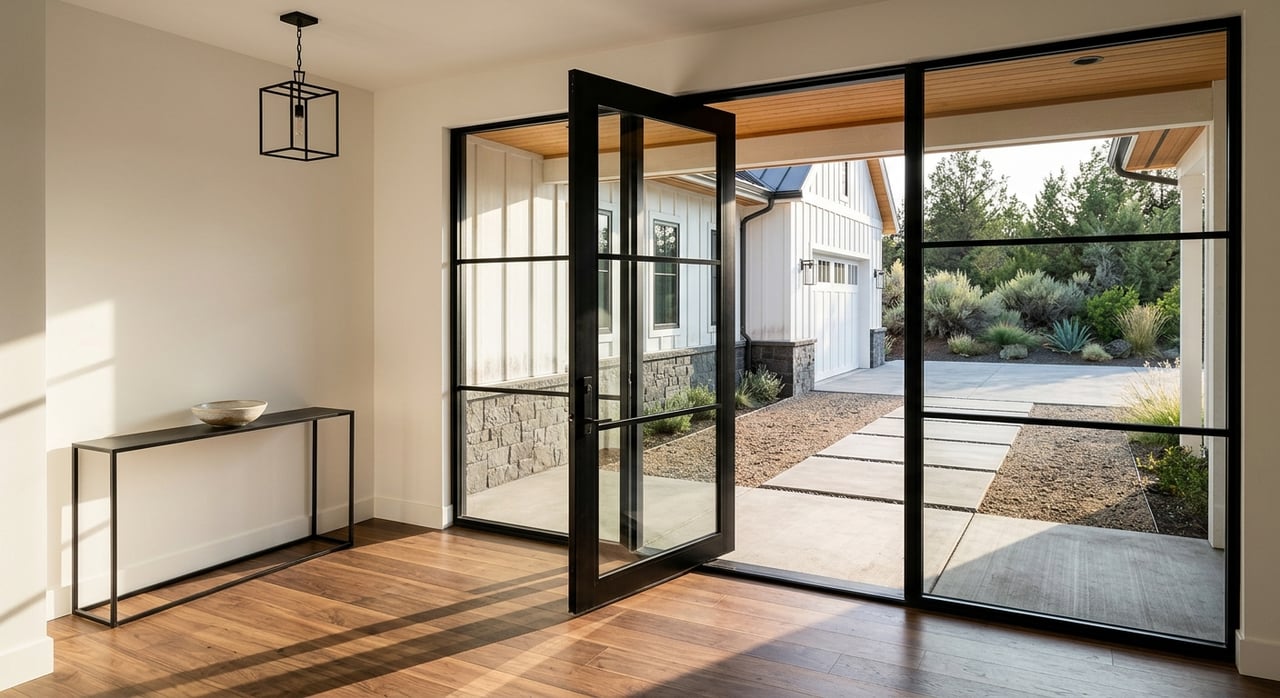
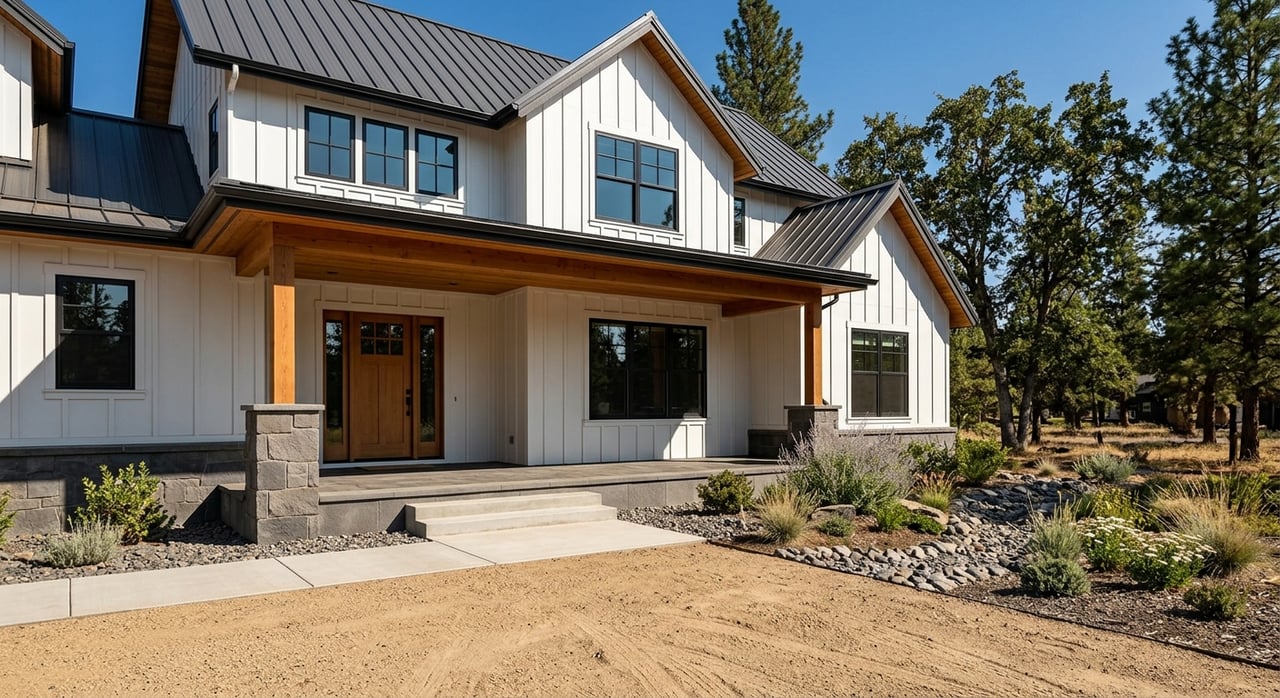
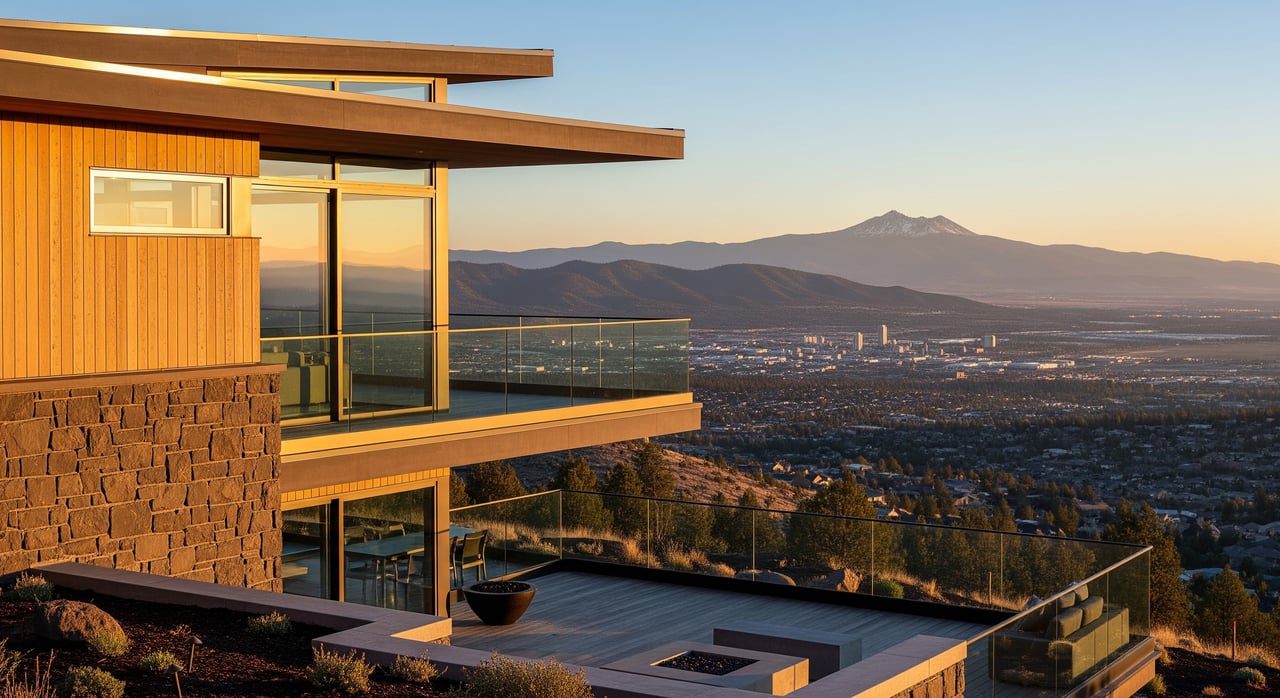
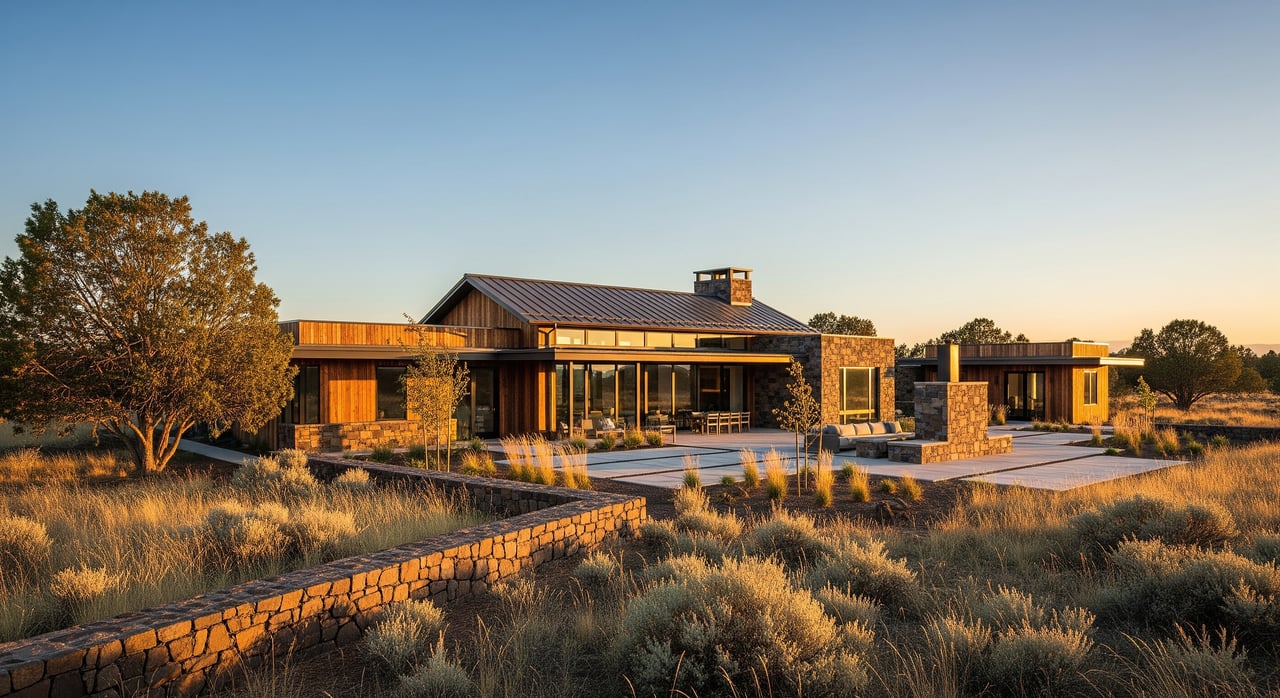
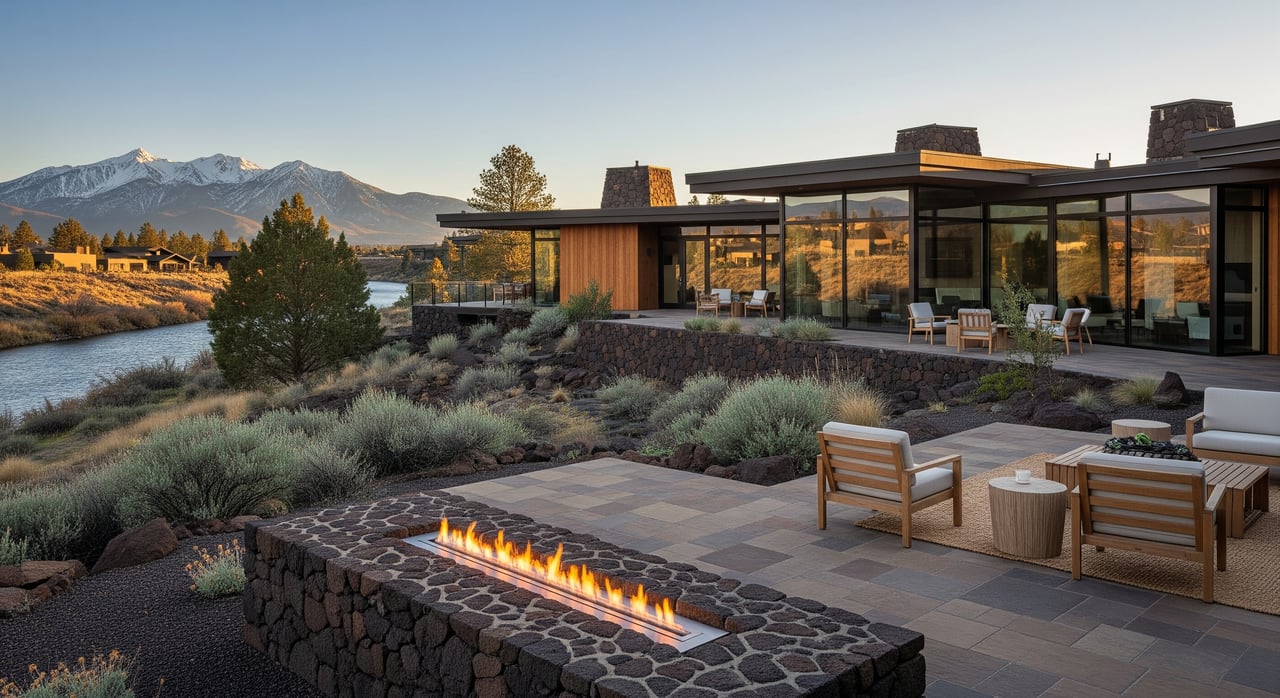
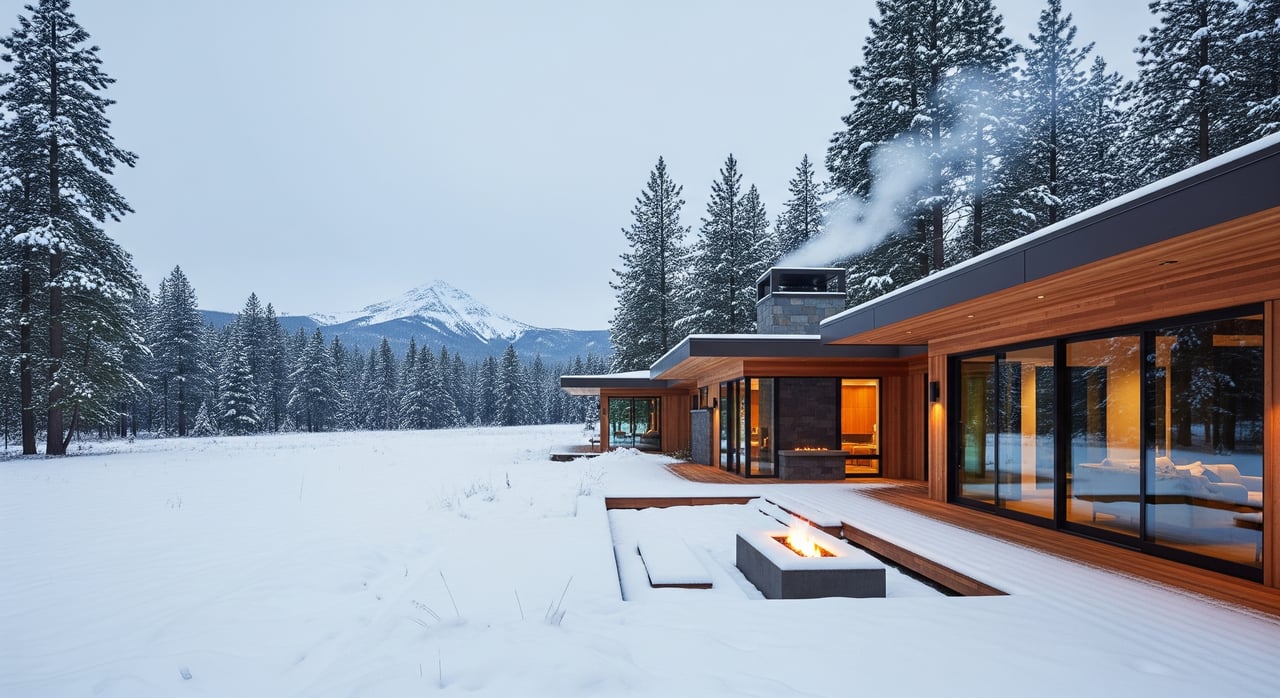
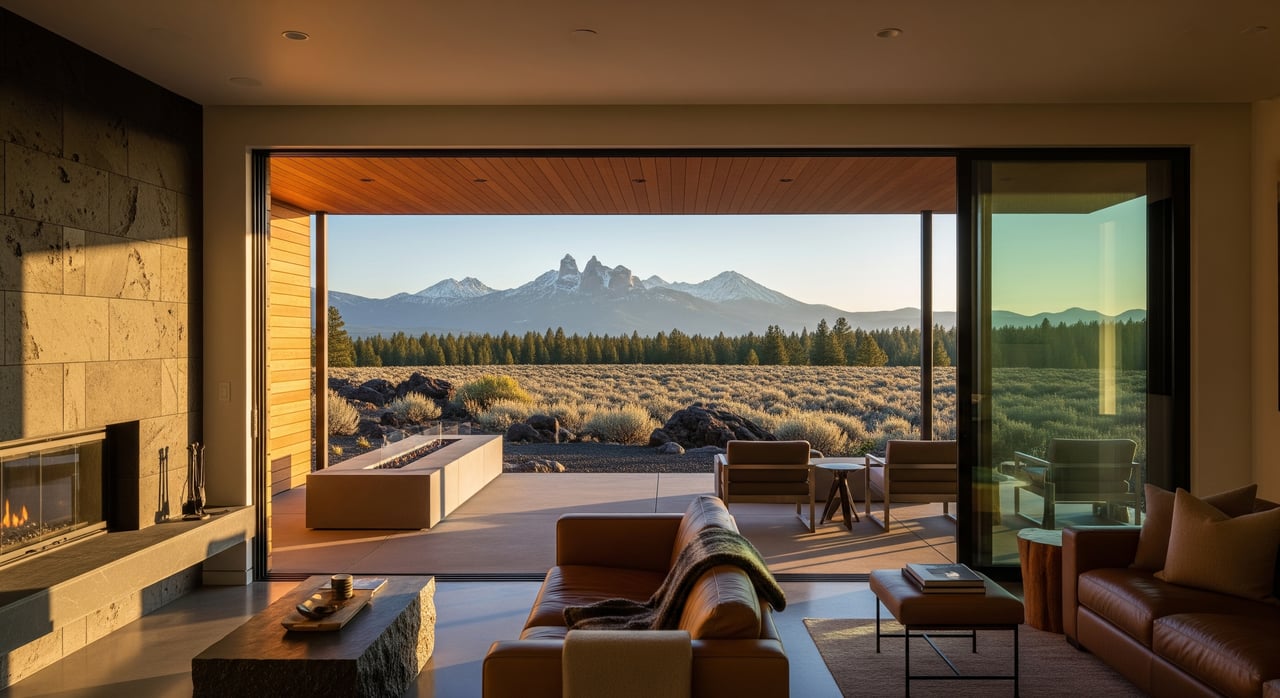
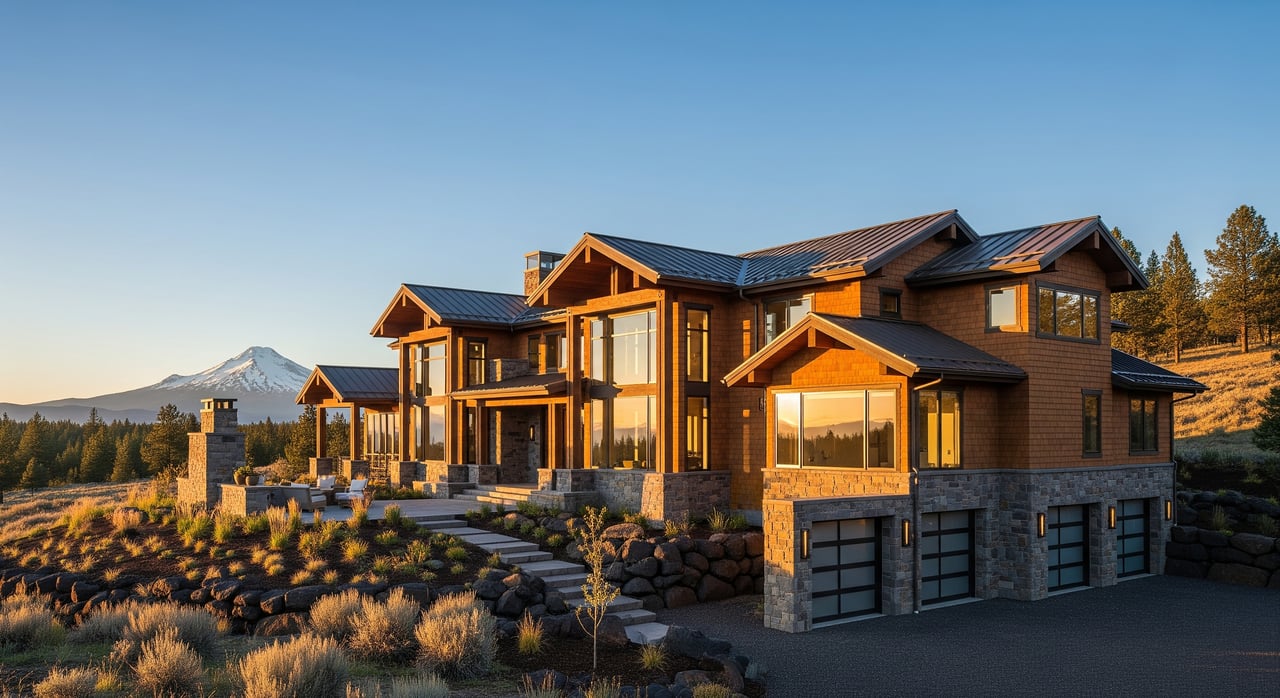
The custom and modern luxury builds cluster along the premium corridors: the Deschutes River, the Meadows golf course, and the northern extensions. These are contemporary Pacific Northwest homes exceeding 3,000 square feet, with steel beam elements, large glass walls, multi-car garages sized for gear storage, and high-efficiency mechanical systems.
Tier | Price Range | What You're Buying |
|---|---|---|
Condos & Townhomes | $400,000 – $650,000 | 1–3 bedroom attached units in complexes like Fairway Village and Quelah; the lowest-maintenance path to Sunriver ownership |
Entry Single-Family | $600,000 – $800,000 | Original, un-remodeled 1970s cabins and smaller mid-century homes on secondary lanes |
Mid-Tier & Remodels | $800,000 – $1,300,000 | Fully updated mid-century homes, expanded family layouts, properties with established rental history |
Luxury Estates | $1,300,000 – $2,500,000+ | Large custom builds, riverfront along the Deschutes, fairway-fronting homes on prime lots |
The pattern worth noting: in Sunriver, rental performance is baked into value in a way it isn't in most of Central Oregon. A remodeled four-bedroom that sleeps ten will outprice a comparable-square-footage home with a layout that sleeps six, because the buyer pool for the former includes investors running the numbers on nightly rates.
Every buyer in Sunriver becomes an SROA member, and the association's reach is broader than most HOAs. It is the reason the community looks the way it does.
The base maintenance assessment runs roughly $173 per month for lot and homeowners. That covers maintenance on the 33-plus miles of paved pathways, the private roadways and street lighting, common area forestry management, snow removal on main access roads, ladder fuel reduction for wildfire prevention, upkeep of common parks and tennis and pickleball courts, plus administration, code enforcement, and community security patrols.
Depending on the property, additional costs may apply — bulk internet service, a separate condominium HOA assessment, or participation in the Recreation Plus Program (RPP), which extends guest access to SHARC. That last one is not a detail to gloss over. RPP eligibility is a transferable feature of a property and it directly affects rental income, which makes it a legitimate line item in any investment analysis.
The SROA Design Committee is where buyers most often need guidance. Any exterior modification to a home or lot requires prior approval under the community's Design Manual, and the standards are specific:
If you plan to remodel — and many Sunriver buyers do — sequence the Design Committee submittal into your timeline from the beginning rather than discovering it after you've ordered materials.
This is where Sunriver diverges most sharply from Bend, and it is the reason a large share of buyers look here in the first place. Bend restricts short-term rentals through a 500-foot buffer rule that effectively caps new permits in most neighborhoods. Sunriver, as an unincorporated master-planned resort community, permits vacation rentals across most single-family lots and condominiums.
On the county side, operators must register for a Transient Room Tax permit and remit the local lodging tax. Deschutes County caps overnight occupancy at two people per bedroom plus two additional guests, with children under five excluded from the count.
SROA layers its own operating rules on top, and they are enforced:
On the income side, three dynamics drive returns. First, demand skews heavily toward group and multi-family travel — more than 70 percent of successful listings are configured to sleep eight or more, which is why bedroom count and bunk-room layouts matter disproportionately here. Second, seasonality is pronounced: revenue peaks June through September and again during winter holidays tied to Mount Bachelor, with real softness in the spring and autumn shoulder months. Third, properties carrying transferable RPP passes command higher nightly rates because guests get complimentary access to SHARC.
Any pro forma on a Sunriver property that assumes flat twelve-month occupancy is wrong. The realistic model is a strong summer, a good holiday stretch, and quiet shoulders.
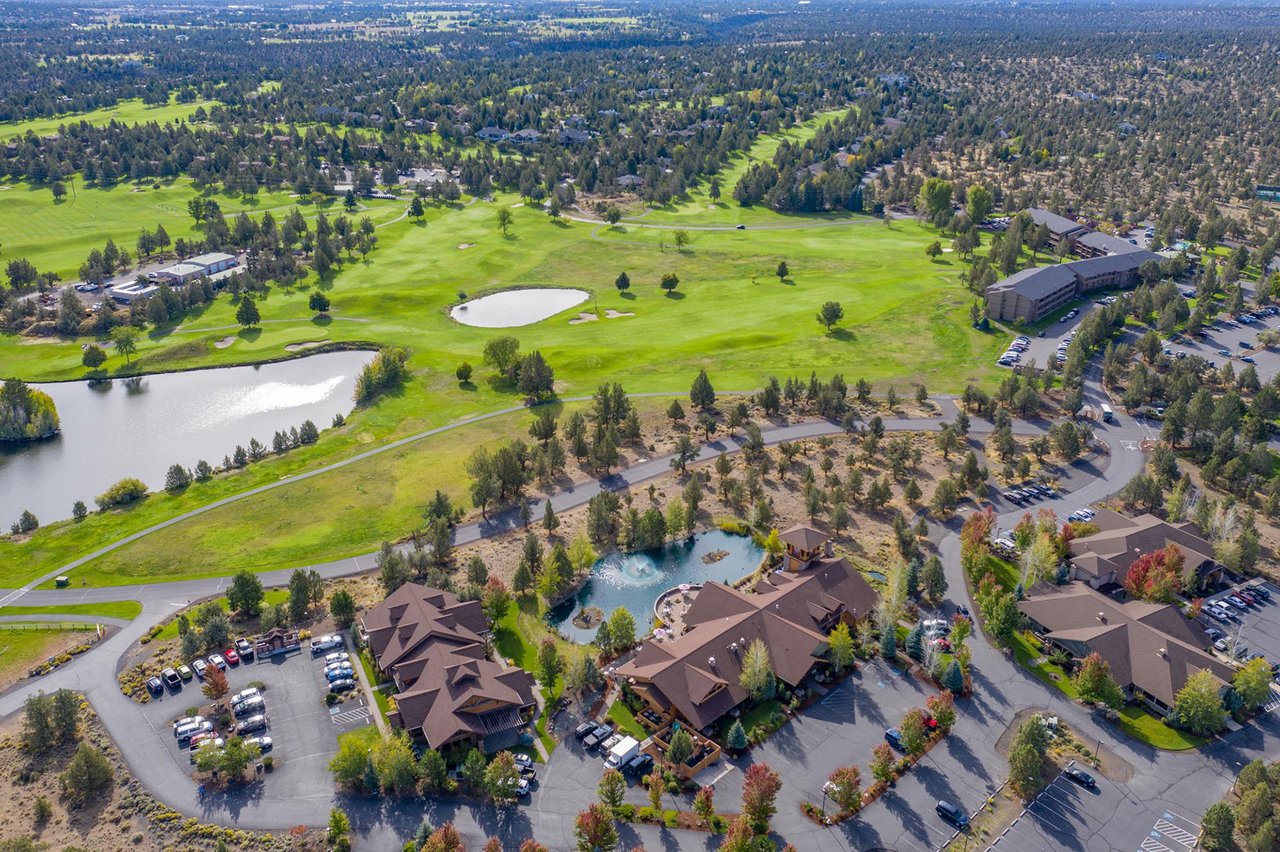
SHARC — the Sunriver Homeowners Aquatics & Recreation Center — spans 22 acres in the center of the community and functions as its recreational anchor. The aquatic side includes an indoor heated lap pool, an outdoor resort pool, a lazy river, water slides, splash pads, and adults-only hot tubs. In winter, SHARC operates a dedicated tubing hill. The campus also holds an amphitheater for summer concerts, multi-purpose event space, and a fitness center. For families evaluating Sunriver, SHARC is often the amenity that closes the decision; for investors, it's the amenity that justifies the nightly rate.
Fort Rock Park, in the central section, is the outdoor sports hub. It carries dedicated pickleball, tennis, and basketball courts, sand volleyball, a soft-surface playground, a covered pavilion for group picnics, and open turf fields.
The pathway system deserves mention again under amenities rather than just layout, because that's how residents actually experience it. Thirty-three-plus miles of paved path, grade-separated at every major crossing, connecting every lane to the Village, SHARC, Fort Rock Park, the resort lodge, the Deschutes marina, and the Nature Center. It is the amenity that most changes how you live day to day — cars become optional for anything inside the community.
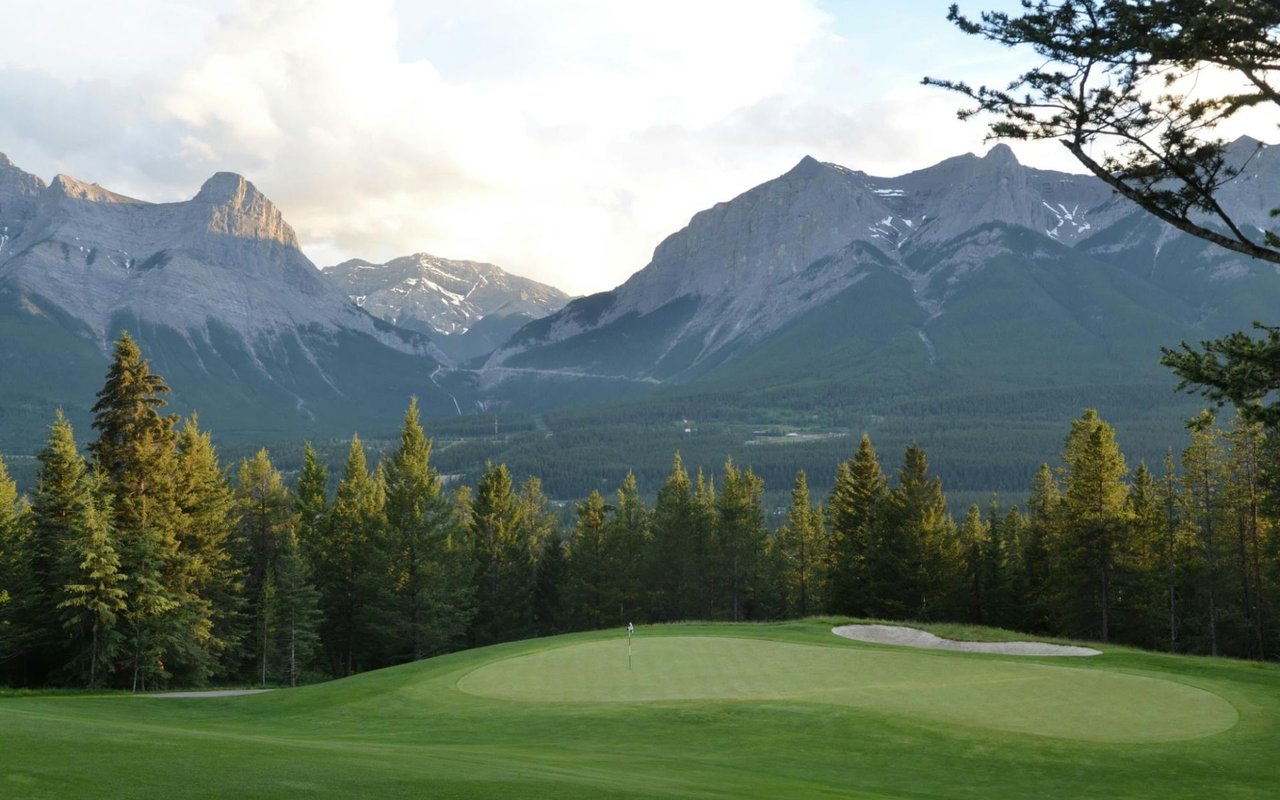
Sunriver holds 63 holes across four courses, and the access structures differ meaningfully. Knowing which is which matters both for lifestyle and for how a property is priced.
Course | Access | Architect | Character |
|---|---|---|---|
Meadows | Resort guests & public | John Fought | Championship resort style with open meadow routing and turtleback greens drawn from 1920s architecture; seven holes border the river |
Woodlands | Resort guests & public | Robert Trent Jones Jr. | Tight Ponderosa corridors, lava rock outcroppings, sharp elevation shifts, water in play |
Crosswater | Semi-private (members & resort guests) | Bob Cupp | A 600-acre heathland course crossing the Deschutes and Little Deschutes seven times; consistently ranked among Golf Digest's top 100 |
Caldera Links | Private (members, resort guests, Caldera owners) | Bob Cupp & Jim Ramey | Nine-hole short course, 60–185 yards, bentgrass greens; built for quick rounds and youth instruction |
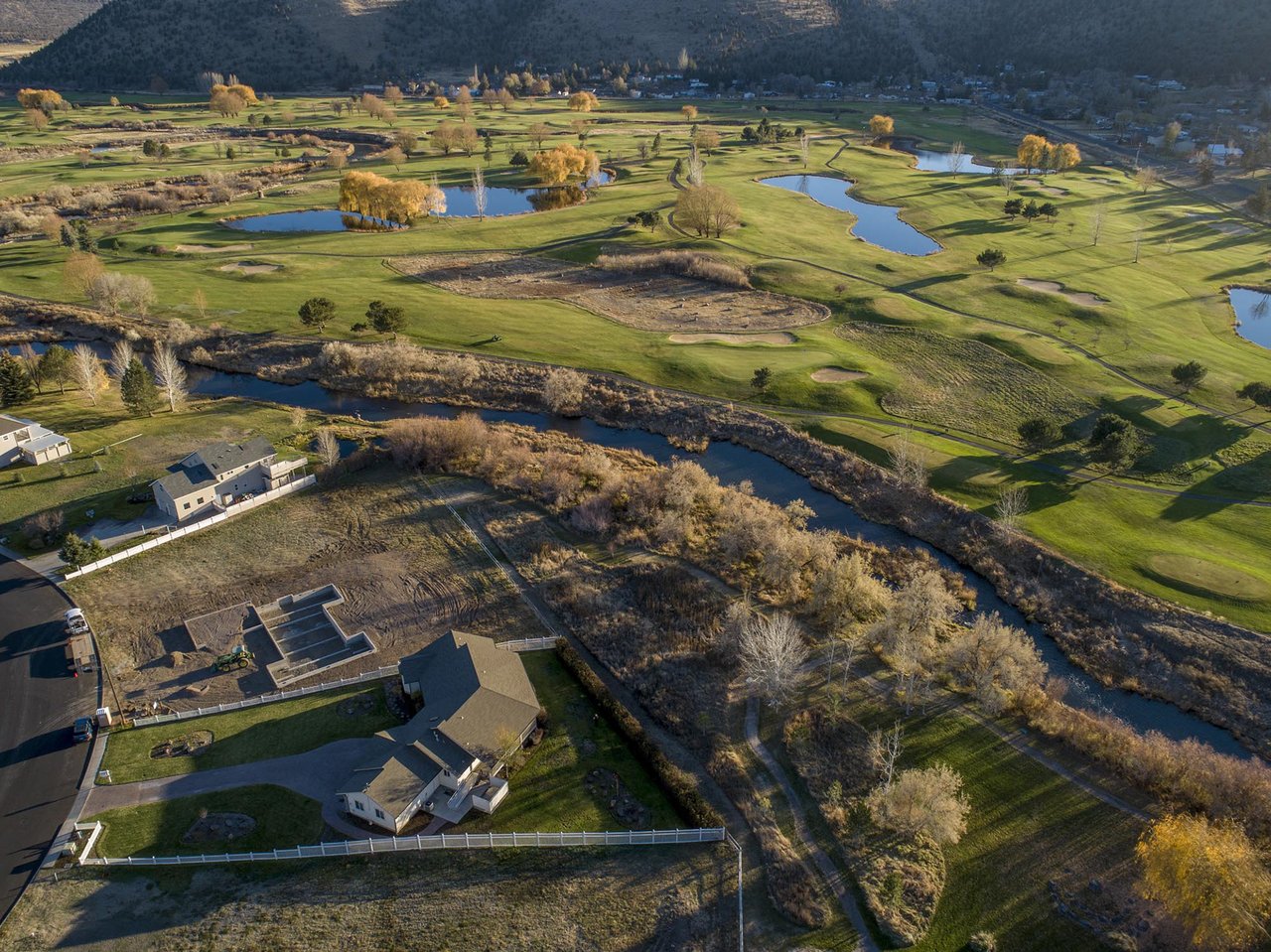
Golf frontage carries a clear premium in this market. Fairway condos in complexes bordering Meadows or Woodlands run roughly $500,000 to $750,000 and offer course views at entry-to-mid price points. Single-family homes with golf frontage on those same courses trade between $900,000 and $1,600,000-plus, typically a 15 to 25 percent premium over comparable interior lane homes — driven substantially by short-term rental demand for view properties. Crosswater estates, inside the gated enclave, run $1,800,000 to $3,500,000-plus on multi-acre sites with river and fairway vistas.
Sunriver's location is its recreational thesis. You sit between the high Cascade lakes and the alpine peaks, with a major river at the property line.
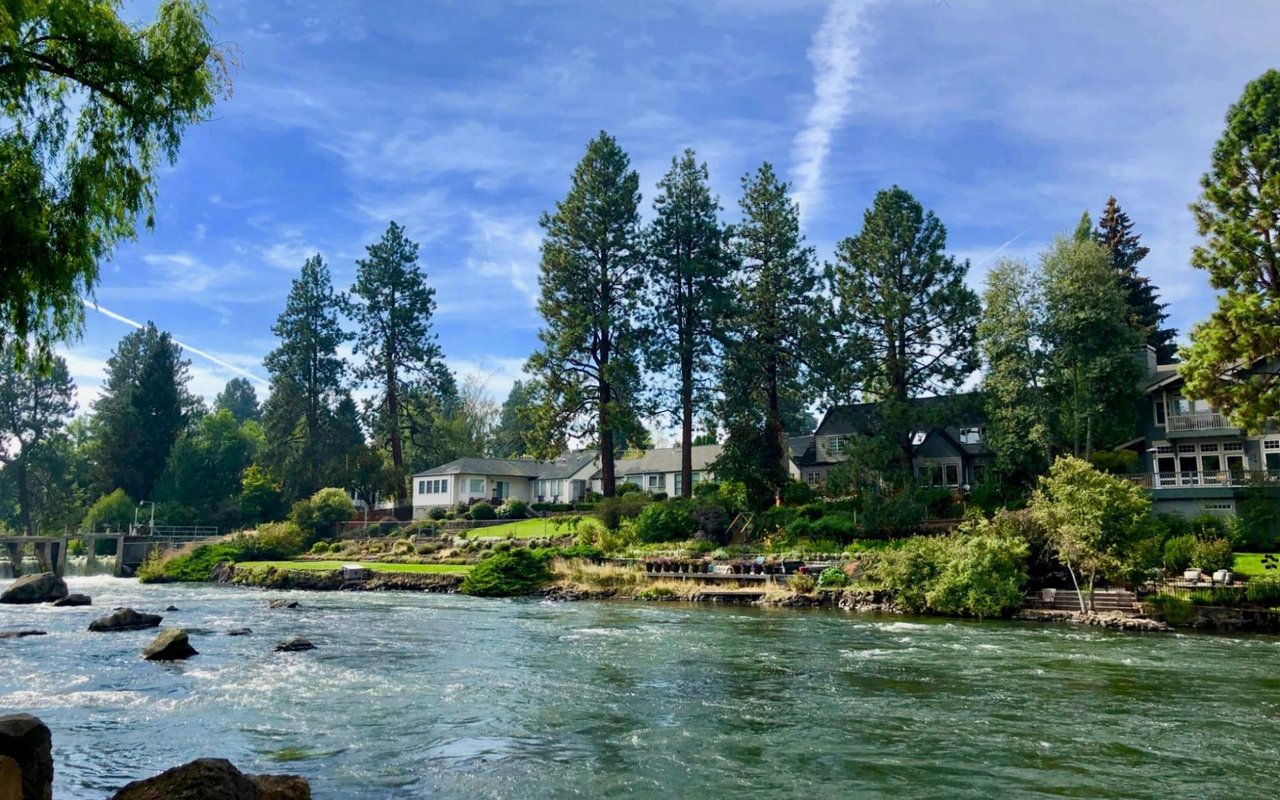
The Deschutes River borders Sunriver's western edge. The flat-water stretch between the Sunriver Marina and Benham Falls is the classic summer run for kayaks, canoes, and paddleboards — gentle enough for families, long enough to fill an afternoon. The fly fishing is genuine, with native Redband trout and introduced Browns; Harper Bridge just south of the resort is a well-known wade-in and drift-boat launch. Unpaved trails link Sunriver's paths directly into the Deschutes River Trail network heading north toward Bend.
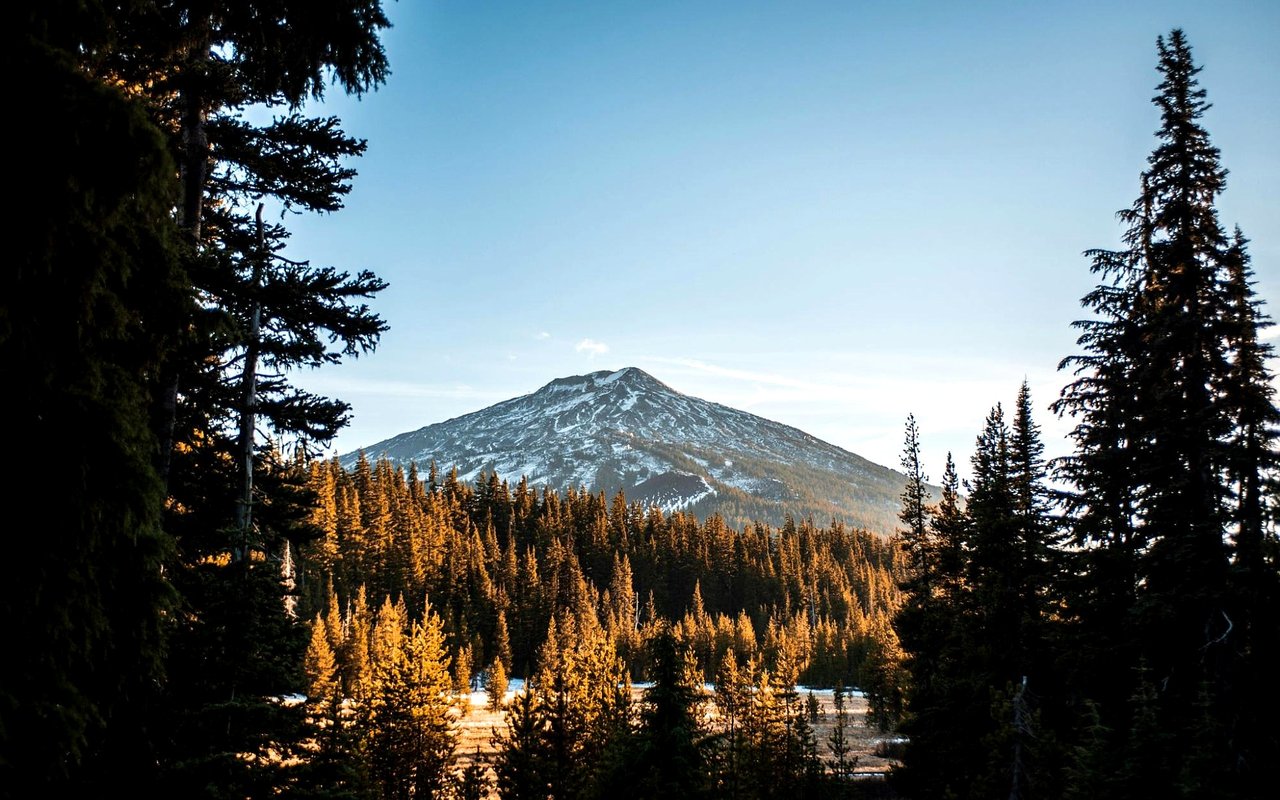
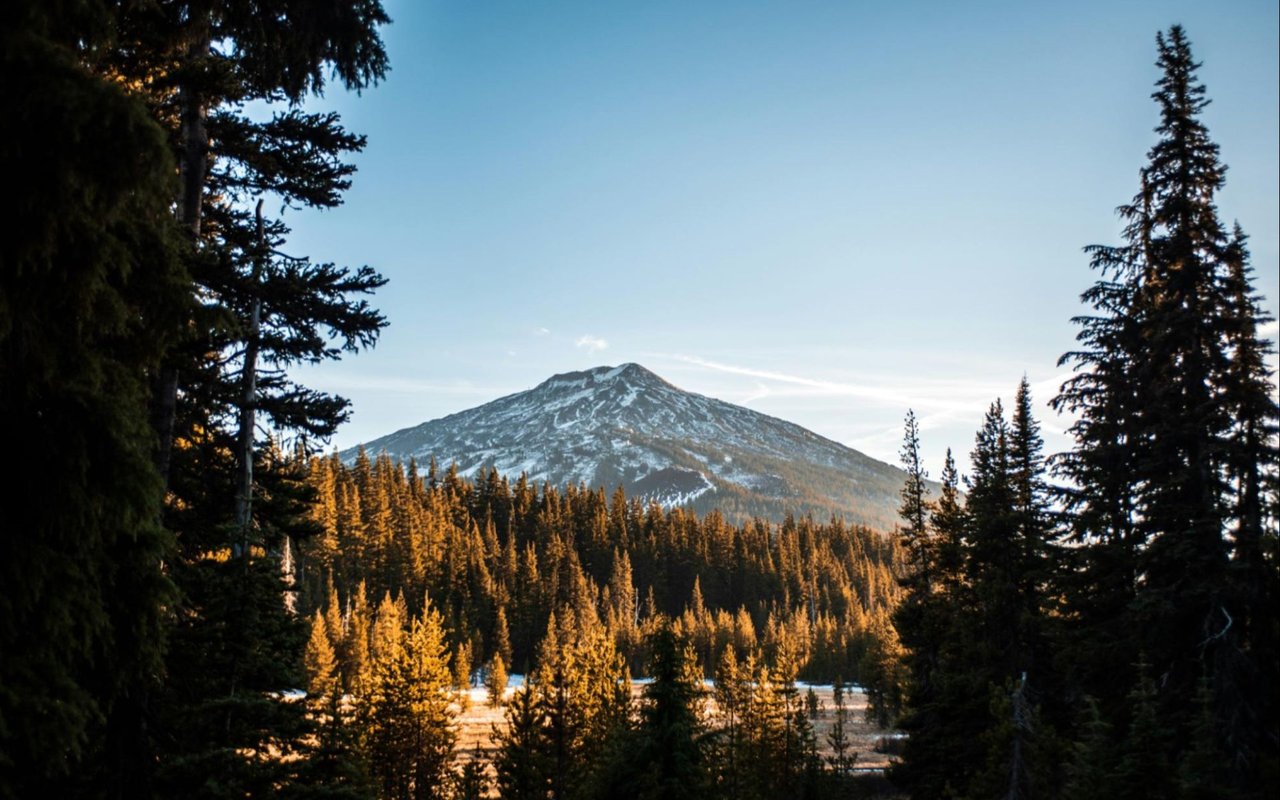
Mt. Bachelor sits 20 miles northwest via Century Drive and Spring River Road. That proximity makes Sunriver a legitimate ski basecamp rather than a long-haul commute: over 4,300 acres of lift-accessible terrain for downhill, snowboarding, Nordic, and snowshoeing in winter, and lift-served downhill bike parks, zipline tours, and scenic chairlift rides into early autumn.
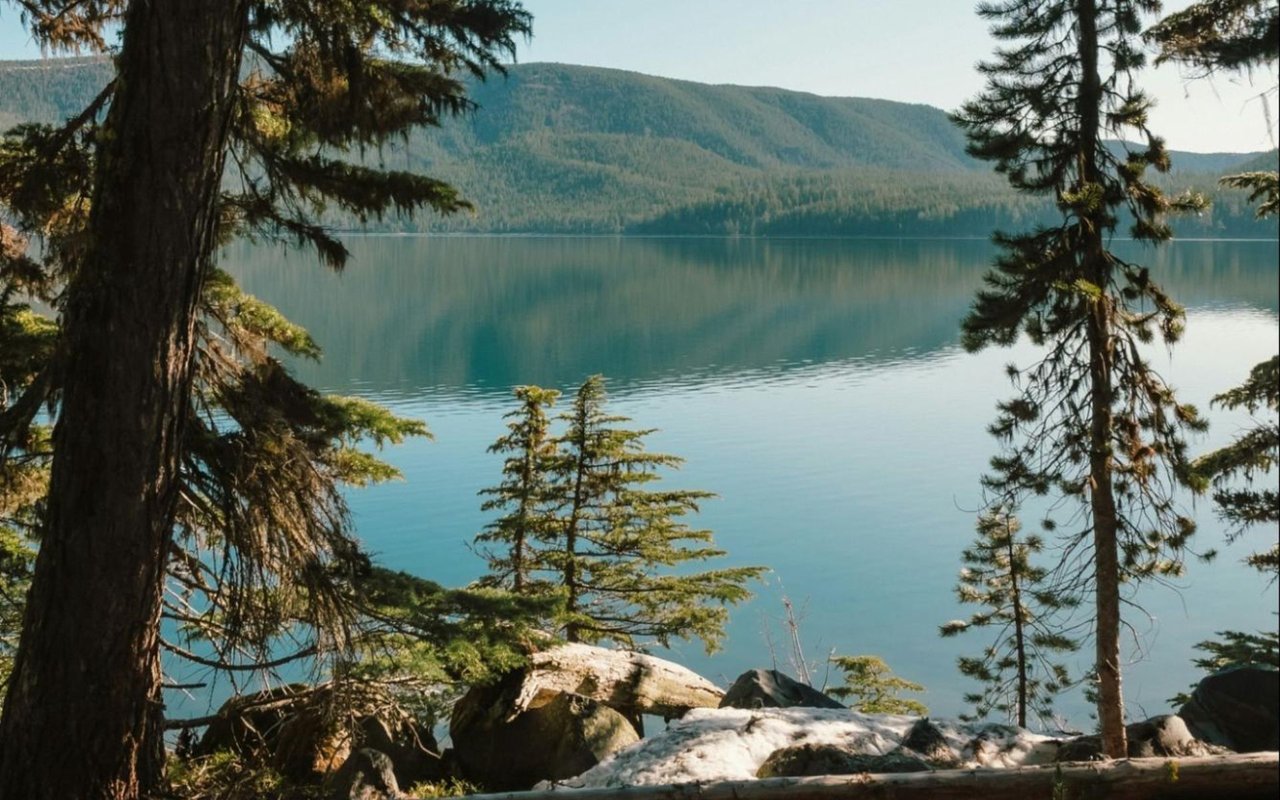
The Cascade Lakes Scenic Byway begins essentially at Sunriver's doorstep and opens onto Elk Lake, Cultus Lake, Sparks Lake, and Lava Lake within 30 to 45 minutes. Summer brings high-alpine boating, backcountry camping, and trout fishing; the trailheads into the Three Sisters Wilderness leave from the same corridor.
Buyers drawn to Sunriver should evaluate the adjacent enclaves, which differ in governance, price, and rental latitude.
Community | Setting | Price Range | Key Distinctions |
|---|---|---|---|
Caldera Springs | Gated extension just south of Sunriver | $1.5M – $3.5M+ | Modern mountain luxury; newer contemporary timber construction, private lakes, the Quarry Pool complex, and Caldera Links. Highly active vacation rental market |
Crosswater | Private gated enclave along the Deschutes | $1.8M – $4.0M+ | Exclusive golf luxury on a 600-acre footprint, multi-acre home sites, substantial privacy, and stricter rental rules that favor primary and secondary owners over investors |
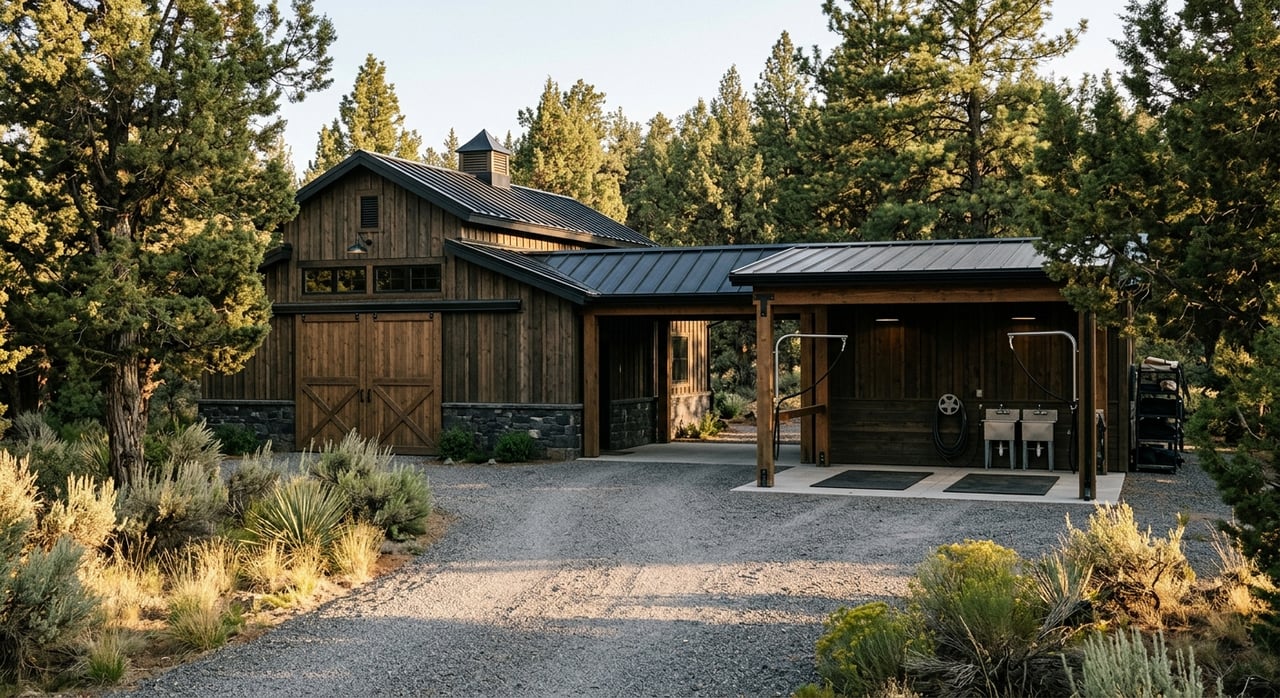
Three Rivers South | Unincorporated acreage pockets including River Meadows and Oregon Water Wonderlands | $450,000 – $1.2M+ | Rural freedom and lower dues; larger lots, room for detached shops and RV storage, minimal HOA involvement, river access, and none of SROA's design restrictions |
The trade-off is fairly clean. Caldera Springs buys you newer construction and strong rental economics at a higher entry point. Crosswater buys you privacy and prestige but constrains your rental flexibility. Three Rivers South buys you acreage, a shop, and freedom from design review — at the cost of the pathway network, SHARC, and the SROA-maintained infrastructure.
Sunriver reads as a resort, but it supports a real year-round population of families, remote workers, and retirees, and the school picture is more straightforward than many buyers expect.
Sunriver falls within Bend-La Pine Schools, the fifth-largest public district in Oregon. Three Rivers School is located right inside Sunriver, serving roughly 400 students as a combined K-8 campus — which means smaller class sizes, continuity from kindergarten through eighth grade, and after-school sports without a commute. For high school, students typically matriculate to La Pine High School about 15 miles south, or use district choice options to attend Bend Senior High, Mountain View, or Summit in Bend, roughly 18 to 22 miles north. The district runs bus routes throughout the Sunriver footprint and the surrounding rural developments.
Day-to-day family life here has one defining feature: the pathway system means children can bike to a friend's house, Fort Rock Park, or the library without crossing a high-speed road. That degree of independent mobility is difficult to find in conventional suburban development and it is, for many families, the reason they choose Sunriver over a comparable Bend neighborhood.
Local resources reduce the need to drive into town — the Sunriver Area Public Library, the Sunriver Nature Center & Oregon Observatory, and local sports leagues all operate inside the community. What full-time residents adapt to is the seasonal swing. Summer brings heavy visitor volume, busy pathways, and crowded Village dining. Late autumn and early spring settle into genuine quiet. Both are Sunriver; you should visit in each before committing.
Public safety in Sunriver is handled by the Sunriver Service District (SSD), a dedicated public entity established in partnership with Deschutes County — not by county sheriff coverage alone. The Sunriver Police Department provides 24/7 dedicated patrol focused on crime prevention, speed enforcement on the arterials, traffic circle safety, and home security checks, which matters in a community where most homes sit vacant part of the year. The Sunriver Fire Department operates from the central public safety complex and provides advanced life support EMS along with structural and wildland fire response. Domestic water and wastewater are contracted to Sunriver Water LLC and Sunriver Environmental LLC.
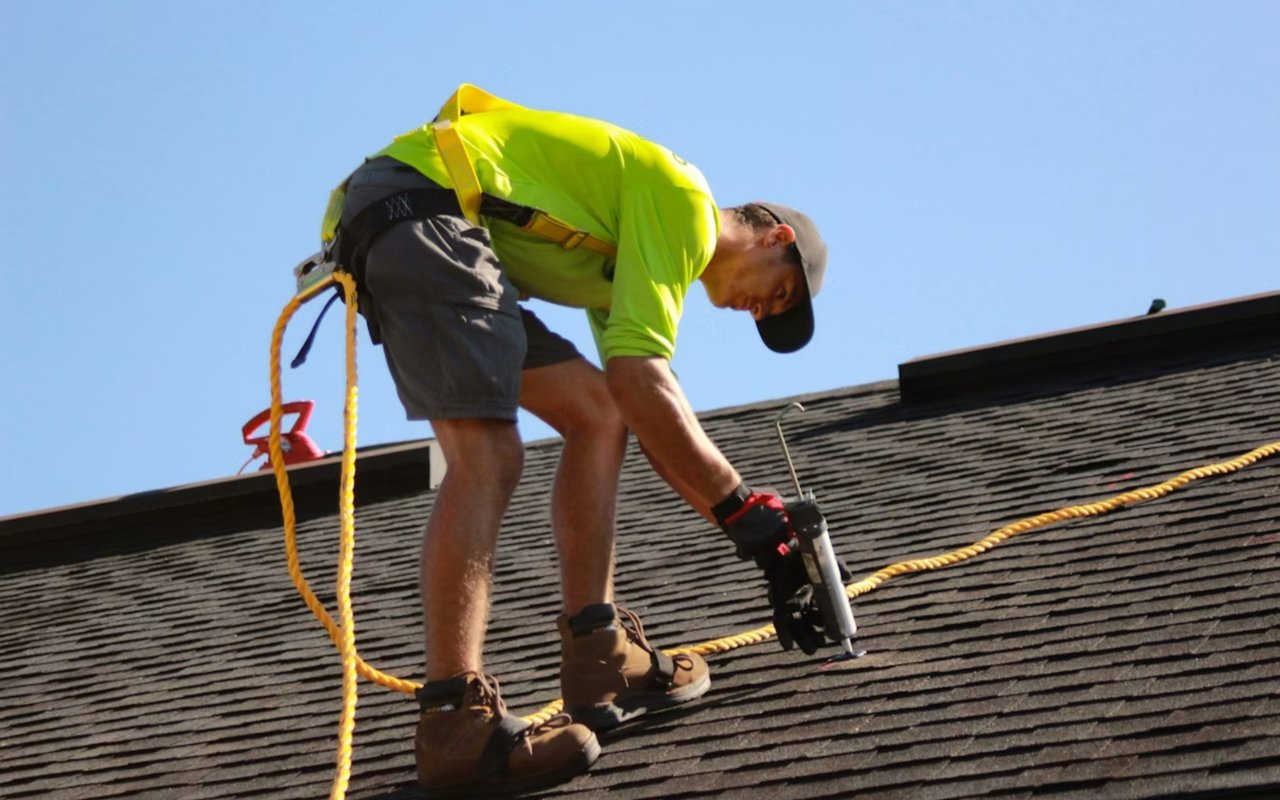
Wildfire mitigation is a homeowner obligation here, not a suggestion. Sunriver is a recognized Firewise USA Community, and the SROA Natural Resources Department enforces the standards. Owners must eliminate ladder fuels — the low branches, brush, and dense undergrowth that let a ground fire climb into the canopy — with branches limbed up 8 to 10 feet. Pine needles and combustible debris must be cleared regularly from roofs, gutters, and decks and within the 30-foot defensible space perimeter, and SROA conducts periodic lot inspections. New construction and exterior remodels must use fire-rated roofing such as Class-A architectural asphalt or metal, with vents screened against wind-borne embers. Budget both time and money for this annually.
Winter and year-round ownership come with a few operational realities:
Consideration | What to Expect |
|---|---|
Snow removal | SROA crews plow all 66-plus miles of private roads and the 33-plus miles of pathway. Driveways and private walkways are the homeowner's responsibility |
Winter driving | At 4,200 feet, AWD or 4WD with winter-rated tires or chains is the practical standard from November through April |
Occupancy mix | Roughly 15–20% full-time residents; 80%-plus second homes and vacation rentals |
Off-season | Winter and shoulder months are genuinely quiet and low-traffic; summer brings a significant population surge |
Sunriver rewards buyers and sellers who understand its specifics. The difference between two similar-looking cabins on adjacent lanes can come down to RPP transferability, driveway capacity for rental guests, a Design Committee approval already on file, or proximity to a pathway underpass. On the sell side, positioning a property for the investor pool versus the second-home pool changes how it should be prepared, priced, and marketed — and getting that wrong leaves real money on the table.
Team Fitch Real Estate brings that kind of local fluency to the South Deschutes County market. Led by Principal Broker Nicole Fitch alongside Matt Fitch and Ani Weber, the team is made up of established Central Oregon residents with deep community ties and a track record of results — recognized with the John L. Scott Chairman's Circle Award in 2025 as top performers in the Central Oregon market. Nicole's background in education and Matt's negotiation strength combine to make complicated transactions legible, whether that means walking a first-time buyer through SROA obligations, modeling realistic rental returns on a Sunriver investment property, or strategically positioning a longtime family cabin for sale. Ani's attention to detail keeps the process seamless from first showing to signing.
If you're weighing Sunriver against Caldera Springs, Crosswater, or Three Rivers South, considering a cabin remodel and want to understand the design review process before you commit, or ready to list a Sunriver property and want it priced against the right buyer pool, the team is glad to talk it through.
Team Fitch Real Estate | John L. Scott Central Oregon
50 SW Bond St, Suite 1, Bend, OR 97702
(541) 749-0875 | [email protected]
Sunriver has 789 households, with an average household size of 1.81. Data provided by the U.S. Census Bureau. Here’s what the people living in Sunriver do for work — and how long it takes them to get there. Data provided by the U.S. Census Bureau.
Total Population
Population Density Population Density This is the number of people per square mile in a neighborhood.
Median Age
Men vs Women
Population by Age Group
0-9 Years
10-17 Years
18-24 Years
25-64 Years
65-74 Years
75+ Years
Education Level
Total Households
Average Household Size
Average individual Income
Blue vs White Collar Workers
Blue Collar:
White Collar:
There's plenty to do around Sunriver, including shopping, dining, nightlife, parks, and more. Data provided by Walk Score and Yelp.
Explore popular things to do in the area, including Easily Enjoy Eating, McDivot's Cafe at Woodlands Golf Course, and Bombaci Pasta.
| Name | Category | Distance | Reviews |
Ratings by
Yelp
|
|---|---|---|---|---|
| Dining | 0.75 miles | 1 review | 5/5 stars | |
| Dining · $$ | 0.76 miles | 6 reviews | 3.2/5 stars | |
| Dining | 0.89 miles | 1 review | 5/5 stars | |
| Dining | 0.9 miles | 0 reviews | 0/5 stars | |
| Dining | 0.95 miles | 2 reviews | 4/5 stars | |
| Dining | 0.99 miles | 65 reviews | 3.8/5 stars | |
| Dining · $ | 1.24 miles | 197 reviews | 3.6/5 stars | |
| Dining | 1.26 miles | 5 reviews | 3.8/5 stars | |
| Shopping | 1.23 miles | 28 reviews | 4.2/5 stars | |
| Shopping | 1.23 miles | 1 review | 5/5 stars | |
| Active | 0.39 miles | 3 reviews | 4/5 stars | |
| Active | 0.75 miles | 11 reviews | 4.9/5 stars | |
| Active | 0.76 miles | 5 reviews | 3.4/5 stars | |
| Active | 0.9 miles | 77 reviews | 2.6/5 stars | |
| Active | 0.93 miles | 1 review | 2/5 stars | |
| Active | 1.22 miles | 37 reviews | 3.1/5 stars | |
| Active | 1.24 miles | 5 reviews | 2.6/5 stars | |
| Active | 1.24 miles | 10 reviews | 5/5 stars | |
| Active | 1.26 miles | 4 reviews | 4.5/5 stars | |
| Beauty | 0.75 miles | 0 reviews | 0/5 stars | |
| Beauty | 1.24 miles | 0 reviews | 0/5 stars | |
| Beauty | 1.24 miles | 0 reviews | 0/5 stars | |
| Beauty | 1.28 miles | 18 reviews | 4.8/5 stars | |
|
|
||||
|
|
||||
|
|
||||
|
|
||||
|
|
||||
|
|
ADDRESS 50 SW BOND ST STE 1 BEND OR 97702
ADDRESS 50 SW BOND ST STE 1 BEND OR 97702