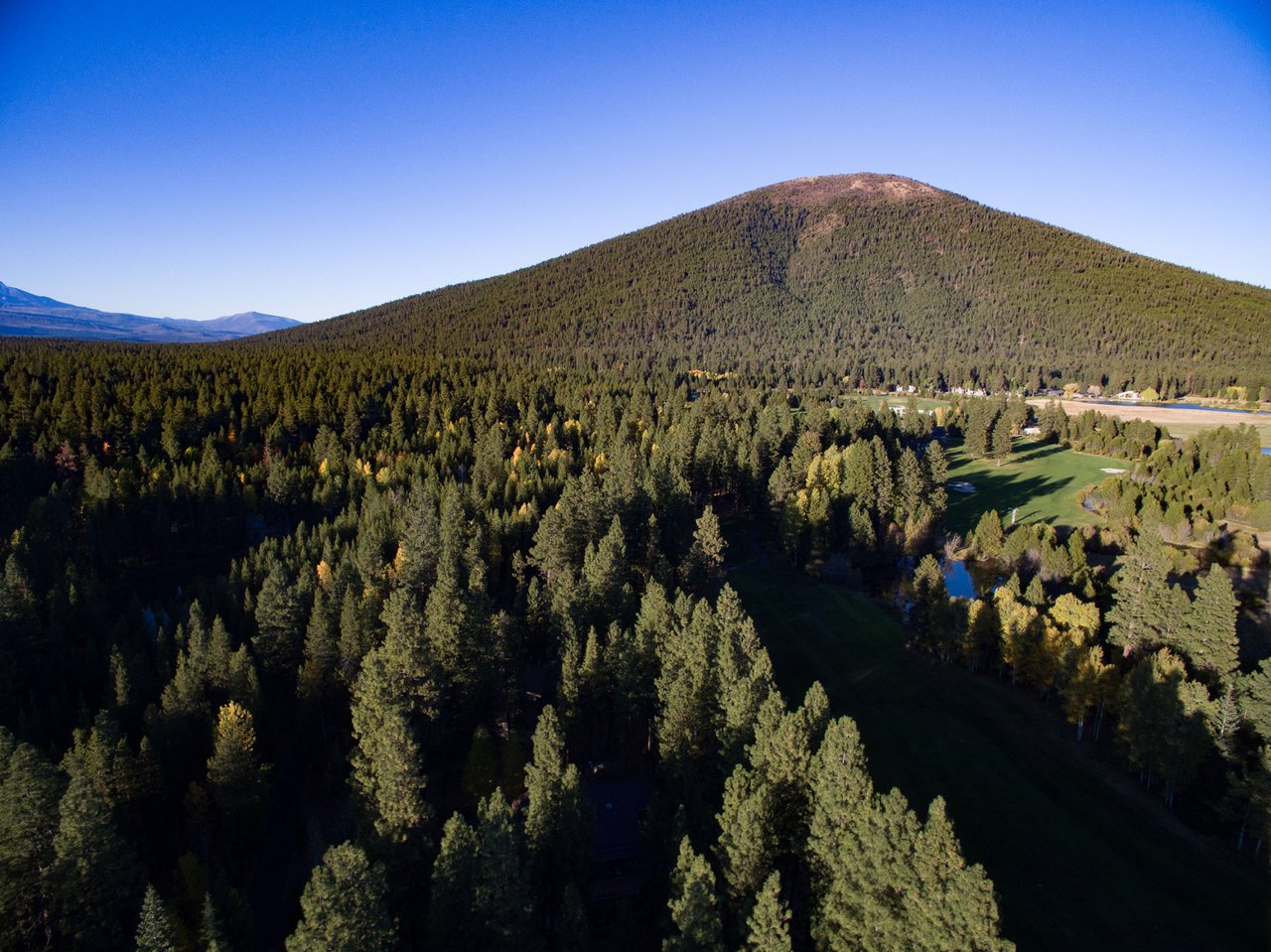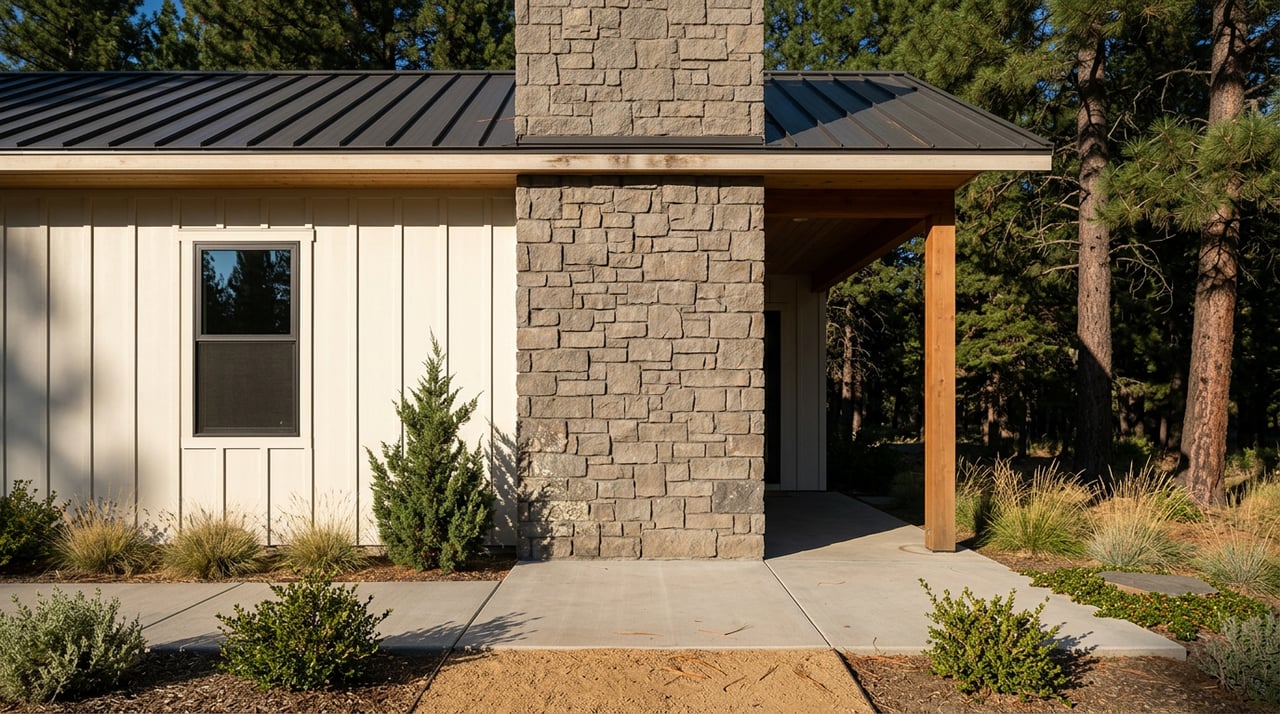
Crook County's luxury market has more closings than it did a year ago and homes are sitting almost twice as long before they sell. Both are true. The reconciliation lives in a file folder most owners have never opened.
Through the first half of 2026, Crook County recorded 11 luxury sales compared with 6 at the same point in 2025, while average days on market stretched from 103 to 205. Inventory crossed 200 single family listings for the first time since November. Of seven closings in a recent week, four had reduced their asking price by an average of 14.84 percent, finishing at a 91.46 percent sold-to-original-list-price ratio. Buyers are here. They are just taking their time, and they are using that time to read paperwork.
That is the thesis of this guide. In rural Crook County right now, the property that closes closest to list is not the prettiest one or the cheapest one. It is the one whose well log, septic permit, and replacement-area records are already in the file when the buyer's inspector arrives. Everything below is about closing that gap before it opens a price negotiation.
What The 2026 Numbers Actually Say About Leverage
Deschutes County is running 166 luxury sales year to date against 185 in the prior year, with days on market barely moving from 86 to 90. Crook County's story is different in kind, not degree. More transactions, dramatically longer marketing windows, and closings that cluster into two shapes: full-price deals on properties with clean paperwork, and steep concessions on properties without it.
A recent Powell Butte Estates closing on SW Mount Adams Loop landed at $1,084,500, or 96.4 percent of original list. That is what a documented property looks like on paper. Meanwhile, half of Crook County's pending single family sales in that same week had cut price by an average of 4.34 percent before securing a buyer, and the aggressive reductions on closed sales averaged nearly 15 percent. The spread between those two outcomes is not random. It maps almost entirely onto how prepared the seller was for rural due diligence.
A rural Crook County listing is not competing on price against Bend. It is competing on friction against every other acreage listing whose seller also underestimated the file the buyer would ask for.
The Four Frictions Buyers Are Actually Pricing In
The Crook County On-Site Septic Program is administered under authority granted by the Oregon Department of Environmental Quality, and rural development in the county depends on it because state land use laws restrict public sewer expansion in rural zones. That single sentence hides four separate cost centers a buyer can point to when they ask for a credit.
- Well water testing at sale. Oregon Health Authority requires domestic wells to be tested during a real estate transaction. Coliform, nitrate, and arsenic are the standard panel. If results have not been pulled recently, a low-yield summer or a nitrate reading near the threshold becomes the buyer's opening move.
- Septic permit history. Permits have been required in Oregon since 1972, and in some counties earlier. Homes older than that can have systems installed under prior standards, with looser setbacks between septic components and wells, surface water, and property lines. Some legacy systems work fine for decades. Others fail during the inspection.
- Replacement drainfield area. Permit records indicate the replacement area a property is required to set aside for a future system. A garage, a shop pad, or a mature juniper grove sitting on that area is a disclosure problem, not a landscaping decision.
- Alternative system maintenance. Pressure distribution, sand filter, mound, and aerobic systems all require ongoing maintenance contracts. Buyers ask for the contract, the annual cost, and the last service date. If none of that exists in writing, the buyer assumes the worst and prices accordingly.
None of these are exotic. All of them appear in the standard due diligence questions a competent buyer's agent runs on rural Oregon property. The seller who has already answered them controls the negotiation. The seller who is still gathering paperwork during the inspection window is negotiating from behind.
The Well Test Most Sellers Learn About Too Late
If your property is served by a domestic well, the water is a sale item. The Oregon Water Resources Department maintains the well log on file, and buyers will pull it. What that log shows about original yield, static water level, and pump depth becomes the backdrop for questions about summer performance.
The version of this conversation that costs sellers money goes like this. Buyer requests recent water tests. Seller does not have them. Seller orders tests during the inspection window. Nitrate comes back elevated. Buyer requests a treatment allowance. Seller either pays it or watches the deal fall apart 45 days in and re-lists as a stale property.
The version that does not cost money is the same test, ordered before the sign goes in the ground. If nitrate is elevated, you install treatment and market a property with clean current results and a documented system. If it is fine, the results sit in the disclosure packet and the conversation never happens. The cost of the test is a rounding error against a five-figure price concession.
What Crook County Actually Has On File
Sellers routinely assume the county holds every record about their property. It does not. Understanding which agency keeps what saves weeks of chasing paper during a live transaction.
| Record | Where it lives |
|---|---|
| Septic permits, site evaluations, repair permits | Crook County Community Development, 300 NE 3rd St, Room 12, Prineville |
| Well construction log, original yield, depth | Oregon Water Resources Department |
| Coliform, nitrate, arsenic water tests | Ordered by the seller through a certified lab; not held by the county |
| Alternative septic maintenance contract | Held by the maintenance provider under contract with the owner |
| DEQ regulatory framework and rule updates | Oregon Department of Environmental Quality |
The right sequence for a Crook County seller is to pull the septic records from the county before listing, verify the well log with the state, and order a fresh water panel. If the septic is alternative, request a current status letter from your maintenance provider. That packet is the disclosure document. When a buyer's agent asks the questions, you hand over the answers.
Pricing Strategy When Documentation Is Your Leverage
Crook County's 2026 pattern rewards two seller behaviors and punishes a third. The rewarded behaviors are pricing to the current buyer pool from day one and marketing with a complete due diligence packet already assembled. The punished behavior is listing aspirationally, waiting, cutting price, and then discovering during inspection that the file is incomplete.
Look at the math implied by the recent closing data. A property that lists correctly and holds close to asking on a documented sale keeps roughly 96 cents on the dollar of original list. A property that drifts through two reductions and negotiates repairs finishes near 91 cents. On a $1.2 million rural home, that spread is $60,000, and it is entirely mechanical. It is not about the market softening. It is about which side of the transaction is holding the answers when the questions get asked.
The luxury and acreage buyer showing up in Crook County in 2026 is doing more homework than the 2021 buyer did. Longer marketing windows give them the time. Rising inventory gives them alternatives. What they are shopping for is a property they will not have to fight the paperwork on, and they will pay for that certainty.
Where Powell Butte And The Prineville Fringe Sit Inside The Trend
The pattern is uniform across the county but the stakes vary. Powell Butte's higher price points concentrate the documentation risk on a smaller number of transactions, which is why a single clean sale like SW Mount Adams Loop moves the county average. Prineville's rural fringe carries a higher share of legacy systems and pre-1972 improvements, where site evaluation gaps and undocumented additions are more common. Ranch acreage in the north county, closer to the Ochoco Mountains, adds grazing lease and irrigation certificate questions to the packet, but the underlying discipline is the same. Bring the records to the listing appointment or expect to build them under time pressure later.
FAQ
Does Oregon require a septic inspection at sale? No. Oregon does not require a septic inspection at the point of sale. Lenders may require one depending on the loan product, and buyers routinely request one as a condition of their offer. The absence of a state mandate is not the same as the absence of a market expectation.
How long do buyers typically want the well water test to be? Current results ordered within the listing period carry the most weight. Older tests are useful as history but do not replace a fresh panel keyed to the transaction.
What if my property predates modern permitting? Pre-1972 systems can be fully functional, but the file will not look the way a lender or buyer's inspector expects. Order a pre-listing inspection from a qualified onsite wastewater professional, document current condition, and disclose known history. Vague answers cost more than honest ones.
Is the county the right place to start? For septic, yes. Crook County Community Development holds the permit history. For wells, start with the Oregon Water Resources Department log. Water quality testing is ordered separately through a certified lab.
Selling rural property in Crook County in 2026 is a documentation exercise wrapped in a marketing plan. If you are considering a listing this year in Prineville, Powell Butte, or the surrounding acreage market, Team Fitch Real Estate will walk your file before it walks your buyer's inspector. Start Your Search or Book a Consultation.